
 Add us as a preferred source on Google
 The restaurant industry is changing rapidly. Today, customers demand quicker services, hassle-free payments, and a frictionless experience. And this means restaurant owners need better tools to keep pace. Restaurant POS Software is considered one of the best tools for taking orders, processing various types of payments, and running operations more efficiently.
Modern POS (Point of Sale) systems now enable people to pay with their phones, check out without touching anything, and utilize innovative tools such as automation and machine learning. These features help save time, reduce errors, and make it easier for your team to perform their tasks. In simple terms, having good POS software can help your restaurant operate more efficiently.
The market for cloud-based point-of-sale (POS) systems is experiencing significant growth. Experts say it could be worth over $30 billion by 2031. That’s because many restaurant and retail owners have already seen the benefits of automation for their businesses. In fact, all the business owners admit that automation improved their operations. As restaurants continue to evolve, having a competent and reliable POS system is no longer just a nice-to-have; it’s a must.
If you want to know which is the best POS system for a restaurant, how the market is growing, and what trends to look out for in 2025 and beyond, this blog will help you stay updated.
So, let’s get started.
What is the Best Restaurant POS System?
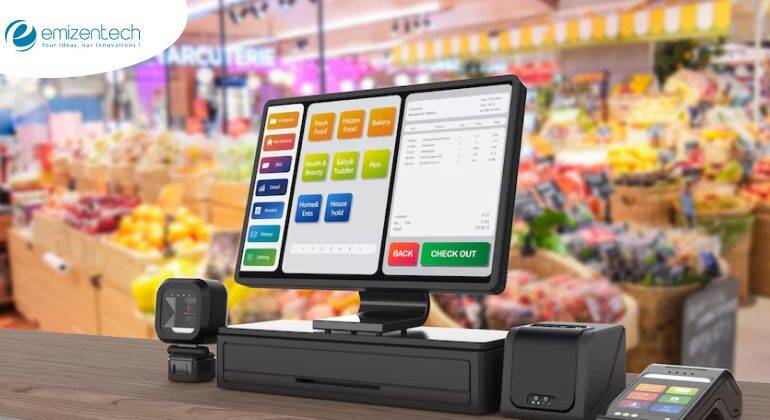
The POS software for a restaurant consists of both software and hardware. Restaurant owners can utilize it to manage transactions and run their businesses more efficiently. Unlike old cash registers, modern POS systems offer much more functionality. They enable you to accept various payment types, manage inventory and orders, process customer transactions, and even expedite order delivery to kitchens.
Additionally, they assist with scheduling staff by generating sales reports, managing staff schedules, and tracking customer data. For restaurant owners seeking to streamline their operations and boost profits, having the best restaurant point-of-sale (POS) system is crucial.
A variety of POS systems are used in the restaurant industry, each with unique features for different types of establishments. Below is the list of the best restaurant POS systems available:
1. Square
Square is a highly accessible point-of-sale (POS) system that is popular among small businesses due to its ease of use and affordability. It is a simple system that handles payments, orders, and basic inventory management. It is also compatible with many third-party applications, making it an ideal option for small-scale restaurants. However, larger or more complex operations may encounter issues with their functionality, as they lack certain features specific to restaurants, such as table management and reservation systems.
2. Lightspeed
Lightspeed is a robust POS system with extensive inventory management and reporting options, making it the perfect choice for eateries that require detailed insights into their operations. Cloud-based technology ensures accessibility from any device or location. Additionally, its strong analytics provide insights into sales trends and customer behavior. Lightspeed is an ideal choice for large and mid-sized restaurants that require a customizable, feature-rich platform with great capacity.
3. Clover
Clover is well-known for its flexibility and application-based customization, which enables it to be used by a wide range of establishments, including restaurants with specific requirements. It features a modern, user-friendly interface that supports various payment options and can be customized with a variety of apps to meet the needs of each business. The flexibility of Clover makes it an ideal option for restaurant owners seeking a payment system; however, customization may result in higher costs.
4. Aloha POS
Aloha POS is one of the top point-of-sale POS systems for restaurants, particularly popular among large chains and high-volume establishments. The system is known for its durability and wide range of features. Aloha offers excellent table management, kitchen communications, and order processing capabilities. Its remarkable ability to efficiently handle large volumes of transactions makes it the most sought-after choice among full-service restaurants.
5. Toast
Toast is a robust point-of-sale (POS) system that integrates essential tools, including inventory management, order processing, and customer support, into a user-friendly mobile app. Toast makes it easier for restaurants to operate more efficiently by eliminating the need for printed menus or bills. With Toast, employees can efficiently accept orders and process payments, simplifying the process for both guests and staff. Toast is an excellent choice for bars, restaurants, and nightclubs seeking quick and efficient service.
6. Posist
Posist is an effective POS software that connects both back-of-house and front-of-house staff, making teamwork easier. Restaurant owners can increase revenue by gaining insights into which food items and meal combinations are the most popular. Posist also offers a QR code option that allows patrons to pay at the table, streamlining the payment process. While Posist is excellent for day-to-day operations, it lacks the marketing support found in other POS systems.
7. SpotOn
SpotOn is a POS restaurant software that provides conventional POS functions, along with integrated loyalty and marketing tools. It helps restaurants manage transactions and orders while enabling them to handle promotions and rewards for loyal customers. This makes SpotOn the ideal solution for businesses seeking to enhance operational efficiency and customer relations through a single platform.
8. Revel Systems
Revel Systems is known for its enterprise-level capabilities, making it an excellent choice for larger, multi-location restaurant chains. Revel Systems offers a comprehensive range of functions, including an advanced inventory management system, employee scheduling tools, and CRM software. Revel Systems excels at handling high volumes of operations. It provides restaurant owners with comprehensive reporting and management tools that simplify day-to-day operations and long-term business planning.
9. Lavu
Lavu is a POS system that can be used on mobile devices. It is a software designed specifically for restaurants with smaller sizes as well as food trucks. Cloud-based software provides easy access from any device. This is especially beneficial for mobile-based businesses and restaurants with multiple locations. Lavu is well-known for its user-friendly interface and its ability to efficiently manage fast-service settings. It is,, however, limited interms of iterms of integrationscompared wtoits larger rivals.
Key Features to Look for in a Restaurant POS System
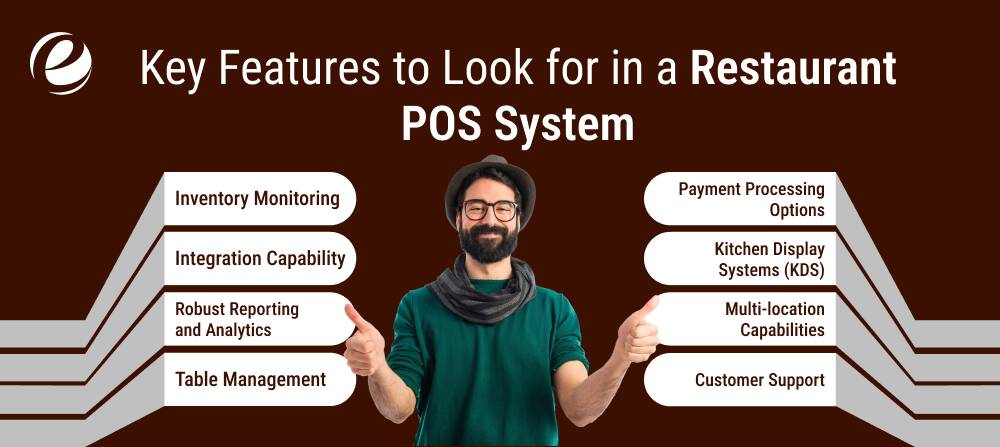
Are you fully utilizing your POS restaurant software to benefit from its potential? The majority of restaurants utilize point-of-sale (POS) software to manage orders and track sales data. However, the POS capabilities available for restaurants go beyond these basic functions. Below are the key POS features to consider before choosing a POS system for your restaurant.
1. Inventory Monitoring
Effective inventory control helps reduce waste and lower food costs. A POS system that tracks inventory ensures you are aware of what’s available. The best time to order is to help maintain accurate inventory levels and avoid the risk of running out of essential products.
2. Integration Capability
A solid POS system must work in conjunction with the other tools that your restaurant utilizes. Shopify POS Integration is an excellent example, as it enables you to connect your store and online sales. It is also essential to connect your POS with other software, such as your CRM software, accounting applications, and other relevant facilities. It manages tasks such as customer recording, processing, payroll, and collecting customer information more efficiently.
3. Robust Reporting and Analytics
A system for point-of-sale (POS) that offers robust reporting features enables you to track inventory levels, sales, and employee performance. The detailed reports will help you make informed, data-driven decisions regarding staff, menu modifications, or inventory management. This can lead to more profitable business results.
4. Table Management
During busy times, table management features help efficiently handle reservations and seating. The POS helps staff track table status, optimize seating, and speed up table turnover, ensuring more guests are served and improving overall restaurant efficiency
5. Payment Processing Options
A reliable POS system will provide a range of payment options. This makes it easier for consumers to make payments using different options, such as cards or other methods. It allows customers to pay as they want, making their shopping experience more enjoyable and simplifying transactions.
6. Kitchen Display Systems (KDS)
A Kitchen Display System (KDS) replaces paper tickets with digital orders, making it easier to track and fulfill orders. It enhances communication between the front and back of the house, ensuring orders are processed efficiently and promptly.
7. Multi-location Capabilities
For restaurants with multiple locations, a POS system that allows managing everything from a single dashboard is key. It simplifies tracking sales, inventory, and customer data across locations, streamlining operations and improving oversight.
8. Customer Support
With complex restaurant operations, having excellent customer support is essential. Quick access to help, whether for setup issues or urgent service problems, ensures the POS system runs smoothly, minimizing disruptions and preventing costly mistakes.

Latest Market Growth Trends in Restaurant POS Software
The growing demand for multi-purpose Restaurant POS Software Solutions is the main driver behind the growth of POS solutions for restaurants. Increased functionality in POS terminals, along with software that enhances efficiency in managing restaurant operations, is another key factor driving the global expansion of restaurant POS solutions.
Below are some key statistics of POS software for restaurants to help you better understand the market.
- The global restaurant POS software market was valued at $9.42 billion in 2022. It is projected to reach $17.87 billion by the end of 2030, with a compound annual growth rate (CAGR) of approximately 8.37% from 2023 to 2030.
- In the United States, the restaurant point-of-sale solutions market was valued at $5.91 billion in 2022. The market is projected to grow at a compound annual growth rate (CAGR) of approximately 6.9% from 2023 to 2030.
- Cloud-based point-of-sale (POS) systems accounted for 53% of the market in 2022. The logistics sector is expected to grow the fastest between 2023 and 2030.
Now, let’s look at the latest growth trends in the Restaurant POS Software market.
1. Customization and Personalization
Solutions are not designed to meet the needs of various types of restaurants. Whether it’s a fast-food restaurant or a fine dining establishment, POS software for restaurants now offers options that align with the service provided by each establishment. The trend of recustomers increasing service, reducing costs, and meeting customers’ needs more efficiently is evident. Personalized systems can also facilitate better decisions and streamline operations across the entire business.
2. Cloud-Based
They’re switching to cloud-based POS platforms because they’re easy to manage and scale. The systems enable online storage of information, allowing restaurant management and owners to view sales and reports at any time. Cloud POS also makes it easy to update software without delay, which reduces the need for on-site IT support. Ultimately, cloud-based systems help save money, reduce downtime, and provide better control over restaurant operations.
3. Mobile and Contactless Payments
Digital payment methods, such as mobile wallets and tap-to-pay, are now widely used in restaurants. Over 60% of customers prefer using these fast and secure options. The best point-of-sale (POS) systems for restaurants are being updated to handle this demand, enabling restaurants to offer a seamless experience. The trend also supports better hygiene and faster service. It’s becoming a must-have for restaurants to stay competitive and meet modern customer preferences.
4. Integration with Online Ordering and Delivery Platforms
As more people order food online, restaurants require point-of-sale (POS) systems that integrate with services like Uber Eats and DoorDash. These integrated systems help manage orders from multiple platforms in one location, reducing errors and enhancing efficiency. They also track deliveries and maintain up-to-date records. This trend fosters better coordination between kitchens and delivery drivers, leading to faster and more accurate service for customers.
5. Artificial Intelligence and Automation
AI and automation are revolutionizing the way restaurants utilize point-of-sale (POS) systems. These innovative features help predict inventory needs, suggest marketing strategies, and even answer customer questions through virtual assistants or chatbots. By analyzing data, AI can improve customer experiences and reduce waste. Automation also speeds up daily tasks, saving staff time and helping restaurants run more smoothly with fewer errors.
How to Choose the Best Restaurant POS System
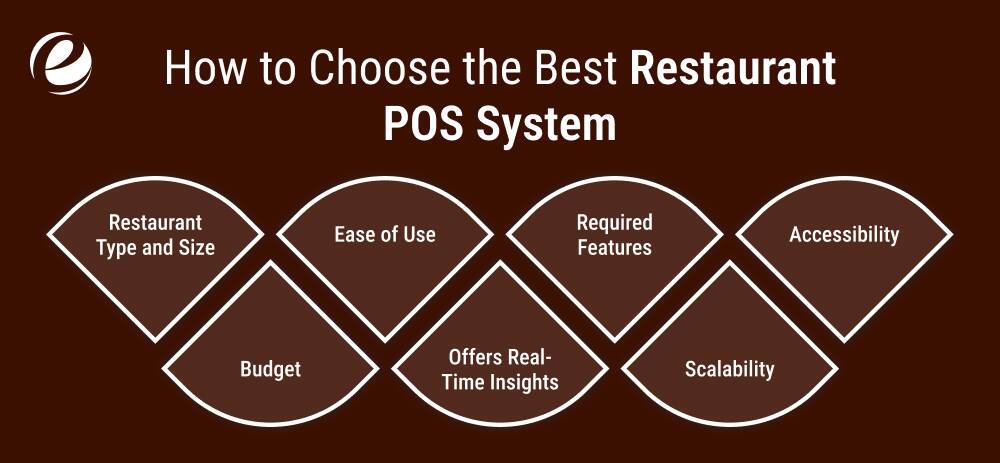
Every restaurant is unique, and the ideal POS software for a restaurant
1. Restaurant Type and Size
The type and size of your establishment play a crucial role in selecting the POS system for a restaurant. Restaurants that offer quick service (QSRs) don’t require complex table management, as they focus on fast orders and take-out. In contrast, larger full-service restaurants need more advanced systems, such as tables with multi-station layouts. Invest in custom POS software development services to meet your restaurant’s specific needs to ensure it supports efficient operations without overcomplicating things.
2. Ease of Use
An easy-to-use point of sale (POS) system is essential for both customer and staff interactions. It should be simple to operate and easy to teach to new employees, while also providing a pleasant experience for guests. Systems that require minimal instruction are ideal, as they reduce the time needed to master them. When choosing a POS, ensure it is as user-friendly as standard applications, allowing for smooth interactions without constant guidance.
3. Required Features
The ideal POS solution should include features that meet the specific needs of your restaurant. For establishments serving seated customers, inventory management is crucial for tracking stock levels. Restaurants focused on delivery and quick service require solutions such as online ordering, mobile point-of-sale (POS) systems, and third-party integrations to streamline their operations. These features can reduce labor costs and increase efficiency by automating the ordering process and simplifying delivery management.
4. Accessibility
A cloud-based POS solution provides the benefits of remote access, enabling you to manage operations from anywhere. This is particularly beneficial for restaurant owners who prefer not to be physically present all the time. Cloud storage allows you to access your information, track sales, and manage inventory from your smartphone or desktop computer. This gives you convenience and security.
5. Budget
The budget you have will determine the POS software you select. Startups can benefit from a less expensive system with simple features that meet their requirements. Established establishments may require sophisticated systems with additional features, which could result in higher prices. Be aware of your transaction volume, the features you require, and the ongoing costs when choosing the right POS. Consider various pricing strategies to determine which one will deliver the most significant value to your organization.
6. Offers Insights
A sound-providing system gives information to help your restaurant’s staff work efficiently. It enables you to monitor inventory, sales, and performance. The customizable reports help identify trends and make well-informed decisions. The information gives you a competitive edge in the market by enabling rapid responses to issues or opportunities, whether it’s adjusting menu prices or managing labor costs.
7. Scalayou’re
As your restaurant grows, so should your point-of-sale (POS) system. Whether you’re adding more staff, expanding your menu, or opening additional locations, scalability ensures the system adapts without creating complexities. Choose a restaurant POS software solution that can grow with your business, offering the flexibility to expand its features or integrate with other systems as needed, without slowing down operations or requiring a costly overhaul.
Emerging Technologies for Restaurant POS Systems
Restaurants are adapting to evolving consumer habits and rapidly changing technology. The latest POS technology is not just about taking payments; it is transforming how restaurants operate. Let’s have a look at the key technologies for restaurant POS Systems.
1. Cloud-Based POS Systems
Cloud-based POS systems store their data online, not on local servers. Restaurant owners can monitor sales, inventory, and employee efficiency from any location. Updates and backups are automatically generated, reducing the need for IT assistance and enabling the oversight of multiple locations with a single control panel. It’s an overall affordable, flexible solution for restaurants looking to improve efficiency and gain more control over their operations.
2. Mobile & Tablet POS
Tabletop and mobile-based POS systems have replaced traditional terminals with more compact designs. Staff can serve customers at their tables using handheld devices. This improves service while reducing mistakes. The systems are easy to use. They’re ideal for pop-ups, food trucks, or even outdoor patios. They’re also easy to use and typically less expensive to install than stationary hardware. Mobile POS enables restaurants to enhance efficiency and deliver a more personalized customer experience.
3. AI & Machine Learning
Artificial Intelligence in POS restaurant software
4. Voice-Activated POS
Voice-activated POS devices allow employees to place orders or verify information using simple vocal commands. This can be particularly helpful in fast-paced kitchens, where hands may be full or dirty. It reduces the time spent navigating, speeds up order processing, and lowers the likelihood of errors. It’s also a more hygienic option, as it eliminates the need to share devices. The use of voice technology is growing due to its simplicity and speed.
5. Contactless and Mobile Ordering
Customers can use contactless ordering by scanning QR codes to browse menus, place orders, or pay using their mobile devices. The trend gained popularity during the pandemic and has continued to grow. It improves service speed, reduces the need for direct contact between customers and staff, and gives guests more control. Mobile ordering platforms also allow pre-ordering, which increases kitchen efficiency. Customers are increasingly expecting these services, making them essential for modern restaurants that want to stay competitive.
6. IoT Integration
The Internet of Things (IoT) connects kitchen appliances and inventory sensors to the POS system. Restaurants can automatically monitor stock levels and receive notifications when items need replenishing or repairs. For example, a refrigerator sensor could alert employees before food items spoil. This technology helps reduce food waste, lower costs, and prevent equipment breakdowns. It ensures smoother operations and reduces the risk of unexpected disruptions in busy kitchens.
7. Cryptocurrency & Digital Wallet Payments
Restaurants are increasingly accepting payments through digital methods, such as Bitcoin, Ethereum, Apple Pay, and Google Pay. These options offer quick, convenient, and secure transactions. They are especially appealing to younger, tech-savvy consumers. Digital wallets also support contactless payments, making the payment process faster and more secure. By incorporating these payment options, restaurants present themselves as modern and progressive, helping attract a broader customer base and adapt to evolving consumer preferences.
8. Augmented Reality (AR) Menus
AR menus enable customers to view 3D images of their food items on their mobile devices prior to placing an order. The interactive menu feature can help guests gain a better understanding of portion sizes and food ingredients, improving their confidence and reducing the likelihood of errors. This feature adds enjoyment and excitement to the dining experience. AR menus are particularly beneficial when it comes to seasonal and new food items. Restaurants can benefit from this distinctive approach to making a mark and creating a contemporary, memorable experience for customers.
9. Blockchain
Blockchain technology provides a secure method for tracking transactions and tracing the source of ingredients. Blockchain technology creates an immutable record, increasing transparency and trust. Customers can track the origin of the ingredients. This makes it ideal for eateries that are focused on sustainable or organic foods. Blockchain also facilitates the auditing process and ensures compliance. In the case of restaurants, blockchain provides a greater degree of trust for both the payment process and the sourcing.
Future Trends to Watch in Restaurant POS Solutions
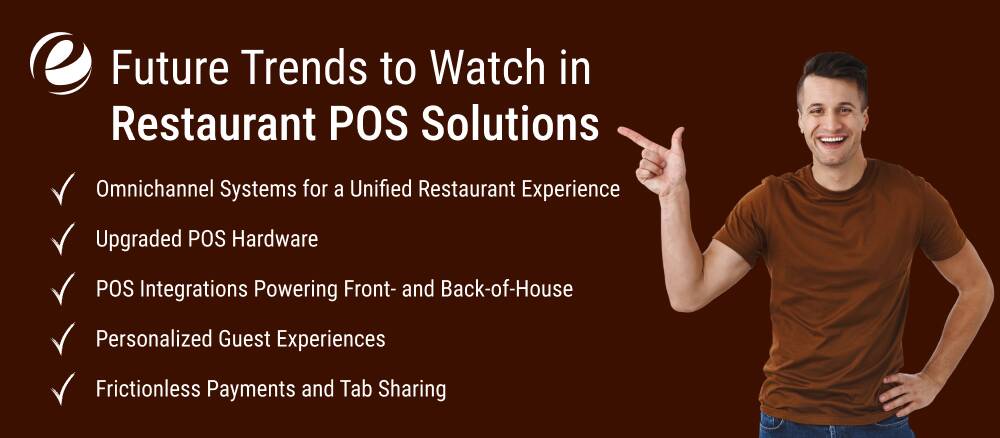
The restaurant industry is undergoing a radical technological transformation, with Point of Sale (POS) technology at the forefront. Here are the key trends that will shape the future of restaurant POS software solutions in 2025.
1. Omnichannel Systems for a Unified Restaurant Experience
Modern customers interact with restaurants across various channels online, through apps, or in person. A sophisticated POS system enables restaurants to manage all these channels on a single platform. It efficiently handles food orders, menus, and information about inventory and customers.
Whether a customer dines in, opts for pickup, or chooses delivery, the experience remains consistent. The system not only enhances operational efficiency but also customer satisfaction, encouraging repeat visits.
2. Upgraded POS Hardware
POS equipment is set to undergo a significant upgrade by 2025. Restaurants are replacing outdated machines with modern tools, such as mobile terminals, tablets, and multi-screen configurations. These devices are faster, more versatile, and easier to use. Wireless connections and Bluetooth enable employees to use card readers and printers without the need for cables or a Wi-Fi connection.
The new systems can also operate offline and connect via various methods to ensure continued functionality regardless of the situation. This enhances both the speed and stability of service for employees and customers.
3. POS Integrations Powering Front- and Back-of-House
Modern POS software for restaurants does more than just process payments; it helps improve collaboration between the kitchen and dining area. By integrating your POS with kitchen displays, inventory software, and other tools, you create an efficient system for managing the entire restaurant.
Orders are directly sent from the table to the kitchen, which reduces errors and speeds up service. Since everything is managed on a single platform, your employees can stay on track while customers enjoy a smoother and more efficient dining experience.
4. Personalized Guest Experiences
Modern POS software enables restaurants to gain valuable insights into their customers and provide personalized customer service. Data is used to help suggest the best dishes to customers, design special promotions, and then offer special deals. Each guest will feel appreciated and acknowledged.
As time passes, personalized experiences can foster loyalty and increase the frequency of visits. Whether it’s reminiscing about a memorable meal or offering discounts or birthdays, these small gestures can have a significant impact on how customers perceive your restaurant.
5. Frictionless Payments and Tab Sharing
Restaurants are accelerating payments and becoming more convenient with the latest POS systems. Customers can now split bills and pay with mobile apps, as well as connect with their friends via mobile devices or electronic terminals. The tools reduce delays and confusion, particularly for dining in groups.
Peer-to-peer (P2P) payment methods have also been growing, enabling people to settle their meals quickly without cash. When payments are smoother, clients are happier, and the staff are able to focus on providing excellent service.

Why Choose EmizenTech for POS Software Development Services?
EmizenTech is the top-rated software and eCommerce development company that offers high-quality software solutions to businesses of all sizes. Our team comprises expert developers who know exactly how to create high-quality point-of-sale (POS) systems for your business.
Our focus is on developing software that is easy to use and meets your specific requirements, enabling you to run your business smoothly. At EmizenTech, our team of experts utilizes the most advanced technology to ensure that your POS system is created with care, quality, and features to support your business growth.
Contact us today to discuss your project requirements.
Final Words
The restaurant point-of-sale (POS) sector is rapidly evolving, and POS systems now offer more than just payment processing. Today, POS restaurant software can also handle tasks like data analysis, mobile ordering, supply chain management, and environmentally sustainable practices. Selecting the right POS system can significantly enhance the efficiency of your restaurant, increase customer satisfaction, and boost profits.
Whether you prefer an all-in-one system or a combination of software and hardware, selecting the best option for your restaurant is crucial. By carefully considering your options and weighing the benefits, costs, and drawbacks, you can make an informed decision that enhances your business’s performance and provides a better experience for your customers.
FAQs
What exactly is a restaurant POS system?
A restaurant POS system is a digital tool used to manage orders, payments, and operations in a restaurant. It helps with taking orders, processing payments, tracking inventory, and managing staff, all in one system. This makes the restaurant run more efficiently and smoothly
What is the reason a POS system is essential in restaurants?
A POS system is essential as it helps make restaurant operations more efficient and faster. It improves order taking and reduces the chance of errors. It also tracks stock and produces reports on sales. Additionally, it enhances customer satisfaction by offering features such as online order-taking and loyalty programs.
Are POS devices suitable for smaller cafés and restaurants?
Absolutely, POS systems are perfect for cafes and small-sized restaurants. They can be tailored to fit the specific needs of smaller companies. They aid in the management of the flow of orders, manage payments, and monitor sales, enhancing the efficiency of daily activities.
What are some of the best POS systems for restaurants?
The best restaurant POS systems



 +1 (989) 535-9295
 info@emizentech.com
 emizentech


