 Add us as a preferred source on Google
 Want more people to visit your online store and actually buy? If you run an e-commerce business, you know how important it is to keep shoppers happy. In the current dynamic world of e-commerce, providing a smooth and enjoyable shopping experience is important. PWA for eCommerce is a new kind of technology that is changing how people shop at online stores.
PWA is a kind of website that functions like a mobile apps but runs within a web browser. It’s quick, reliable, and able to work offline. PWA eCommerce helps keep shoppers entertained and enhances their overall experience. This leads to greater sales and customer loyalty.
One of the biggest benefits of PWA eCommerce development services is that it works seamlessly across all devices, whether it’s a phone, tablet, or desktop. It loads very quickly, even on slow networks, and allows features like push notifications and offline browsing. These features greatly help businesses reach more customers and keep them coming back.
With more shoppers shopping on their smartphones, making the switch to PWA is a major game-changer for e-commerce stores. In the wake of this, many stores are using PWA eCommerce technology to make their online shops easier to use and more enjoyable for customers.
In this article, we are going to talk about how progressive web apps are transforming the future of the e-commerce industry.
Market Stats For Progressive Web Apps
Let’s take a look at some easy facts and numbers that show how fast Progressive Web Apps (PWAs) are growing and why more businesses are starting to use them.
- It is estimated that the Global Progressive Web Apps (PWA) market size will grow to around $40.3 billion by 2033. It was $2.6 billion in 2023. The market is projected to expand at a rate of 31.43% over the period from 2024 to 2033.
- Compared to native apps, PWAs have a significantly safer security profile, with 60% fewer security vulnerabilities. The improved security features make PWAs a desirable choice for both businesses and developers.
- The e-commerce sector within the larger PWA marketplace is seeing significant growth, with a projected CAGR of 33.5% from 2024 to 2030.
- Progressive Web Apps (PWAs) are currently a huge opportunity in the online marketplace, as only 54,000 websites are using this type of technology.
- The Progressive Web Apps (PWA) market in the U.S. is projected to expand at a CAGR of 31.1% from 2024 to 2030.
What is PWA ECommerce?
PWA eCommerce is an online store built with Progressive Web App technology. It blends the best of mobile apps and websites to deliver a pleasant shopping experience. PWAs run fast, load quickly, work offline, and look similar to native apps. They enhance user experience and boost sales for companies operating online. Unlike traditional apps, PWAs don’t need to be downloaded from app stores, making shopping simpler and more convenient for users.
Users don’t need to download or install any software, allowing for an effortless shopping experience that is as exciting and enjoyable as a native mobile app. Wondering how to test if the new PWA for eCommerce works well? Through A/B tests for advanced web applications, you are able to evaluate your website’s PWA against the current experience. It is extremely efficient due to its accuracy because it can remove other factors that could be prone to skewing the outcomes.
Why E-commerce Businesses Should Use PWAs
The number of smartphone users is growing rapidly, and these users expect websites to deliver an uninterrupted and seamless digital experience. However, many e-commerce websites either lack proper mobile optimization or, if they do have it, fail to deliver the quality needed to retain their clients.
To meet customer expectations, e-commerce businesses must review the user experience on their websites. They should leverage cutting-edge technology, including PWA eCommerce development, to offer user-friendly and secure interfaces that enable customers to make purchases quickly and effortlessly, without the risk of being overlooked.
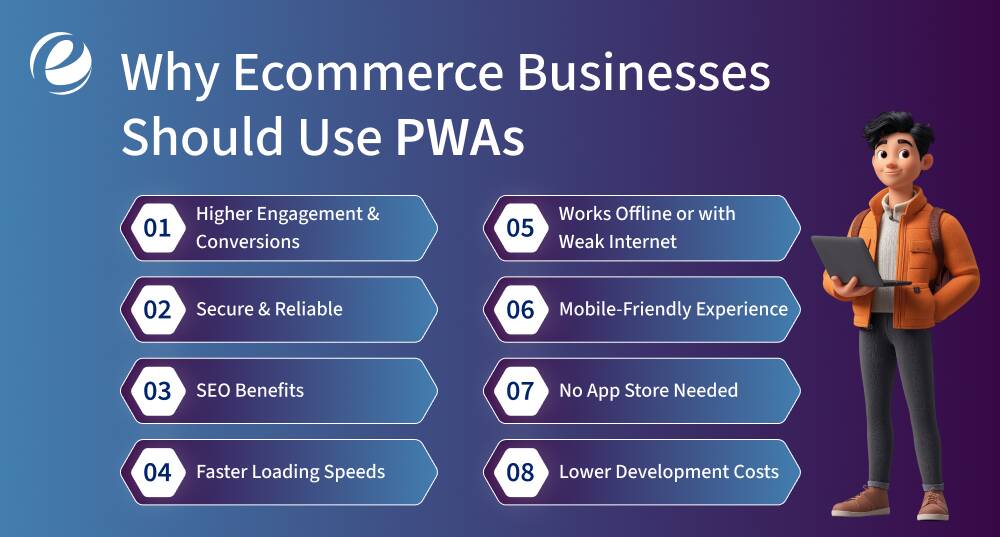
Below are the most compelling reasons why eCommerce businesses should adopt PWAs for eCommerce:
Higher Engagement & Conversions
PWAs support push notifications, just like native applications. Businesses can re-engage customers by offering discounts, promotions, or cart abandonment reminders. Customers can also add a PWA to their device’s home screen without downloading it from an app store. This makes returning visits more convenient, resulting in increased frequency and conversions.
Secure & Reliable
PWA eCommerce runs on HTTPS, ensuring all data transferred between the user and the site is secure. This is crucial for e-commerce platforms handling sensitive payment information. A secure checkout process builds trust and reduces the risk of fraud. Customers feel more confident while making purchases, leading to more successful transactions.
SEO Benefits
Unlike native apps, PWAs are crawlable by search engines like Google, which helps improve visibility in search results. More potential customers can discover the store through organic search. Increased visibility simply leads to more traffic, which can ultimately boost sales. PWAs also load faster, improving user experience and reducing bounce rates.
Faster Loading Speeds
PWA eCommerce loads extremely quickly, even on slow internet connections. This allows customers to shop online without long waits. Faster websites improve customer satisfaction and increase the likelihood of purchases. Speed is critical in eCommerce, as slow websites often drive users away. PWAs store some data locally, so not everything needs to be reloaded each time.

Works Offline or with Weak Internet
PWAs can run even without a high-speed internet connection. This means users can continue browsing even if their connection is unstable or temporarily lost. It offers a more consistent experience for users in areas with weak signals. This reliability keeps users engaged and returning, as they don’t need to restart after losing connection.
Mobile-Friendly Experience
PWAs resemble mobile apps. They are easy and smooth to use on screens of any size. Since most shoppers use smartphones or tablets, PWAs offer a better user experience than standard websites. Customers can also add PWAs to their home screens like real apps, making them convenient to access and browse anytime.
No App Store Needed
With PWAs, users don’t have to navigate to an app store in order to download any app. Users can simply access the site and then add the page to their home screen. This will save time and prevent large downloads or updates. Companies also do not have to cover the costs of app store or wait for app store approval. It’s an easier, faster approach to get in touch with users immediately.
Lower Development Costs
The process of creating PWA eCommerce is less expensive than creating separate applications for Android as well as iOS. One PWA can be used on any device, which saves time and money. It is only necessary to update one version and not multiple. This is perfect for smaller and mid-sized online retailers who want to have a solid mobile presence without having to invest a lot of money in the development of apps and updates.
How Leading Ecommerce Brands Succeed with PWAs

Many famous brands have recently switched their sites to progressive web applications. This section will look at some of the best PWA for eCommerce examples that will inspire you to take the next step.
Alibaba
The innovative web application developed by Alibaba, one of the most popular eCommerce platforms worldwide, has been recognized as one of the finest PWA examples. Alibaba’s PWA was designed to be fast, reliable, and easy to operate, offering a great web-based user experience for its clients.
The conversion rate grew by 76% after Alibaba implemented its PWA. Alibaba’s capacity to run on all devices and platforms including those with slow connections or less powerful hardware is largely responsible for the success of its business. Furthermore, Alibaba’s PWA allows businesses to reach a larger audience, particularly in regions with low internet connectivity.
Flipkart
Flipkart launched its PWA, called Flipkart Lite, to address mobile performance issues with a mobile-responsive layout. The results were impressive: Flipkart saw a 70% increase in conversion rates, and users spent three times more time on the site. The PWA’s optimized performance also reduced data consumption, making the platform accessible in areas with poor internet connectivity.
By focusing on a mobile-first approach and providing a seamless shopping experience, Flipkart was able to reach a wider customer base and significantly increase sales. Flipkart Lite is a strong example of how responsive mobile layouts and PWAs can boost eCommerce success.
OLX
OLX implemented a Progressive Web App to optimize the mobile user experience. The results were impressive, including a 250% increase in returning users and a 146% rise in ad click-through rates. The PWA enabled OLX to deliver better service in areas with limited internet access, offering fast load times and offline capabilities.
Improvements in speed and usability led to a significant increase in overall user satisfaction and engagement. OLX’s PWA for eCommerce success highlights the power of progressive apps in boosting customer retention and driving revenue in competitive markets.
Rakuten 24
Rakuten 24 is an incredible platform that combines the user-friendliness of an online store with the convenience of mobile apps. Customers can shop through their web browser, explore a variety of products, receive personalized suggestions, and enjoy a seamless buying experience.
The PWA created by the firm, improved the rate of retention for visitors by 450% when compared with the prior mobile website flow. The result was that users were able to quickly and easily browse through the various categories, allowing the business to provide a fast and seamless experience for users. Customers can also browse items offline without internet connection.
5miles
5miles, an online marketplace for goods and services, has made the switch to the Progressive Web App to enhance its mobile users’ experience. The result was a 50% increase in engagement of users and increased conversion rates. The speedy loading time of the PWA and user-friendly interface helped to provide a more enjoyable shopping experience especially for those who shop on the go.
5miles’ success with its PWA eCommerce proves its benefits using this method for businesses that sell online providing a flexible and reliable solution for increasing customer retention as well as driving sales.
Benefits of PWA for eCommerce
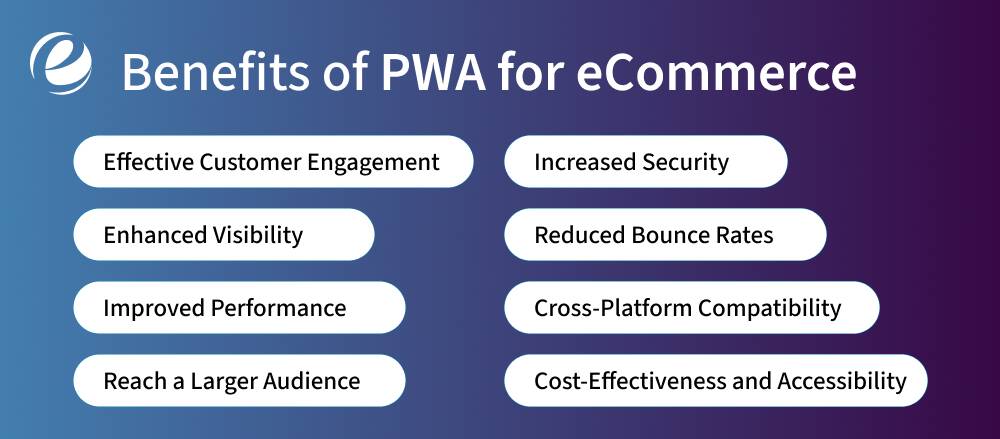
PWAs let customers shop smoothly on phones, tablets, or computers. They load fast, even on slow internet connections, and work offline. You can browse, add items, and buy without interruptions. Below are a few of the greatest benefits of PWA for eCommerce. Let’s have a look:
Effective Customer Engagement
Keeping customers engaged is important for the success of the online marketplace. PWAs can be a good option for this, providing a similar user experience to apps through browsers on the web. With push notifications, organizations can keep their customers engaged through personal messages, like exclusive offers or reminders about abandoned shopping carts. PWAs aid in bridging the gap in keeping users active as well as bringing them back to the website, eventually leading to a higher level of retention.
Enhanced Visibility
PWAs are designed to be SEO-friendly, making them highly visible in search engine results pages. Since they operate like regular web pages for Google, they tend to rank well for relevant keywords. Thanks to their optimized mobile functionality, PWAs naturally meet SEO criteria, increasing both the visibility of websites and their ability to be discovered. With mobile browsing continuing to dominate, adopting PWAs can enhance customer experience and improve search engine rankings.
Improved Performance
PWAs are best known for their fast loading times and flawless performance. They use advanced caching strategies to speed up content loading, providing a smooth and seamless user experience. The speed reduces bounce rates, increases user satisfaction, and leads to higher conversion rates. By efficiently delivering content, PWAs keep users happy, encouraging them to stay longer, ultimately improving the business performance.
Reach a Larger Audience
PWAs eCommerce development enables businesses to reach a broader audience by working seamlessly across all platforms, browsers, and mobile devices. Their responsive design adapts to any screen size, offering a pleasant user experience. Unlike traditional apps that require downloads, PWAs are instantly accessible via a single URL. The ease of access and sharing increases the visibility of PWAs, encouraging users to adopt the app and expanding the reach to potential customers, even in remote areas.
Increased Security
PWAs operate on HTTPS, which ensures that every data exchanged between the user and the website is protected. This is especially crucial for stores online, which handle sensitive data of customers like payment information, as well as sensitive personal data. PWAs give customers the security of shopping online that increases confidence and trust within the company, which is crucial to increasing customer satisfaction.
Reduced Bounce Rates
Speedy loading times as well as a smooth user experience are crucial to decrease bounce rates and keep visitors coming back to your website. The research shows that an instant delay in loading could reduce conversion rates up to 7.7%. PWA for eCommerce has been specifically developed to reduce loading times to ensure that your visitors engage as soon as they are on your website. Thanks to a simple and quick web interface for users, they keep visitors interested, which eventually results in lower bounce rate as well as higher conversion rates.
Cross-Platform Compatibility
PWAs give users the same experience across platforms and devices, whether they are using smartphones, tablets, or even desktops. Their cross-platform capabilities allow businesses to increase their reach without the need to develop distinct native apps for each operating system. PWAs guarantee that users enjoy the same services on all devices and allow companies to serve an even wider range of clients with greater efficiency.
Cost-Effectiveness and Accessibility
For e-commerce businesses, it is essential to be efficient. PWAs provide a cost-effective option by eliminating the requirement to develop and maintain different applications that are adapted to different platforms. A unified approach to development reduces cost and also makes updates easier and less maintenance. Additionally, PWAs are directly accessible by using web browsers. This simply eliminates the requirement for users to download applications from store.
Best Practices for Implementing PWAs
PWAs run within web browsers but can also be installed on mobile devices, offering an app-like experience. Therefore, PWAs must be capable of adapting to various environments and meeting different user expectations.
This section provides a checklist of best practices to help ensure that the PWA for eCommerce is implemented properly.
Make It Work Offline
A PWA will still function even without internet access. This means customers can view items and pages they have previously visited. Use a process called a Service Worker to store parts of the site. If users are offline, the saved pages will be displayed. This allows them to browse and shop even when they have little or no internet access. It makes them more satisfied and more likely to return.
Make It Load Fast
People don’t want to wait. If your website takes too long to load then users might leave. A PWA will load quickly, even with a slow internet connection. Use lightweight images, fewer scripts, and store essential parts of the site before a user’s first visit. This makes the initial visit faster and future visits even more efficient. Fast websites allow customers to enjoy shopping and spend more time browsing your products.
Work on All Devices and Screens
Your PWA must look good and function well on smartphones, tablets, and computers. Choose a design that adjusts to different screen sizes. Everything should be easily accessible and simple to use. Test your PWA eCommerce on a variety of devices. Ensure users can navigate using a keyboard, mouse, touch, or stylus. No matter what device they use, your store should work properly.
Add to Home Screen Option
Allow users to save your store to their phone’s home screen as an app. This is easy to do with PWAs. After users visit your site, display a short message asking if they’d like to add it to their home screen. Once they do, they can open your store like a regular app. This encourages regular visits.
Ensures Its Mobile-Friendly
Most shoppers use their phones. Your PWA must look good and work well on small screens. Use large buttons, clear text, and simple menus. Don’t force users to zoom or scroll sideways. Everything should fit neatly on the screen. A mobile-friendly design makes shopping easy and enjoyable, which encourages users to buy and return.
Keep It Secure (Use HTTPS)
Security is crucial, especially when users enter payment or personal information. A PWA must use HTTPS, which secures the data exchanged between the site and the user. Look for the lock icon in the address bar it builds trust. When customers feel secure, they are more likely to make a purchase. Without HTTPS, some PWA tools may not work, and buyers may leave.

How Can Emizentech Help You With Progressive Web App Development?
EmizenTech is here to help you grow your e-commerce business with a powerful Progressive Web App (PWA). As a top ecommerce app development company, we build fast, easy-to-use, and mobile-friendly web apps that work on all devices and browsers. Our skilled team offers services, including web development and user-friendly UX/UI design. We focus on creating smooth and enjoyable shopping experiences for your customers.
We are experts in PWA technology and will make sure your online store is fast, reliable, and ready for the future. No matter what device you use, your store will work great. We keep getting better at PWA to help your business do its best.
Let EmizenTech turn your e-commerce business ideas into a high-performing online store. Contact us today and start your journey to success with a smart, future-ready PWA.
Wrapping Up
The businesses that do well will be those that can adapt to the market changes on time, and the transition towards PWA for e-commerce is already in progress. It revolutionizing the world of e-commerce, offering the speed, stability, and customer service that conventional websites and native applications struggle to compete with. The world’s biggest companies, such as Alibaba and Flipkart, are experiencing impressive success through PWAs; it’s obvious that this tech will revolutionize the world of e-commerce.
E-commerce PWAs are the ideal option for businesses looking to connect the desktop and mobile experience. it give clear benefits to both store owners and their customers. They make shopping fast, easy, and smooth. This smart technology makes things simpler, saving time and money. E-commerce PWAs can change how we think about software and what it can do.
FAQs
Do you think PWAs are suitable for online shopping?
PWAs give e-commerce companies an app-like experience without requiring downloads. They make the user experience better, keep people more interested, and help increase sales.
What are the reasons you should use PWA for eCommerce?
PWAs give eCommerce companies an app-like experience without needing downloads. They improve the user experience, increase engagement, and help make more sales.
What does the development cost for a PWA eCommerce application?
Costs vary based on features and design. A basic PWA could cost between $10,000 and $30,000, while a custom-built version may exceed $100,000.
What are the drawbacks of PWAs?
PWAs have challenges, like not working on all devices, a lack of skilled workers, and high development costs. It can be hard to build one without enough time and money.



 +1 (989) 535-9295
 info@emizentech.com
 emizentech


