 Add us as a preferred source on Google
If you want to create a new online store or develop one, then all you have to do is choose the right platform, and this decision can be the key to your success. In the world of eCommerce, the battle between Shopline vs Shopify is not only ongoing but also becoming more serious. In one way or another, putting up your store is easier by utilizing either platform, but the question is, which one suits your business best? This comprehensive walkthrough gives a simplified comparison of their aspects, pricing, and benefits to guide you in the right direction.
Besides, Shopline may become a runaway winner as it offers an array of practical plans complemented with region-specific payment and shipping options that are mainly designed for Asian markets; thus, the platform is the best fit for startups and small businesses.
On the other hand, Shopify can be referred to as a leader of the group when it comes to the vast world of apps, and it is also known for its technology-powered business branding capabilities, along with marketing strategies that can be modified to support annual journals at any given scale.
In case the buyer were to pivot from issues of whether to prioritize costs or scalability, this comparison would be the buyer’s go-to tool to get the buyer site response and eCommerce success that follows.
Shopline vs Shopify Market Stats – The Future of eCommerce Platforms (2025-2030)
Shopify is the best platform among those globally that co-exists in the eCommerce platform market with over 4.8 million active stores worldwide as of 2025. The global eCommerce platform market has a controlling figure of around 10.3% and is the top in the US market from this point of view, with a whopping 29%.
Not only that, but these features in the Shopify ecosystem are well placed to make large numbers of customers migrate to it all around the world, and so the global eCommerce platform market is projected to grow to $16.5 billion by 2030 with the optimistically predicted CAGR of 12.7%. (Source: Markets & Markets)
Despite Shopline being smaller and focused in a geographic area within Asia, it is on an uptick due to rising digital adoption in the Asia-Pacific region, which is predicted to lead global eCommerce growth by 2030. Shopline’s low-cost, localized payment and logistics make it a strong contender in emerging markets, while market share data for Shopline is not as easily identified, the potential for Shopline is high because it offers mobile-first commerce and engages social platforms regionally.
An Overview of Shopline vs Shopify
Shopline vs Shopify comes into debate when it comes to choosing the best platform to develop an online store. Shopline offers user-friendly features at affordable prices for the Asia-specific region, while Shopify offers a wide range of features and global scalability for all business sizes. The selection of the best e-commerce platform depends on your company requirements.
About Shopline
Shopline is a comprehensive eCommerce platform designed to enable businesses to create and manage their online store quickly. Shopline’s merchant-friendly interface allows merchants without knowledge of any coding language to build high-quality storefronts. With multi-language and multi-currency support, Shopline enables users to tap into a worldwide customer base, with popular payment gateways available, such as Apple Pay, PayPal, and Stripe, to smooth the transaction checkout process.
Order fulfillment is a snap with Shopline, as it is integrated with all of the best logistics and shipping companies. Shopline is more than just a storefront and will provide you with advanced marketing features, real-time analytics, and a full POS system connecting your online sales to physical sales. If you’re looking to expand your online presence, no matter where you live or do business, comfortably, with Shopline, changing physically or digitally is very easy!
About Shopify
Shopify is a popular eCommerce platform that has the trust of millions of businesses all over the world, as it allows them to create and manage their online stores conveniently. The Shopify platform has features that suit startups and brands of any size, and in this way, it is a perfect choice. The simple and effective system that Shopify offers its customers enables users to construct top-notch front-end stores without the need for coding skills. The drag-and-drop interface, as well as 2,500+ customizable themes, make it possible for store owners to have a branding identity of their own without delay.
Shopify offers a variety of payment methods, such as Shopify Payments, PayPal, and Apple Pay, among others, to facilitate a straightforward and hassle-free checkout for customers. The platform is very capable in the areas of stock control, shipping automation, and multichannel marketing as well. This is made possible by allowing the merchants to sell products through social media, online marketplaces, as well as in-person using Shopify POS. Besides, Shopify combines AI-powered tools like Shopify Magic for content creation and marketing automation, thus enabling businesses to utilize them efficiently in sales and growth.
What is the Difference Between Shopline and Shopify?

Successfully choosing the best e-commerce platform is the first step for you to take to make your business shine. Thus, the question of Shopline vs Shopify is often solved by features and functionalities. Both platforms provide users with the necessary products to create and develop Shopify stores; however, the one with the greatest success is the one that offers the best advantages for the different needs of the business. This comparison highlights and explains how each of these features can simplify operations, engage customers, and increase sales effectively.
1. Store Creation & Customization
Shopify allows users to choose from many customizable themes with drag and drop editing and build visually amazing and exclusive stores. However, Shopline is more focused on user-friendliness with its especially Asian market-targeted just-for-you templates that make the journey to the store very easy and fast.
2. Payment Gateway & Checkout Options
Shopify Payments, PayPal, and Apple Pay are some of the numerous global payment gateways supported by Shopify that enable transactions to be made smoothly and securely, no matter where in the world the wires are. On the other hand, Shopline is doing very well with local payment methods adapted to regional customers; for example, Alipay and WeChat Pay are the two best localized ways of checking out in the market.
3. App Ecosystem & Integrations
Shopify has a marketplace with thousands of applications that can provide features such as SEO tools, email marketing, analytics, and more to the store without requiring the store owner to write any code. Shopline is a smaller, more-focused set of tools that cover essentials like CRM, advertising, and inventory management, prioritizing simplicity and effectiveness.
4. Marketing & SEO Tools
Shopify offers comprehensive marketing automation, tailored emails, and SEO-friendly functionalities that enable stores to draw in and keep users worldwide. Shopline furnishes intelligent ads and social media integrations that are tailor-made for Asia’s most popular platforms, improving targeted marketing capabilities.
5. Logistics & Shipping
Shopify allows merchants to ship internationally with delivery options like FedEx, UPS, and USPS. Sellers can offer global delivery with ease and flexibility. Shopline ships based on local providers such as 7-Eleven and SF Express, offering fast and easy delivery in its focused markets.
6. Multi-channel Selling
Shopify has options for selling that go across channels, such as selling on Amazon, eBay, and social media with Facebook and Instagram, or selling directly with Shopify POS in-store. Shopline easily integrates across local marketplaces and social media such as WeChat and LINE to help merchants reach their target customers more quickly.
7. Customer Support & Resources
Shopify provides customer service support 24/7 through various channels and a vast collection of tutorials and guides to help with developing a store. Shopline also offers localized customer support, live chat, and more in-depth FAQ, giving businesses in its core markets fast access to localized support.
Based upon this comparison of Shopline vs Shopify, while Shopify offers a broader global reach and extensive functionalities, Shopline is able to provide user-friendly localized features and affordability for its target markets.
Pricing Plans and Cost Analysis
When thinking about Shopline vs Shopify, the price factor is very important to consider. Both sites offer subscription plans for businesses of different scopes and needs. Shopline’s plans are more affordable overall, especially for new companies and small businesses, while Shopify tends to be more expensive compared to Shopline, but also includes more advanced features overall.
There will be additional costs to review and consider (transaction fees, apps, and other fees), and knowing the pricing model of each site can help you discover and select the right plan that works for your budget and functionality expectations.
Here is a simple comparison of the pricing plans:
| Plan Type | Shopline Monthly Cost | Shopify Monthly Cost | Key Features Included |
| Basic/Starter | $19 | $39 | Store setup, basic templates, standard payment gateways, 24/7 support |
| Mid-Tier | $49 | $105 | Additional staff accounts, professional reports, marketing tools |
| Advanced | $99 | $399 | Advanced report builder, priority support, third-party calculated shipping |
- Shopline’s most reasonable starter plan is probably the best option for new eCommerce companies that need basic features but want to avoid spending heavily up front.
- Shopify’s Basic plan is still more costly, but it connects to a robust directory of apps and sales channels.
- Mid-tier and top-tier plans from Shopify provide even more scale, with advanced reporting and additional marketing features.
- Both Shopify and Shopline will also charge additional fees when using 3rd party payment gateways and apps. These extra costs also need to be considered when estimating overall costs.
Future Trends in eCommerce Platforms
With the growing eCommerce, you must be curious to know How Does eCommerce Work? Well, Shopify and Shopline are shifting to new methods of engaging with clients and managing businesses through the internet. Both platforms will next concentrate on the integration of new technologies to meet ever-growing consumer expectations and on improving personalized shopping experiences on one hand, and on operational efficiency on the other. For companies that intend to make use of either platform for sustained growth, it is important to grasp the details of such trends.
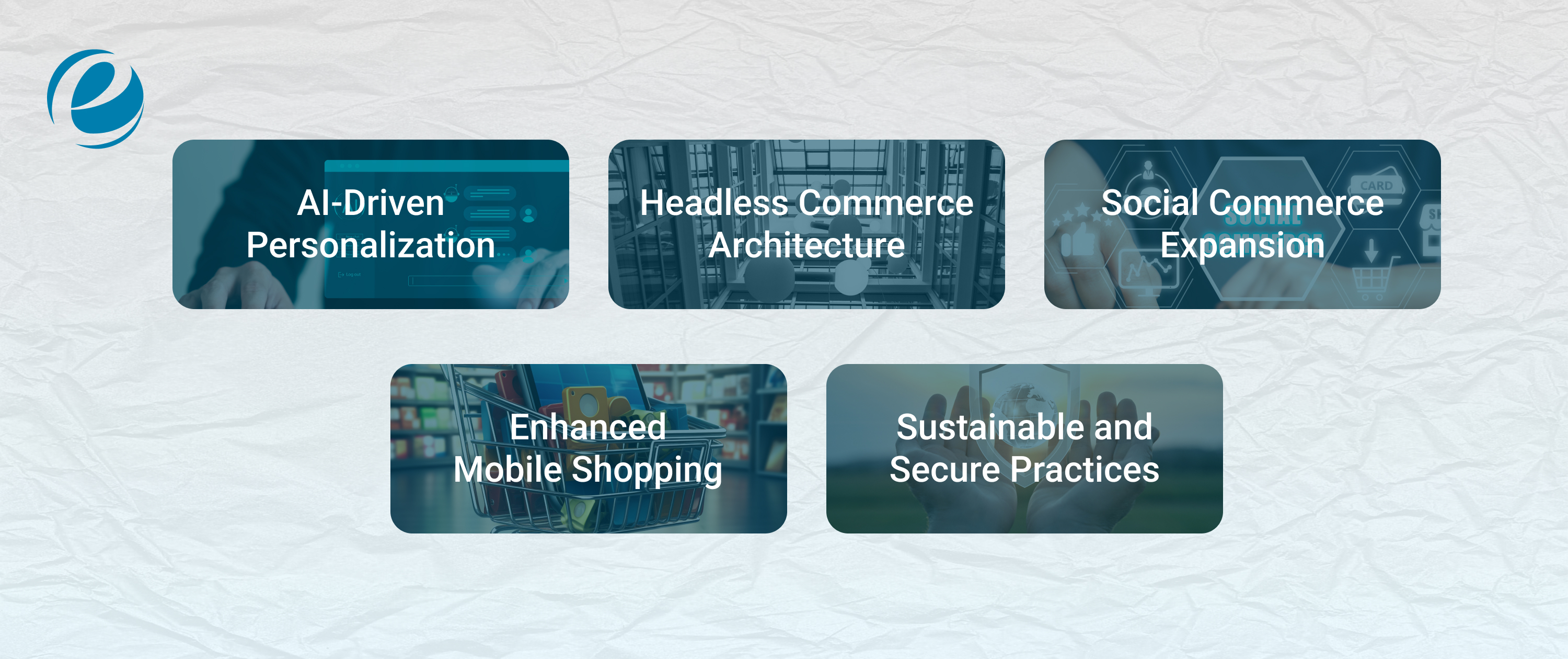
1. AI-Driven Personalization
Shopline and Shopify are both working on the incorporation of AI tools to provide product recommendations that are more relevant to the shopper’s interest, to create advanced automated marketing, and to enable a more customer-centric help desk. With AI, the stores can redefine the entire shopping experience to fit the individual, and thus increase customer engagement and sales.
2. Headless Commerce Architecture
Greater customization and frictionless omnichannel experiences spanning websites, applications, and IoT devices can be achieved through the removal of the front-end user interface to eCommerce management from the back-end. Merchants require a lot more flexibility, and Shopify is putting a lot of resources into headless commerce solutions to serve that need.
3. Social Commerce Expansion
The trend of integrating social media platforms for direct sales is increasing day by day. Shopify widely supports shoppable posts and influencer collaborations, whereas Shopline concentrates more on regional social platforms such as WeChat and LINE, thus helping merchants to unlock the social buying trend.
4. Enhanced Mobile Shopping
The fact that mobile traffic has increased leading to online shopping, both platforms have prioritized mobile-first designs, fast loading times, and simplified checkouts to push conversion rates on smartphones and tablets.
5. Sustainable and Secure Practices
Well, alternating brands that prioritize environmentally friendly packaging and secure payment methods will be noticed by consumers. Consequently, Shopline and Shopify are changing operational procedures to become more eco-friendly and implementing security procedures to cultivate trust and loyalty from environmentally conscious shoppers.
The change from Shopify to Shopline and their capacities to provide to the evolving state of trends signifies that eCommerce continues to evolve and influence the ways in which businesses can deliver innovative, time-efficient, and customer-centric shopping experiences in 2025 and beyond.
Shopify or Shopline? Which Platform is Better for Your eCommerce Business ?
Still confused about choosing between these two, which platform is better for your online business? Well, there is so much the same between features and marketing tools, it is only normal that you are not quite sure of your choice. So instead of just taking into account traditional features, why not take a look at some other factors that will help you distinguish a Shopline vs Shopify decision?
1. Omnichannel Hardware Integration
Shopline merges the hardware system with its POS to make the online and offline parts of the store, which is convenient for those who have a web business as well as a stationery one. Though Shopify also provides POS, there is a possibility that apart from the hardware, you might have to bear extra money and spend time on the setup.
2. Built-in Live-Streaming & Social Sales
Shopline delivers the free live-streaming feature for product launches and events, and an easy chat commerce tool that takes in customers from Asia socials like Facebook and Instagram. These help the immediate sales promotion run smoothly, and also, the platform does not charge any fees to the seller or the buyer.
3. All-Inclusive Themes & Communication Tools
Every single theme that Shopline offers is free and comes with full customization. Also, the built-in messaging hub not only encourages customer conversations but also supports communication with customers through WhatsApp, Facebook, Telegram, and multiple other channels without any hassle. Meanwhile, the premium customized theme of Shopify might not only be expensive, but also, if you want to have a similar communication feature, it will probably require you to get an extra plugin.
4. Simple Global Expansion Toolkit
Shopline is highly recommended for rapid runs and testing in new Asian markets as it allows merchants to handle multiple local gateways and logistics from day one. On the contrary, there are more third-party dependencies for a similar reach in those regions if you are using Shopify.
5. Total Cost of Ownership & Vendor Coordination
Shopline’s all-in-one approach translates into less reliance on external vendors and probably reduced total expenses for small teams with limited resources. While Shopify’s ecosystem is perfect for users needing the most customization options, it can make managing multiple vendors necessary and thus add complexity to their operations.
| Feature | Shopline | Shopify |
| Starting Price | $19/month (more affordable) | $39/month (higher starting price) |
| Themes and Customization | User-friendly with essential templates | Thousands of themes & extensive customization |
| App Ecosystem | Limited but focused on essential apps | Large ecosystem with 8,000+ apps |
| Regional Focus | Strong in Asia with localized payments | Global reach with multiple currencies |
| Marketing Tools | Social media integrations & smart ads | Advanced SEO, email marketing & automation |
| Payment Gateways | Regional gateways like Alipay | Comprehensive worldwide payment options |
| Customer Support | Localized support, live chat | 24/7 worldwide support |
There is a certain balance between the two platforms, one in favor of the other depending on the different points of view: Shopify is powerful in terms of customization and global scale, whereas Shopline is more advantageous because it can be a cost-effective solution that is endowed with excellent regional features. It is always a matter of business size, target audience, and the specific needs of the latter to make the right choice.
How We Can Help You Choose the Right Platform?
At Emizentech, we pride ourselves on understanding your unique business needs first. By working with you, we evaluate your goals, budget, and target audience and, with that information, we find the right eCommerce platform for you, be it Shopline or Shopify. Just by trusting our vast experience in ecommerce app development and Shopify store development, the platform selection process is made easier for you, so that you can instead dedicate yourself to your business growth.
We don’t just stop at recommendations.
As a top Shopline Development Company, we provide the client with all the development and implementation services, along with the trust that our services deliver. We not only design the user-friendly store but also ensure the integration of smooth payment and shipping solutions. This is how our professional developers actually do the job of optimizing your future and online store for the digital market. Not only do we provide you with ongoing support and hold the key to your success by revealing the secrets of the eCommerce business, but we also take care of your place in the competitive digital marketplace.
Final Words
Choosing between Shopline and Shopify depends on your specific requirements and target market. Shopify is a widely recognized platform with plenty of customization options, thousands of apps available, and strong marketing abilities. If you want to expand internationally, Shopify is definitely a good option. Shopline is a value-based and localized platform, so if you are an Asian business with regional payment and shipping needs, you will get an ideal solution from Shopline, especially if you are a startup or small business and just want a simple but effective platform.
Both platforms also offer user-friendly interfaces, secure and reliable payment gateways, a multi-channel selling option, and marketing abilities. On price, Shopline makes sense for more small-scale operations, as it offers lower pricing schedules. At the same time, Shopify is more expensive and has higher-priced packages for bigger stores with many more features.
Understanding your goals and priorities for growth will help you make the best decision for Shopline vs Shopify. Additionally, working with a professional Shopline Development Company, like Emizentech, will eliminate some risk working on your own and also provide a smoother start to your eCommerce journey.
FAQ’s
What is the main difference between Shopline and Shopify?
Shopline is focused on the Asian markets with more affordable price points and localized payments and shipping. Shopify is a world leader with a lot of depth in customization, thousands of apps, and strong marketing support.
Which platform is more affordable?
Shopline is typically more reasonable in price, ranging from the start, which is affordable enough and perfect for startups and small businesses. Shopify doesn't have reasonable price plans, but that's because it has advanced features with scalability.
Can I customize my store easily on both platforms?
Shopify has significantly more themes and apps to customize deeply, whereas Shopline will only offer much simpler, out-of-the-box templates aimed for ease of use in quick set-up.
Is customer support available on both platforms?
Yes, Shopify support is represented all over the world and offers 24/7 support. Shopline provides localized support, along with live chat and FAQ support.
Can I switch from Shopline to Shopify or vice versa?
Yes, but it will require planning and, most of the time, technical assistance to help transfer over your data, design, and integrations to your new store smoothly.
Beta feature
Beta feature



 +1 (989) 535-9295
 info@emizentech.com
 emizentech


