 Add us as a preferred source on Google
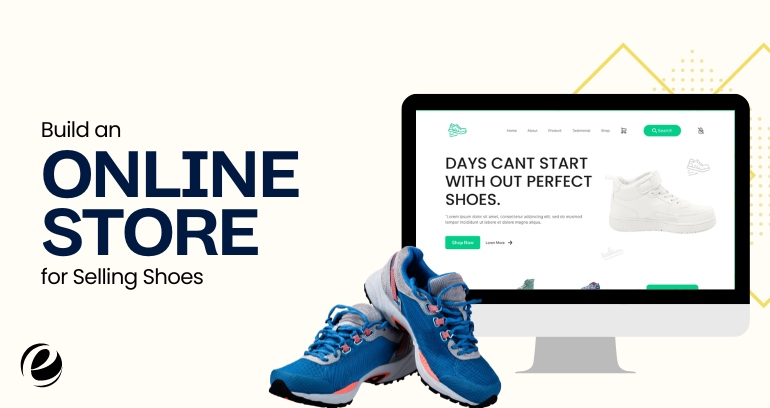
Are you looking to build an online store for shoe selling? Are you passionate about footwear selling and have the relevant business sense? If so, then developing a shoe store can help you reap the rewards.
| According to Straits Research, the global eCommerce footwear market is expected to be valued at $211.87 billion by 2032, at a CAGR of around 7.25% in the forecast period of 2024-32. |
How to sell shoes online and make money?
This guide will walk you through the crucial steps to develop an online shoe selling store, from choosing a platform to designing your website.
Let’s get started!
What Is An Online Shoe Store?
An online shoe store is a digital platform that lets customers browse, choose, and buy footwear while sitting at their homes. It performs as a virtual storefront where businesses can exhibit their shoe collections, offer product descriptions in detail, and allow secure online transactions. Such stores hold a different range of small stores to multinational retailers.
Why Build An Online Store To Sell Shoes?
If you still need clarification, this section will put forth the latest facts and figures about the market to let you know why you should go for shoes selling online store development.
- The global online shoe market revenue is expected to grow by approximately 39% by 2028.
- Through eCommerce stores, shoe sales are anticipated to hit $157.06 billion by the end of 2028.
- The Indian footwear eCommerce market is predicted to hit $5,208.8 m in revenue by the end of this year.
- The online shoe market is projected to expand by 35% by 2027, taking roughly 3.8% from the physical retail.
- Global online shoe sales are likely to boost by a CAGR of 6.8 by 2028.
The statistics we’ve gathered are a testament to the fact that the online shoe market is a thriving industry with a promising future. By developing an online shoe-selling store, you can tap into this growing market and secure a considerable market share.
Benefits Of Developing An Online Store For Shoe Selling
Developing a shoe selling app is profitable. Here, we will check whether starting a shoe business online can be promising for customers and business owners.
For Businesses
| Benefit | Explanation |
|---|---|
| Increased Reach | Online stores have the potential to reach a global audience, expanding your business. |
| 24/7 Accessibility | Customers can shop anytime, anywhere. You will get sales round-the-clock. |
| Lower Overhead Costs | Reduced expenses compared to physical shoe selling stores (utilities, rent, staffing). |
| Flexibility | Easily update products, costs, and marketing strategies. |
| Data-Driven Insights | Track customer behavior, purchasing habits, and preferences. |
| Environmental Benefits | Minimize transportation and waste. |
| Reduced Inventory Costs | Carry less stock and meet orders as needed. |
For Customers
| Benefit | Explanation |
|---|---|
| Convenience | Shop from home or anywhere at any time. |
| Price Comparisons | Compare prices easily across different stores. |
| Wider Selection | Access a wide variety of shoe brands and styles. |
| Customer Reviews | Read reviews, ratings, and feedback from other customers before purchasing. |
| Personalized Recommendations | Get tailored product suggestions. |
| Secure Transactions | Enjoy safe and trustworthy payment methods. |
| Easy Returns and Exchanges | Convenient to return or exchange items. |
Thus, if you have any doubts and are wondering if starting an online shoe store would be profitable, you might clear them up by reviewing the stats and benefits.
Types Of Online Stores To Build For Shoe Selling
When deciding to build a shoe selling store, it’s essential to pick the type of store that suits your business objectives, product offerings, and target audience.
Check some of the popular options for types of online stores to build for shoe selling.
1. Single Brand Online Store or Ecommerce Website
An online store is built to sell a specific brand of shoes. In this store, the business will promote and sell a particular brand of shoe. Such a platform or store is built to encourage and grow the specific brand’s customer base.
2. Multi-Brand Online Store or Marketplace Platform
In the multi-brand online store, the entrepreneurs or multiple sellers sell shoes from different brands under one roof. The customers will get a variety of shoes in a variety of styles. Such stores have better chances to increase sales and generate more customer base.
3. Niche-Specific Online Store
It means creating an online shoe store that sells shoes based on their type or category. Suppose the store sells just athletics shoes, sneakers, sports shoes, vegan shoes, handmade shoes, etc.
4. Customized Shoe Online Store
The word “customized” itself tells its objective. Customers get customized shoes from such stores according to their needs and demands. Such stores make designer shoes and craft creatives, add cushion pads, or style them. Also, they allow customers to create shoes per their design & style choice.
5. Reselling Online Shoe Store
Everyone can’t buy expensive branded shoes. Here comes the reselling of online stores. Customers can purchase second-hand branded shoes through the stores at a lower price. These shoe reselling stores are in high demand as they meet the desire of customers to wear expensive shoes within their budget.
6. Rental Shoe Store
People love changing their shoes frequently. Every time, the budget doesn’t allow for the purchase of fresh and expensive shoes. You can build a rental shoe store to meet customers’ requirements. These stores are specially created to put expensive shoes on rent. The rental amount can be according to days, weekly, or monthly, as per the customer’s requirement.
7. Social Media Store
Social media platforms, such as Facebook and Instagram, allow businesses to create their account in the face of online shops. Thus, they can conveniently sell shoes to their social media followers.
8. Dropshipping Store
Dropshipping is one of the best ways to sell shoes that don’t mandate inventory management. The store owner partners with suppliers, who, on receiving orders from their business partners, shop directly and ship products to the customers. That’s why it’s a low-risk mode to start an online shoe store.
Your choice of online store type relies on your business goals, available resources, and target audience. While choosing, be careful and choose the most suitable platform.
Also Read: Develop A Custom Shopify Dropshipping App

Features To Consider For Building An eCommerce Store For Shoe Selling
While you build an app or website to sell shoes, you need to include features to make your platform helpful and let it perform as expected.
We have created a table of significant features you can include.
Must-Have Features
| Feature | Description |
|---|---|
| User-Friendly Interface | Intuitive navigation, precise product images, easy-to-understand description, and straightforward checkout process. |
| Product Search | Let customers search for the exact shoes they want by brand, size, style, or price. |
| Mobile Optimization | Ensure an easily accessible store with perfect functioning on various devices. |
| Detailed Product Descriptions | Incorporate accurate details about features, materials, sizing, and care instructions. |
| Product Filters | Provide various options to filter products based on multiple criteria (e.g., material, color, price range). |
| Secure Payment Gateway | Offer secure and reliable payment options (e.g., credit cards, PayPal). |
| High-Quality Product Images | Use clear images from different angles. |
| Guest Checkout | Allow customers to buy shoes without creating an account. |
| Shopping Cart Functionality | Permit customers to add items to their shopping cart and proceed to checkout. |
| Customer Reviews and Ratings | Motivate customers to leave reviews, feedback, and ratings. |
| Order Tracking | Offer real-time order tracking details. |
| Return and Exchange Policy | Clearly draft the store’s return and exchange policies. |
| Wishlist Functionality | Facilitate customers to save products for later purchase. |
| Shipping Information | Offer accurate delivery times, shipping rates, and shipping options. |
Advanced Features
| Feature | Description |
|---|---|
| Personalized Recommendations | Suggest products according to customer preferences and browsing history. |
| Augmented Reality (AR) | Allow customers to try on shoes they choose virtually using AR technology. |
| Visual Product Configurator | Let customers customize shoes with different styles, colors, materials, or features. |
| Loyalty Program | Reward repeat customers with points, discounts, or exclusive offers. |
| Social Media Integration | Connect with various customers on social media platforms and let them share products. |
| Multi-Language Support | Create a store that incorporates different languages to reach a wider audience and ease their shopping experience. |
| Multi-Currency Support | Accept payments in various currencies to meet the needs of international customers. |
| Live Chat Support | Provide real-time customer support via live chat. |
| Abandoned Cart Recovery | Send reminders to customers who have abandoned/ left items in their cart and are a few steps away from completing their purchase. |
| SEO Optimization | Optimize the store’s structure and content for search engines to enhance visibility. |
| Email Marketing | Send targeted email campaigns to promote products, increase sales, and provide special offers. |
| Integration with Inventory Management System | Seamlessly connect the online store with an inventory management system to easily track stock levels and automate operations. |
You can incorporate these features while you build a shoes selling store. So forth, you can launch a useful and anticipatedly performing platform.
Key Steps To Build A Successful Online Shoe Store
You should follow crucial steps to build a successful online store to sell shoes for money. A team of ecommerce developers can help you.
Below, we have showcased steps that will help you create the best online shoes selling store seamlessly.
1. Market Research and Niche Recognition
Conduct deep market research to know what your target audience prefers, their demographics, and buying patterns.
Besides, check out what your competitors are doing and what not. Try embracing their strengthening aspects in your online shoe selling business, and work on their weaknesses that can drive opportunities for you.
As we have discussed, the show market operates in varied niches. You can choose according to your business objective, and that can make your store stand out.
2. Develop a Business Plan
Craft a complete business plan marking your objectives, marketing strategies, and financial goals.
Define your unique selling proposition, target market, and competitive advantages. Explore industry trends and analyze possible risks and challenges.
3. Choosing an Ecommerce Platform and Domain Name
Pick a suitable eCommerce platform that goes with your business requirements and budget. Consider top factors, such as ease of use, customization options, and scalability.
You can build your shoe selling stores with any platform – Magento, BigCommerce, Shopify, Shopware, and WooCommerce.
All platforms have the same purpose but differ in terms of features and functionalities.
Magento/Adobe Commerce- Magento is a renowned e-commerce platform known as Adobe Commerce Cloud, which is highly recommended by the tech-people. It is a well-versed service platform with a huge user base that can shop from thousands of stores. The platform provides flexibility with numerous features to customize the stores to sell shoes.
Shopify- Shopify is a high user-base platform where you can build a store in just a few minutes. For those looking for ways to open exclusive stores with high status in the marketplace, shopify is your suitable space. To make the most out of Shopify’s features and create a truly exceptional store, consider engaging the services of a reputable Shopify development company.
BigCommerce- BigCommerce is best suited for small and medium-sized enterprises (SMEs) to build e-commerce stores on a budget. The entrepreneurs must pay monthly fees to host their stores on the platform. Entrepreneurs need not worry about hosting problems because an expert BigCommerce Development Company will build the best for you.
Shopware- Try Shopware, an e-commerce platform for building online stores. Shopware service makes exceptional stores with manageable features. It is easier to use, especially for beginners. However, entrepreneurs can use its customized features to make required changes in their stores.
WooCommerce- WooCommerce will convert websites into incredible online e-commerce shops. Customers can build fully functional stores with all the necessary features. To achieve this, it is advisable to engage the services of a WooCommerce development company.
Weebly- Weebly is also a widely-recognized platform for building websites, including online stores. It provides a user-friendly interface and various customizable templates to let you create an online store with a professional look. You don’t need extensive technical knowledge to build a shoe selling store with Weebly.
Besides, remember to pick a relevant and easily memorable domain name reflecting your brand.
4. Designing Your Online Store
Develop a visually aesthetic and user-friendly online store that is well-optimized for varied mobile devices and operating systems. Embrace best-quality product images and precise descriptions to showcase your products (shoes here) perfectly. Remember to provide a smooth checkout process to diminish cart abandonment.
5. Product Selection and Sourcing
Carefully curate product listings that can drive the target audience. Partner with reliable suppliers who provide top-quality shoes at the best prices. Additionally, a well-organized inventory management system should be implemented to keep away stockouts or overstocking issues.
6. Pricing Strategy
Create a pricing strategy that can meet customer affordability and profitability. Consider the factors such as shipping fees, production costs, and competitive pricing. Offer discounts and promotions strategically to drive customers and boost sales.
7. Marketing and Promotion
Utilize varied marketing channels to reach the target audience effectively. Use social media platforms to increase customer engagement, optimize websites for SEO, and opt for paid advertising campaigns. Create an email list to foster customer relationships and promote your shoes.
8. Customer Service
Offer the required customer service to increase customer loyalty and build trust. Promptly respond to concerns, identify customer concerns, and provide easy exchange and returns.
Encourage customers to give feedback, reviews, and testimonials to enhance your online reputation.
9. Analyze and Optimize
Constantly monitor your online shoe store’s performance, leveraging analytics tools. Track key performance metrics like sales, website traffic, and customer engagement. Conduct data analysis to address areas of improvement and accordingly optimize the store. Stay updated with the latest industry trends and enhance your strategies to stand out.
By following these steps, you can build an online shoe store that can flourish in the market with increased sales and revenue.

Cost To Build An Online Store For Shoe Selling
The cost to build an online store for shoe selling relies on varied factors, such as:
- Ecommerce platform fee
- Hosting
- SSL certification
- Ecommerce designs
- Payment processing cost
- Testing
- Support & maintenance after deployment, etc.
To get assistance on how to start an online shoe business, you should consult with developers and an e-commerce development company. They will help you with the cost of creating an e-commerce website or app and the essential timeframe required with every other relevant factor.
The average cost to build an online store to sell shoes will start from $20,000 and go up to $200,000. The advanced features and functionalities, complexity, and cost a bit more.
Tools And Tech Stack Required For Online Store Development For Shoe Selling
Creating a revenue-making online shoe store needs a robust technological base. Also, the choice of suitable tools and technologies can improve customer experience, streamline processes, and drive sales.
Let’s check out the tools and technologies you can choose for your online shoe selling store.
| Tool/Technology | Description |
|---|---|
| E-commerce Platform | The basis of your online store (e.g., WooCommerce, Shopify, Magento). |
| Hosting Provider | It offers space for your e-commerce website on the internet. |
| Content Management System (CMS) | Easily handles website content, including product images, information, and blog posts. |
| Payment Gateway | Securely processes online payments (e.g., PayPal, Stripe). |
| Domain Name | It’s your website’s address on the internet. |
| Inventory Management System | Seamlessly tracks product stock levels and automates order fulfillment. |
| Shipping Carrier | Manages product delivery (e.g., FedEx). |
| Email Marketing Software | Sends customer-targeted email campaigns. |
| Customer Relationship Management (CRM) Software | Handles customer interactions and data. |
| Design Tools | Used to create website layouts, branding elements, and graphics. |
| Analytics Tools | Tracks user behavior, website traffic, and sales performance. |
| Security Tools | Safeguards your online store and customer data from cyber threats. |
| Development Tools | For coding and customizing the website (e.g., HTML, CSS, JavaScript). |
| SEO Tools | Optimizes your online store for search engines to increase visibility. |
| Social Media Management Tools | Helps handle your social media presence and increase engagement with customers. |
Make the best of the latest tools and technologies. You can build a robust online shoe store. You can consider this tech stack to easily manage your inventory, effectively engage customers, seamlessly process orders, and optimize your store.
Latest Tech Trends Can Be Followed In Online Stores For Shoe Selling
Staying updated with the latest trends demands online places to sell shoes that can make you stay competitive and offer unique customer experiences.
By embracing innovative technologies, businesses can improve their operations and drive new customers and sales.
Staying updated with the latest trends demands online places to sell shoes that can make you stay competitive and offer unique customer experiences.
By embracing innovative technologies, businesses can improve their operations and drive new customers and sales.
| Trend | Description |
|---|---|
| Augmented Reality (AR) | Permits customers to virtually try on shoes, offering an enhanced immersive shopping experience. |
| Voice Commerce | Let customers shop conveniently using voice commands. |
| Artificial Intelligence (AI) | Facilitates inventory management, personalized product recommendations, and customer service. |
| Mobile Optimization | Ensures the store is completely optimized for mobile devices, meeting the needs of the increasing number of mobile shoppers. |
| Chatbots | Offer instant customer support and revert common queries. |
| Blockchain Technology | Ensures transparent and secure transactions, especially for luxury brands. |
| Social Commerce | Seamlessly integrates social media platforms with the ecommerce store, allowing smooth shopping experiences. |
| Sustainable Materials and Eco-Friendly Practices | Identifying rising consumer concerns regarding environmental sustainability. |
These latest tech trends can make your online shoe selling store stand out and boost sales.
Monetization Of Online Store For Shoe Selling
There are various ways to earn money from online stores for shoe selling. To monetize from an online store, like-
1. Cost for Advertisement
Earn from the advertisement cost. If the store runs ads for any brand, then advertisement cost is an excellent way to monetize the store efficiently. The cost of advertising for one brand is profitable for both the brand and the store.
2. Subscription Fee
Apply a subscription feature in the online store, which provides more discounts, offers, and rewards on every purchase. The subscription fees will be the income of the online store. So, a subscription system should be installed in the store.
3. Cost on Every Purchase
The online store can make money through the cost of every sale. The store can demand the brand to give a certain percentage of the total cost on every purchase. A certain amount on each order is a good process to monetize.
4. Collaborate with Other Brands
There are a number of shoe brands that exist in the marketplace. Providing an online store to shoe brands takes a certain cost for collaboration. Cost is a source of monetization of the store and revenue generation.
5. Delivery Charges
The store will demand delivery charges as well, which is also a great way to monetize and earn well through the store.
How Can EmizenTech Help You In Developing An Online Store For Shoe Selling?
How to start an online shoe store business? If you are wondering how to get started, partnering with reliable eCommerce development services can help you build a professional, user-friendly, and scalable online store.
EmizenTech, a leader in eCommerce development, offers solutions for online selling by building web and mobile apps for a worldwide clientele.
Key Highlights of Choosing EmizenTech
- Clutch Awarded
- Competitive Pricing
- On-time Delivery
- Custom eCommerce Development Services
- In-budget Solutions
- Team of Expert eCommerce Developers
- Ongoing Support and Maintenance, etc.
Real-Time Ecommerce Development Projects by EmizenTech
1. Rebellious Fashion – Shopify Ecommerce Store
EmizenTech created a successfully running women’s fashion store with Shopify that meets the fashion needs of women worldwide.
2. Buitanda – Magento B2B Marketplace (Ecommerce Website and Mobile App)
Wholesale products selling store in Angola, Buitanda is a comprehensive online marketplace that facilitates multiple sellers connecting with suppliers and warehouses.
3. Shisha King – Ecommerce Store for Shisha and Water Pipe Accessories
It is one of the largest online stores for selling shisha and water pipe accessories, satisfying varied relevant customer requirements for over ten years.
Connect with EmizenTech and get your website for selling shoes or mobile apps incorporating the features and functionalities that can thrive in the market.

Conclusion
Developing a successful online shoe store demands perfect planning, thoughtful execution, and a good knowledge of your target market.
By following the steps we discussed, you can create a platform that generates increased revenue and meets customers’ requirements. Besides, constant monitoring of your store is crucial to ensure long-term success.
If you find it complicated and can’t get an idea about how to start a shoe business online, hire a team of ecommerce developers.
Contact an ecommerce development company that’s dedicated and follow the right strategies to turn your online store into a rewarding venture.
FAQs
Q. How Big and Profitable Is the Online Footwear Market?
The global footwear market will likely cover a revenue of $489 billion in 2024 and a CAGR of around 2.21% from 2024-2029.
Q. How do I start building an online store for selling shoes?
If you want to build an online store for selling shoes and make money, consider a few things-
1. Create your own personalized store; otherwise, find the e-commerce platform to build an online store.
2. Find the niche and analyze the competition for the same in the marketplace.
3. Decide on which business model you want to deal in. (Business Model – Wholesale Commerce or drop shipping).
4. Find the best development team to build the online store. Look for the experts working in Emizentech, and get an up-to-mark store with advanced features as well.
5. Consult with the developers and find the best online store development company.
6. Do not forget to take after-deployment services for support and maintenance.
Q. How can I market my online shoe store and attract customers?
If you want to market online store for shoe selling, then try these-
1. Influential marketing
2. Social Media Marketing
3. Run Loyalty Programs
4. Do Promotions
5. Provide Discounts and Offers to the customers
Q. How can I track the performance and success of my online store?
You can track the performance of your online store through Google Analytics and Google Search Console. Also, you can build CRM Tools like Salesforce. These all will help to know about what’s running in the business like conversion rates, return rates, bounce rates and many more. Afterwards bring the required changes for the best possible results.
How long does it take to build an eCommerce store for shoe selling?
A basic, simple eCommerce store may take a few weeks to build. Extensive customization or advanced integration may take more months. It’s because you will need to devote more time to development, quality testing, and launching your shoe selling store.



 +1 (989) 535-9295
 info@emizentech.com
 emizentech


