 Add us as a preferred source on Google
 Have you ever wondered whether to start an E-Commerce business or a Retail Store
Have you been discussing whether starting an e-commerce store or a conventional retail store is the best option for your business? There are numerous choices in the current marketplace, and understanding key distinctions will help determine which of the two different business models is going to be right for you.
This blog will compare and contrast the characteristics of e-commerce and retail stores and look at recent trends in both types of stores. Additionally, we’ll also look at the business models commonly used by successful sellers. Whether you’re a first-time entrepreneur or looking to grow your existing business, hopefully, this will provide some clear observations as you consider the world of online and offline retail.
Market Statistics and Future Forecast for E-Commerce and Retail Stores (2025-2030)
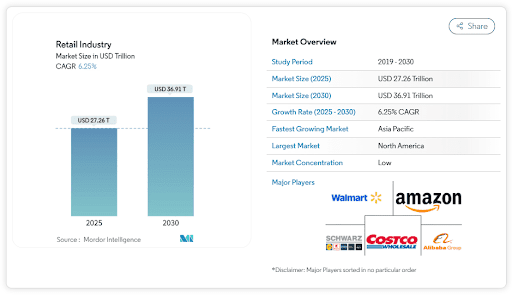
According to Mordor Intelligence, it is expected that the global retail industry will reach nearly $27.26 trillion in 2025 and about $36.9 trillion by 2030, with an almost assured rate of growth in online and mobile commerce buying at a compound annual growth rate (CAGR) of over 11%, which is a clear shift to digital sales alongside traditional retail.
The e-commerce platform market is expected to double from ‘just under $9 billion in 2025’ to over $16.5 billion by 2030, with a CAGR of 12.7%. This growth is a direct result of a rapid acceleration of smartphone user adoption because of personalization in shopping experiences that deliver access and convenience to digital experiences.
According to Grand View Research, the global e-commerce market was valued at $25.9 trillion in 2023 and expected to reach $83.3 trillion by 2030, with a CAGR rate between 2024 and 2030 approaching 19%. Some of the trends influencing growth in the e-commerce market are mobile commerce, secure payment platforms, and risk stemming from social amplification by social media.
Similarly, the global smart retail market (advanced technology used in physical retail stores, or AI & IoT to track and manage inventory and customers) is expected grow from around ~$43 billion in 2024 to over $450 billion in 2033 at a CAGR over 30%, which showcases the substantial amount of innovation that modern physical retail requires in light of these changes (Source: Grand View Research).
What is a Retail Store?
A retail store is a place (physical or virtual) where products or services are sold directly to consumers for their personal use. This represents the final step in the supply chain, sending products and services directly to customers or end users (the last stop for a product). In a retail store, there are basic categories like brick-and-mortar, pop-up, and online, which all provide shoppers with direct access to multiple items. Retail stores make efforts to ensure a pleasing atmosphere when shopping, provide personalized customer service, and help consumers make informed buying decisions.
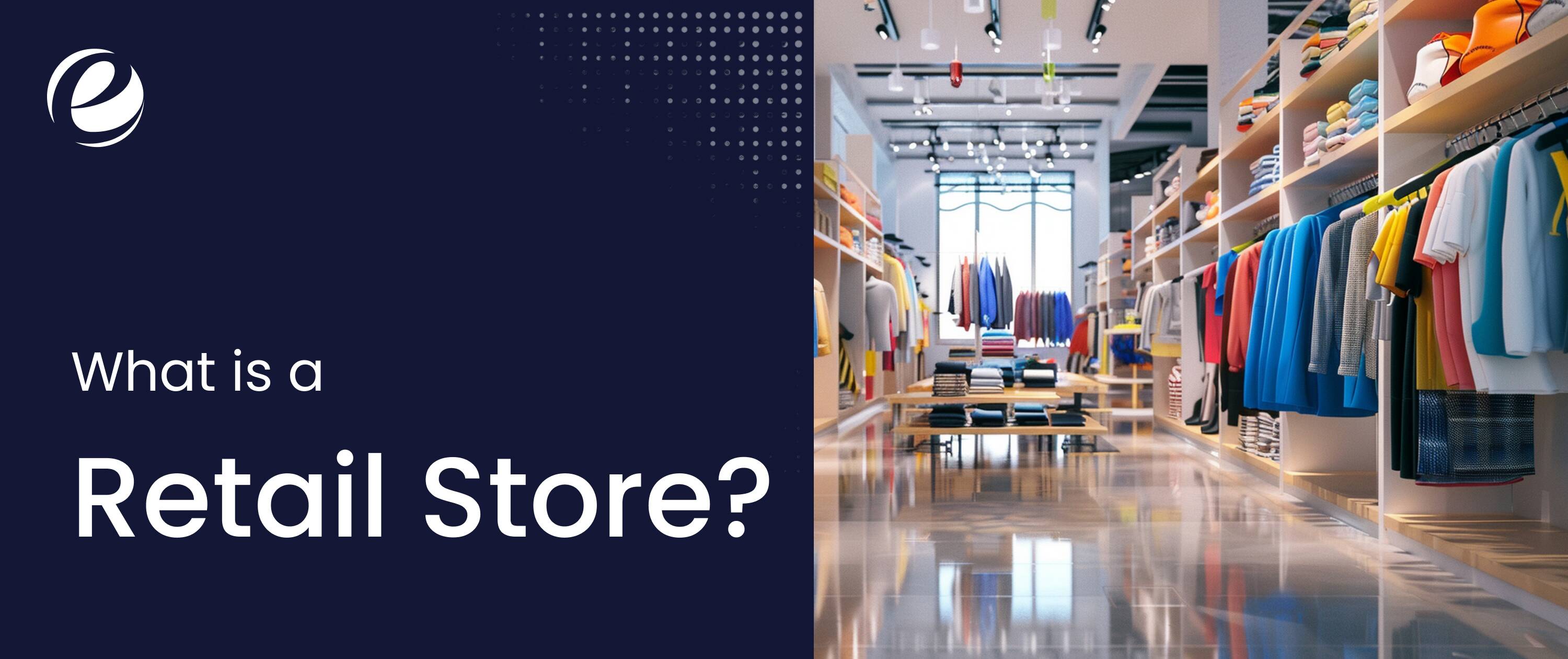
Retail stores represent where purchases are made, and they help create jobs. Even more importantly, retail stores help stimulate consumer spending. The location, the layout, product line offerings, product assortment, and knowledgeable retail sales staff are all important to the overall shopping experience. Many retail stores sell food, clothing, electronics, or just about everything used on an everyday basis. If there are retail stores in your area, they are designed to make purchasing everyday items easier and more convenient.
Key Highlights
- Direct Sales: These are retail stores that sell products and services directly to the end customer, and not a business.
- Physical or Virtual: Retail stores can be physical brick-and-mortar locations or virtual online locations.
- Consumer Focused: The intention of retail is to sell directly to the customer and satisfy their personal or household needs.
- Variety: Retail stores sell products from a completely open selection, a load of consistent products, not limited to food, clothing, electronics, etc.
- Customer Experience: Retail margin is really small and substantial.
What is an E-commerce Store?
You must be curious to know what ecommerce and how does eCommerce work? Well, an E-commerce store is a website or app where products or services can be sold over the internet from a seller to a customer. Shoppers consider these online stores because they are able to view product options, place orders for the products, and pay for them online without setting foot into a physical location in most cases.
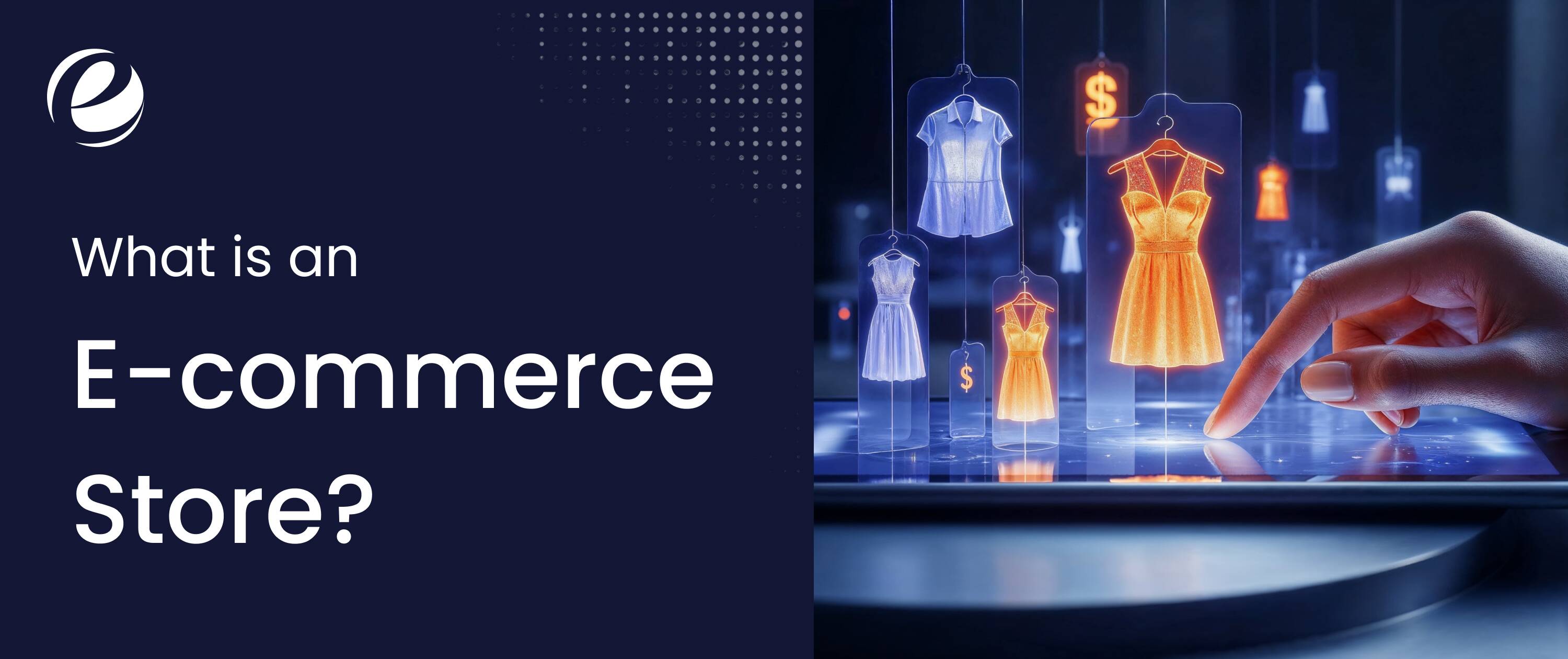
The seller and customer could read, look at pictures, and videos of a large variety of products online from the comfort of their own personal devices, shop, and ultimately purchase products from the seller of the customer’s choice without going to a home or store.
E-commerce stores can be found on websites or apps where customers can purchase items online through a secure checkout process. Sellers can operate either online as a business or maintain a physical store or a combination of both. A wide range of shoppers are shopping online every day; consequently, e-commerce stores are becoming more important than ever to the everyday overall shopping experience.
Key Highlights
- Online Shopping: A product or a service is ordered and paid for using the internet.
- Accessible Anywhere: The customer is able to order his or her products using the internet from any place or time.
- Wide Product Range: E-commerce websites are able to provide both physical and digital products, as well as services.
- Secure Transactions: Online payment gateways are safe for purchasing.
- No Physical Visit Needed: Orders are completed and delivered without the need for any type of visit.
E-commerce vs Retail Store: Features You Should Know
E-Commerce vs Retail store are the two main ways that people purchase products nowadays. Visiting a physical store or shopping via e-commerce websites has necessary functions that determine the customer experience and the business model. Being able to distinguish the features helps both customers and business owners make better decisions and cater to their requirements and preferences.
Features of E-commerce
1. Shop Anytime, Anywhere
E-commerce is open 24/7, which means that customers can shop at any time and place from anywhere they want, whether this is 3:00 a.m. or during their lunch hour. Since there are no store hours to worry about, consumers can purchase at their convenience and without any concern about their busy schedule.
2. Wide Selection
Due to the online nature of many e-commerce sites, it is possible to have millions of products and brands available in one location. This access to products also means that consumers can purchase products that may not be available in their area (e.g., exclusive products; variety of styles, colors, or sizes).
3. Convenient Delivery
After purchasing a product online, consumers can have the product shipped directly to their home, thus saving travel time and effort (i.e., especially with large or heavy items). Also, more and more retailers are offering rapid delivery or same-day delivery options.
4. Easy Price Comparison
E-commerce has changed the shopping experience to allow easy access for consumers to comparison shop for prices, read reviews from others, and find vendor ratings. With much less escalation in time, customers can make better decisions about their purchases and find deals, all from multiple retailers.
5. Personalized Experience
With data and AI being used to make tailored product recommendations and discounted offers based on product browsing and purchase history, online storefronts are now able to create personalized shopping experiences that are continuous and real for the shopper.
6. Low Overheads for Sellers
Sellers are no longer dealing with commissions of having a physical store or spending thousands on hiring an excellent workforce. This means sellers have lower overheads in traditional retailing, because sellers don’t have rent or utility expenses and have less in fixed costs associated with a retail workforce, which allows new businesses to open a more cost-effective and cheaper way to open an e-store and have a great product out on the marketplace.
Features of Retail Store
1. Hands-On Shopping
One of the main benefits retail has over ecommerce is the customers ability to touch, feel, try on, compare prospective purchases. These tactile attributes help the customer in assessing the quality of the product, fit, and appropriateness towards their final buying decision. Customers often feel much more comfortable making the final purchase of a quality product with a tactile experience in retail.
2. Instant Gratification
Customers in retail shops have an advantage in being able to obtain immediate take-home satisfaction, as they can leave a shop with an item for immediate use rather than face a delayed trip to the post office for pick-up. This is particularly valuable for urgent purchases that cannot wait or last-minute purchases.
3. Personal Interaction
Retail has the unique advantage of face-to-face interaction. Customers can ask questions, ask for recommendations, and get specialized recommendations and assistance from store associates. Come back to the previous point of sales associate knowledge, be recommended, and find items quickly. Think of the environment when working with a customer face-to-face; they are seeing immediate responses from the associates without any hesitation, which facilitates trust and ultimately leads to shopping.
4. Local Community Presence
Retail supports the local economy by creating jobs and providing positive support to the community. They can generate community activity, as they can hold events and offer deals where stores/communities can bond and strengthen those community connections and loyalty.
5. Immediate Returns and Exchanges
The frustrations of shipping returns and waiting can almost always be avoided with most retail exchanges. Even though the exchange or return took place while shopping, the processing of an in-person return or exchange is a faster process for the customer.
6. Visual Merchandising
Coordinated product displays and the storefront can make shopping fun and inviting. The neatly defined assortments of products and the present organization of the store have been intentionally orchestrated to encourage purchasing while being enjoyably manipulated to increase store revenues.
Future Trends in E-Commerce vs Retail Store
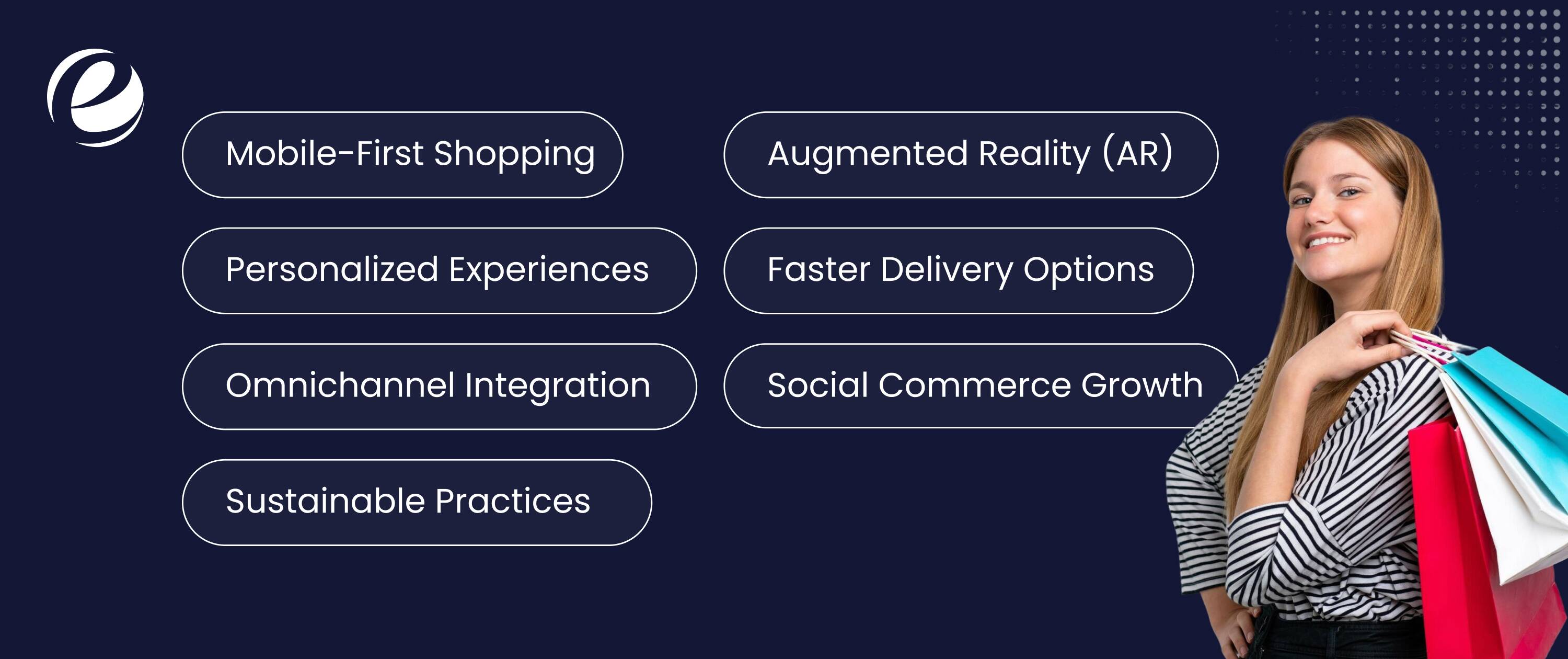
Well, the pattern of how people shop and how businesses sell the product is changing, and customers and businesses have both adopted the technology for better improvement and growth. Both e-commerce and retail stores have their own unique challenges, and blending both has its own unique challenges. A business is able to effectively cater to the needs of its customers if and only if it understands the demands of its customers and is able to fulfill them in the most effective way possible.
1. Mobile-First Shopping
Conducting trades with the help of tablet or smartphone devices is becoming an ever increasing norm, so shopping sites are developing their offers with an emphasis on mobile access. This allows one to shop on the go with even greater speed and convenience.
2. Personalized Experiences
As a result of AI and data analytics, shopping will provide even more tailored products and shopping offers, increasing the relevance and the ‘human touch’ of shopping.
3. Omnichannel Integration
Consumers are beginning to take an integrated approach regarding utilizing online and offline channels, in regard to being able to buy a product online and then pick it up in store, and return using multiple channels (in-store or return online).
4. Sustainable Practices
Some consumers are beginning to notice sustainability in recycled and biodegradable packaging, energy use of retail store locations, and ethical sourcing of materials.
5. Augmented Reality (AR)
Shoppers will be able to try on clothing and furniture virtually through the use of AR technologies, making them feel more empowered about their buying decisions.
6. Faster Delivery Options
Same day and next day delivery services will continue to expand, and meet shopper demand for convenience and particular buying expectations regarding the speed of product delivery.
7. Social Commerce Growth
Buying and purchasing products directly from social media continues to resonate with more and more shoppers as they enjoy the socializing aspect and community of shopping and then purchasing products.
All of these trends will be characterized by the ways in which e-commerce and the retail store, driven by technology and consumer values, will increasingly develop a more convenient, personalized, and sustainable shopping experience.
As per the trend and future requirement of eCommerce store or shopify store then you can consider our other guides on shopify store development.
E-commerce or Retail Store: Which Business Model Works Best?
Choosing between an e-commerce store and a retail store is an important decision for any business. Both models have advantages and disadvantages, and the decision depends on the products, customers, costs, and long-term goals. Knowing these differences can help business owners choose the correct business model for future growth.
1. Reach
E-commerce stores can serve customers from virtually anywhere in the world as long as they have internet access. E-commerce stores have a wider geographic reach than local retail stores by overcoming the physical limitations of retail customer flows. Retail stores depend on local ground traffic, and their customer base is limited to their community or city.
2. Startup Costs
Starting an eCommerce business typically requires less money up front, because it does not require many of the costs like rent, utilities, or physical store preparation. Start-up costs are primarily sinking the costs of developing a website, developing marketing for your online business, and maintaining your inventory management system. Opening a retail store, on the other hand, requires an upfront cost, which can include leasing or purchasing real estate property, fitting the space, hiring staff, etc.
3. Customer Interaction
Retail stores provide face-to-face interaction, and e-commerce stores provide engagement through various digital channels of communication, chat support, email, or phone calls. Although these digital options offer engagement and prompt resolution, the type of bond that can be created in a retail store is challenging to establish with customers online.
4. Convenience
Aside from the ability to provide instant satisfaction, retail stores cannot provide the same convenience as e-commerce because e-commerce stores are open 24/7 for customers to shop and fulfill their needs when it is convenient for them. Retail stores operate during scheduled store hours that may not support the lifestyles of all customers.
5. Product Experience
One of the main advantages of retail stores is that customers have an option to see, touch, and experience products before purchase, which can help increase purchase confidence. E-commerce depends laboriously on product imagery, words, and sometimes video, but at the end of the day, customers cannot experience the product directly before they click purchase.
6. Delivery
With e-commerce, customers usually need to wait for shipping/delivery (often days, depending on services, but sometimes just a matter of hours). Retail stores provide customers with the opportunity to be in control of when they receive possession of the product by enabling them to take it home right after purchase without waiting time.
7. Marketing
E-commerce marketing takes a much broader approach through online advertising (such as social media ads), search engine optimization (SEO), and email marketing campaigns to a worldwide audience. Retail marketing focuses more on local visibility through in-store promotions, local ads, event promotions, and engaging with the community to reach nearby customers.
8. Scalability
E-commerce businesses are able to scale faster than retail businesses because online expansion comes down to increasing inventory and sales as opposed to real estate. Retailers must deal with real limitations concerning tangible space costs, and any expansion also involves building out a new location and all the costs involved.
Well, if businesses want custom apps, then they have to go for an on demand app development company that bridges the gap by offering custom solutions for hybrid shopping experiences.
| Aspect | E-Commerce Store | Retail Store |
| Reach | Global, anyone with internet access | Local or regional customers |
| Startup Costs | Lower (website, inventory management) | Higher (rent, utilities, staff) |
| Customer Interaction | Online chat, email, calls | Face-to-face, personalized service |
| Convenience | 24/7 shopping from anywhere | Fixed hours, requires physical visit |
| Product Experience | Photos, videos, descriptions | Physical touch, try-before-you-buy |
| Delivery | Shipping/handling time involved | Immediate purchase and possession |
| Marketing | Digital ads, social media, SEO | Local ads, events, storefront promotions |
| Scalability | Easier to scale with less physical limitation | Limited by physical space and location |
This E-Commerce vs retail store comparison will make it easier for both your customers and your business to share. It gives your business a perspective on what business model makes the most sense for your business, from your offerings, to how you will deploy resources, and of course, your customers’ preferences.
How EmizenTech Helps You to Build Your Own Online Store?
At EmizenTech, we realize the process of creating your own online store can be a daunting process for you, but we make it simple and easy! Our team goes deep into understanding your business needs to tailor a custom e-commerce solution for your business. From start-up to expansion, we are here to guide you every step of the way!
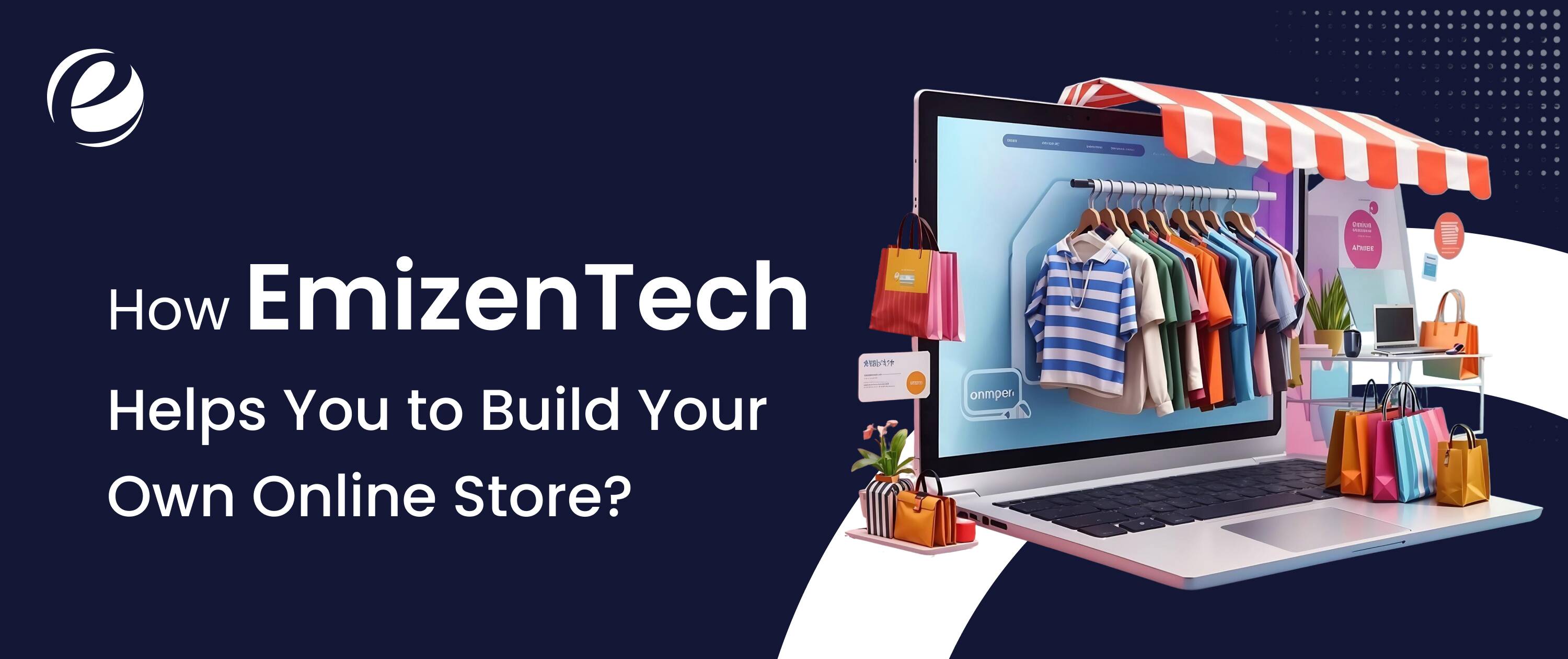
Our professional developers specialize in ecommerce app development, allowing you to focus on the products. We make sure to provide an e-commerce site that will optimize and convert visitors into sales while at the same time keeping things user-friendly and secure. Our experts take care of it all, designing an appealing look to your layout, integrating credit card payment gateways, inventory management systems, and all other services associated with running an online shop.
After your store is live, we continue to support and update when necessary to keep your business trending. Partnership is at the core of what we do; our relationship will continue to flourish even outside of the ecommerce store development. We want to provide support with ongoing changes to adhere to trends while keeping your business adapting to new technology. By working with us, you will not only have a website but also a team dedicated to your e-commerce success.
Final Words
E-commerce and retail stores have their own characteristics, trends, and business models to satisfy a variety of customer needs and business goals. As customers find value in understanding the various strengths of the E-Commerce vs retail store models, companies are also adapting to the customers’ purchasing behavior by starting to take advantage of both e-commerce and retail stores in a combined shopping experience to satisfy the evolving, agile expectations of today’s consumers.
Additionally, whether the particular business chooses to go with either a refined e-commerce model, a retail store, or a hybrid approach, keeping up with the technology and practice as required will help define the future of success under a sustainable model. Using the opportunities highlighted above will help you establish your business in the dynamic environment of commerce. Also you can go through a detailed eCommerce app guide which will help you to get know more about the ecommerce store development.
FAQs
What is the main difference between e-commerce and retail stores?
In the case of eCommerce, stores acquire their stock through dedicated websites or specialized mobile applications. On the other hand, Retail stores acquire their products through other physical outlets, thus catering to the end consumers.
Which business model costs less to start?
An eCommerce store requires less initial investment because there is no necessity to hire employees or lease out a shop for selling products and services.
Can businesses combine e-commerce and retail models?
Retailers benefit the most from a hybrid model since it gives customers the option to shop from a physical outlet and an online store.
What are some key trends shaping e-commerce and retail?
Some trends shaping both include mobile-first shopping, deliveries of augmented reality, sustainable practices, personal recommendations, and speedy deliveries.
How does customer experience differ between the two?
A customer in a retail store is able to physically examine the products and receive assistance from a sales associate. On the other hand, e-commerce is designed for ease of access, providing swift product searches and even automated, chat-based customer aid.



 +1 (989) 535-9295
 info@emizentech.com
 emizentech


