
 Add us as a preferred source on Google
Is your manufacturing business having a hard time keeping up with industry changes? In the current time, speed, efficiency, and adaptability, is even more crucial than ever. Old methods just don’t work as well anymore. That’s where Salesforce Manufacturing Cloud steps in to make things easier and smarter.
Salesforce Manufacturing Cloud is an easy-to-use, cloud-based platform made just for manufacturers. It helps businesses bring all parts of their production process together in one place. This makes it easier to see what’s going on, work better with others, and make smarter decisions. By using this platform, manufacturers can improve their processes and stay ahead of the competition.
But just using the platform isn’t enough. To get the most out of it, you need to understand how it works, explore the extra tools it offers, and set it up to fit your business needs.
In this blog, we’ll show you how Salesforce Manufacturing Cloud can change the way you do business. We’ll explain its features, the benefits it brings, and the steps to set it up the right way. If you want to improve your manufacturing business and grow, keep reading this blog till the end.
What Is Salesforce Manufacturing Cloud?

Salesforce Manufacturing Cloud is a platform created specifically for manufacturing companies. It is a part of the Salesforce system and has tools that help make operations easier, improve teamwork, and give a better view of the whole manufacturing process.
Flexibility is one of the greatest aspects of Salesforce manufacturing cloud implementation. You can set it up to fit your business needs. You can choose to use just the Sales tools, just the Service tools, or both. It also works well with the regular Sales Cloud or Service Cloud for even more collaboration.
With Manufacturing Cloud’s forecasting tools, businesses can predict demand, improve inventory management, and solve supply chain problems before they happen. This makes customers happier and helps the business grow and succeed.
Statistics Of Salesforce Manufacturing Cloud Implementation

Manufacturers are now focusing on tools that help workers work from home, improve connections in the supply chain, and make operations more transparent. This shift is all about building a stronger, more flexible business for the future.
Below, we’ll share some statistics that highlight how these changes are making an impact.
- A large number of manufacturers, 81%, believe moving their planning processes to the cloud is very important or a top priority.
- 60% of customers now prefer to interact online, and 88% expecting businesses to speed up their digital efforts, using Manufacturing Cloud has become more important than ever.
- In fact, 8 out of 10 manufacturers recognize that they need new strategies and tools to improve their forecasting accuracy.
- Salesforce for manufacturers increases sales by 22% & revenue by 25%. However, there are challenges. One in three CRM projects fails, and 43% of CRM users only take advantage of less than half of the system’s features.
Key Features Of Salesforce Manufacturing Cloud

Salesforce Manufacturing Cloud implementation services are getting popular in the manufacturing world because it helps sales and operations teams work together more easily. It’s designed to solve common problems and meet the special needs of manufacturers.
Let’s explore the main features and how they help achieve these goals.
1. Account Planning and Forecasting
Salesforce Manufacturing Cloud helps manufacturers plan and predict future needs by providing strong account planning and forecasting tools. With real-time data and smart analytics, manufacturers can anticipate customer demand, manage inventory, and solve supply chain issues before they happen. This enables better decision-making and helps companies grow steadily by reducing risks and ensuring they’re prepared for what’s ahead.
2. Sales Agreements
Sales agreements in Manufacturing Cloud create a clear view of customer relationships. This feature enables manufacturers to create, manage, and keep track of agreements during their complete lifetime. It makes sure that both the sales team and the customers are aligned with the information thereby increasing communication and trust. Sales agreements are a means of ensuring both parties are aligned on their expectations, thus permitting stronger, more reliable business relationships geared toward longevity.
3. Actionable Insights and Reporting
Salesforce for manufacturing industry provides powerful tools for tracking performance and monitoring sales activities. It helps manufacturers keep track of important information, like sales progress and goals, with customizable reports. Using real-time data, businesses can notice patterns, see how well they’re doing, and quickly change their plans to keep up with the market. This helps them stay flexible and make smarter decisions based on what’s happening right now.
4. Rebate Management
The Rebate Management feature makes it easier to manage rebate programs. Manufacturers can set up, track, and adjust rebate plans to match their business goals and encourage customers to stay loyal. Businesses tend to engage more deeply with customers by providing them with rewards for achieving sales goals, helping both the business and the customer grow.
5. Integration with ERP Solutions
Manufacturing Cloud easily connects with ERP systems and Order Management Systems from different companies. It uses pre-set APIs to link these systems, which makes it simple to share data and automate tasks. This allows manufacturers to operate faster and with greater efficiency by minimizing the manual work and integrating systems seamlessly.
6. Partner Collaboration Tools
Manufacturing Cloud Salesforce provides a customized platform for your partners to work together. Distributors and dealers can share information without risking confidentiality. This gives sales teams more time to focus on closing deals instead of managing partner relationships. It aids in creating deeper relationships with customers while ensuring secure operation of business.
7. Order Management and Fulfillment
Salesforce’s order management and fulfillment tools work smoothly within the Manufacturing Cloud to improve how orders are processed. It allows manufacturers to finish orders faster while also ensuring the customer has a smooth experience. This decreases errors by automatically processing orders, provides real-time tracking for better visibility, and ensures that orders move easily from production to delivery.
Benefits Of Salesforce Manufacturing Cloud Implementation

To stay ahead in the manufacturing industry, you need more than just good production. You need all your business processes connected, like sales, production, inventory, and customer service. Salesforce Manufacturing Cloud helps by increasing efficiency, forecasting capabilities and ensuring customer satisfaction.
Here are the top reasons to invest in Salesforce manufacturing cloud implementation:
1. Streamlined Business Operations
Salesforce for manufacturers brings different departments together to help them work better and communicate easily. This connected system improves business processes and makes sure information flows smoothly across all areas, like sales and supply chains. By breaking down barriers between departments, it reduces errors and helps everyone collaborate more effectively, leading to a more efficient business overall.
2. Optimized Service Delivery
Manufacturing Cloud Salesforce provides tools to improve service operations and boost customer satisfaction. It provides a unified platform, where manufacturing businesses can create and manage all customer requests and respond from there without missing any information. This minimizes the need to hop from one system to another. It also ensures quick warranty processing, reduces wait times, and smoothens scheduling maintenance visits which keep the customers satisfied and bring them back to business.
3. Inventory Management
Salesforce Manufacturing Cloud helps businesses keep track of their inventory by showing stock levels and movements clearly. It enables manufacturers to track real-time inventory at various locations, allowing them to anticipate restock when necessary, schedule production, and fulfil orders. This improved transparency enables them to make wise decisions and optimally control stock to ensure that they have what they need at the right time.
4. Accurate Business Predictions
Manufacturing Cloud Salesforce uses smart tools to help businesses make better predictions. It analyzes past information, market trends, as well as customer data to assist firms plan things like how much to produce, what sales strategies to use, and what resources they’ll need. This helps businesses make smarter choices and get ready for the future, so they can stay efficient and grow.
5. Lead Tracking
Salesforce Manufacturing Cloud helps manufacturers track leads throughout the entire sales process. By capturing data on lead sources, interactions, and outcomes, businesses can learn more about how leads perform and convert. This information helps improve sales and marketing strategies, so companies can get more customers and increase their sales.
6. Faster Service Delivery
Salesforce manufacturing cloud implementation services makes it easier to deliver services quickly, which improves customer satisfaction. When all customer data and service requests are present in one location, enterprises can speed up response, service, and dispatch activities and solve problems quickly. This means customers get relevant prompt assistance that will result in higher satisfaction and retention.
7. Simplified Contract Management
With Salesforce Manufacturing Cloud, managing contracts has become much easier. You no longer need to manually update contracts with partners and suppliers. Everything can be handled electronically, which saves time and reduces mistakes. This eliminates the need for paper-based systems and brings many benefits, like quicker updates and easier access to contract details.
8. Integration With Existing Systems
A big advantage of Salesforce Manufacturing Cloud is that it works well with your current systems. Manufacturing businesses usually use different software tools, and Manufacturing Cloud is made to work with them easily. Whether you’re using CRM systems, ERP software, or other tools, it helps sync all your data. This way, everything works together, giving you a full view of your business and making it easier to manage.
Step By Step Process Of Salesforce Manufacturing Cloud Implementation
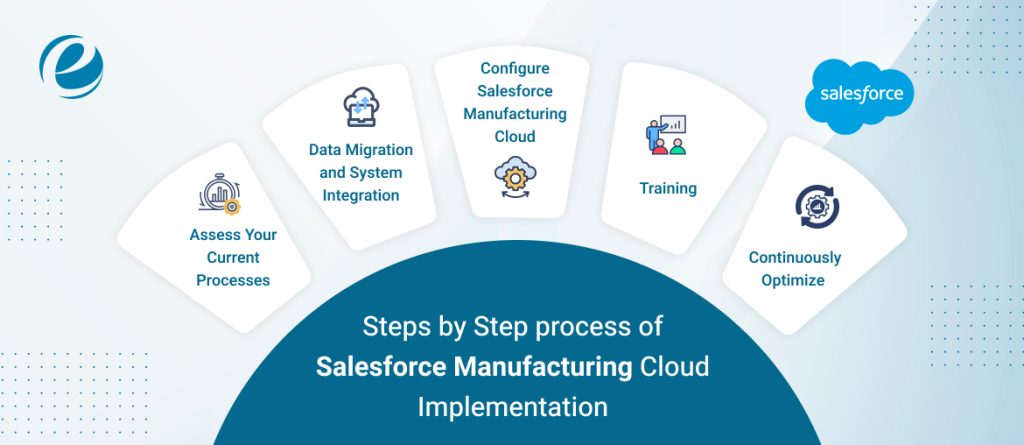
Starting with Salesforce Manufacturing Cloud is an important step that can change the way your manufacturing works. When done right, it brings your production, sales, and operations teams together, making everything run more smoothly and quickly.
Here’s a closer look at each step of Salesforce Manufacturing Cloud implementation to guide you and make the transition easy.
#Step 1. Assess Your Current Processes
Before starting with Salesforce Manufacturing Cloud, look at how your current processes work. Find out what’s not working well and what can be improved. Break your goals into small wins and long term plans, ensure you have a quick progress to show. Ensure team members from the various departments understand their jobs to help select the appropriate solutions.
#Step 2. Data Migration and System Integration
Create a plan for migrating your data, including how you’ll clean it, and define data governance to keep it accurate. Make sure you know how Salesforce Manufacturing Cloud will work with your other systems. This plan should show how data will flow and where systems will connect. If custom solutions are needed, outline them so everything fits together smoothly after the migration.
#Step 3. Configure Salesforce Manufacturing Cloud
Use the tools in Salesforce Manufacturing Cloud to arrange the system to fit your needs. This means creating custom fields, objects, and workflows based on how your business works. And configure user permissions and access levels, so the right people see and do what they need to do. This helps ensure that the system works well for your team and the way they work.
#Step 4. Training
Salesforce for manufacturing companies should thoroughly train users and key team members how to use Salesforce Manufacturing Cloud. Show them how to move through the system, enter data, and create reports. Make sure they understand the basic features so they can work smoothly. Deliver simple and practical training so users do not hesitate to use the system in their day-to-day work skills.
#Step 5. Continuously Optimize
After manufacturing cloud Salesforce implementation, keep checking how it works. Ask users for feedback to find problems or better ways to do things. Update processes and settings regularly to make Salesforce Manufacturing Cloud more useful. Small changes over time will help everyone work more efficiently.
Why Choose EmizenTech For Salesforce Manufacturing Cloud Implementation?

Salesforce manufacturing cloud helps manufacturers work better and grow faster. But just having good technology is not enough. Many businesses fail because they don’t set it up the right way. That’s why hiring reliable company who know how to make Salesforce Manufacturing Cloud work best is important.
EmizenTech is a trusted Salesforce development company which excels in implementing Salesforce for manufacturing industry seamlessly and successfully. Our certified experts customize the manufacturing cloud to fit your business needs and implement smoothly with your current setup, so you get the most benefits. With our Salesforce expertise, companies create better experiences for their clients and manage their work more efficiently. Our experts handle everything to make sure your setup is successful.
Contact us today to get started on a smooth and successful salesforce manufacturing cloud implementation.
Conclusion
Salesforce Manufacturing Cloud is a very powerful tool that makes manufacturing operations smoother, boosts efficiency, and gives real-time updates. It helps businesses track the entire customer journey, make smarter decisions, and grow easily. Manufacturing Cloud Salesforce keeps all your important data like orders, inventory, customers, and production schedule, in one place. No more scattered information or confusion. Your team gets the right tools to focus on customers, manage leads better, and improve service.
With everything connected, sales and operations work together smoothly, making collaboration easier and more efficient. It’s a complete solution that helps manufacturing businesses stay organized and grow faster. In this salesforce manufacturing cloud implementation guide, we have discussed how to rightly set up Salesforce Manufacturing Cloud. This step by step guide ensures that businesses implement the system successfully and gain maximum ROI.
FAQs
Can Manufacturing Cloud link with other Salesforce tools?
As Salesforce Manufacturing Cloud is part of the Salesforce platform so it integrates with the Sales Cloud, Service Cloud, and other Salesforce products. It also integrates with ERP and SaaS apps by API to enable easy and seamless data sharing.
Does Salesforce Manufacturing Cloud be customized?
Salesforce Manufacturing Cloud can be customized to meet various manufacturing requirements. It customises itself according to particular processes ensuring that it smoothly integrates with your business functions and processes.
How does Salesforce manufacturing cloud help in CRM?
Salesforce Manufacturing Cloud shows all customer interactions in one place. By managing sales agreements more efficiently and responding to customer requirements much faster, it helps manufacturers keep their customers contented while developing long-term relationships with them.
Can Salesforce Manufacturing Cloud be used on mobile device?
Yes, Salesforce Manufacturing Cloud works on mobile devices. This lets sales and operations teams access important data and tools anytime, anywhere, making it easier to stay flexible and respond quickly to needs in the manufacturing business.



 +1 (989) 535-9295
 info@emizentech.com
 emizentech


