 Add us as a preferred source on Google
Key Takeaways
- A Scrum Master owns the team process; a Project Manager owns the whole project outcome including budget, scope, and client relationship.
- Small agile projects often need only a Scrum Master. Multi-stakeholder builds usually need a project manager too.
- Certifications differ by design: CSM, PSM, and SAFe SM for Scrum Masters; PMP, PRINCE2, and CAPM for Project Managers.
- 2026 salary ranges overlap significantly, though senior PMs on large programs typically earn more than Scrum Masters.
- AI tools are already automating formal Scrum Master tasks, which is pushing the role toward coaching and hybrid PM skills.
One of the biggest hiring questions in Agile software delivery is whether you need a Scrum Master, a Project Manager, or both. The two roles are often confused because they contribute to successful delivery in different ways. If you choose the wrong combination, it can increase costs and create overlapping responsibilities and slow down execution.
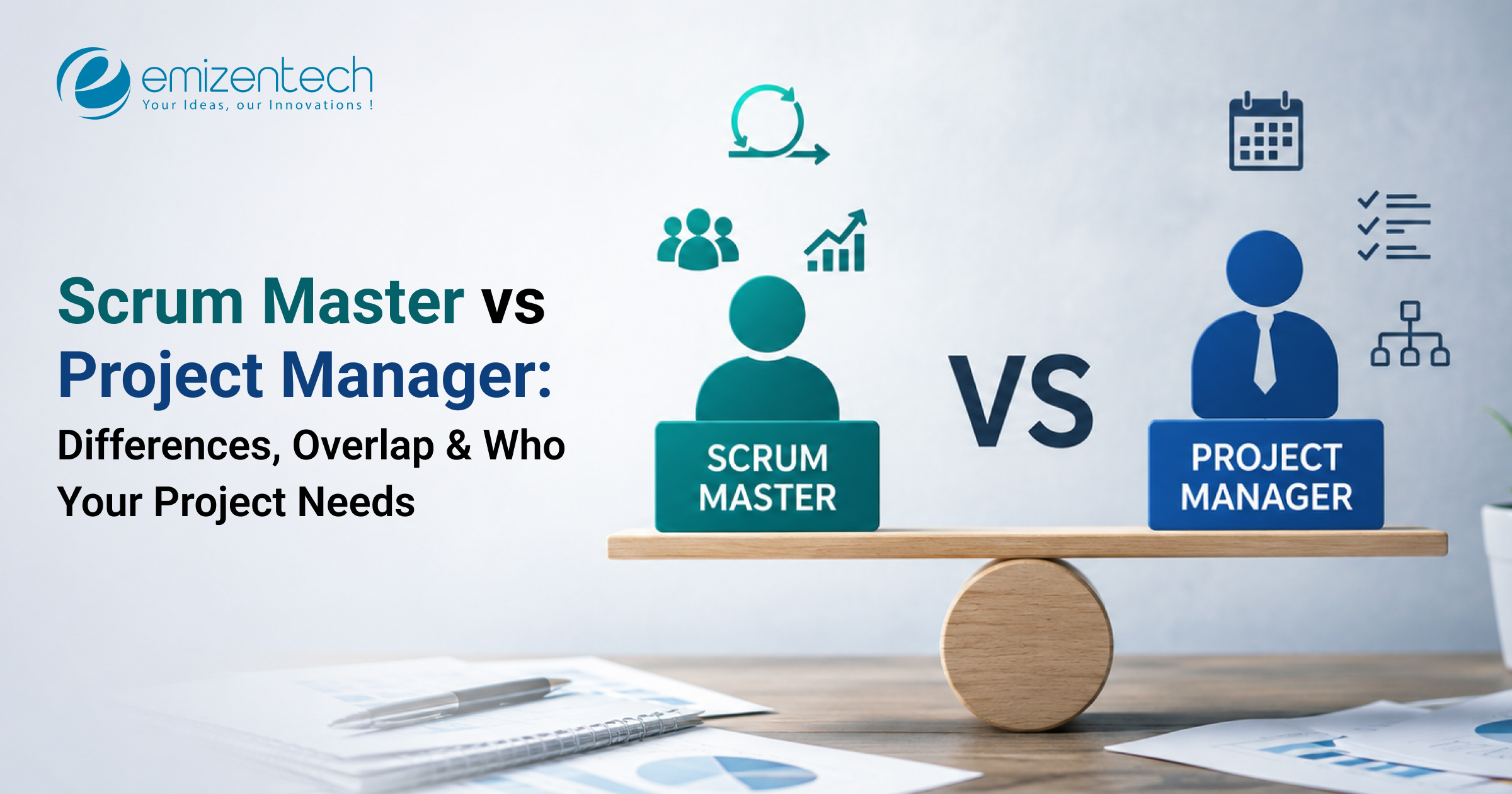
A Scrum Master is responsible for how the team works, and a project manager is responsible for what the project delivers and when. Which one you need depends on how big and complex your project actually is. This guide breaks down exactly where project manager vs scrum master roles split, where they overlap, and how to hire for each.
Scrum Master vs Project Manager: Quick Comparison
Before you dive deep into the theory, this table will help you understand things clearly because both roles guide teams to success, but they use very different styles and focus on separate goals:
|
Factor |
Scrum Master |
Project Manager |
| Primary focus | Team process and sprint health | Full delivery scope, budget, timeline |
| Methodology | Scrum, Agile, Kanban | Waterfall, Agile, hybrid |
| Authority | The facilitator has no formal authority over people | Formal authority over budget, resources, scope |
| Manages people | No | Yes |
| Certifications | CSM, PSM I/II, SAFe SM | PMP, PRINCE2, CAPM |
| Average US salary (2026) | Roughly $95,750–$142,250 | Roughly $90,000–$150,000 |
So, you may have understood that both of their duties are distinct. Also, treat the salary figures as a starting range because they can shift based on region, company size, and certification level. Let’s move forward to the fundamental theory part of the difference between scrum master and project manager.
What is a Scrum Master?

A Scrum Master ensures that the team follows Agile and Scrum practices, removes obstacles, and helps the team work productively on the tasks. They manage the ongoing process, not the project’s budget, timeline, or deliveries.
Core Responsibilities
- Runs daily stand-ups and facilitates sprint planning.
- Hosts the retrospective at the end of each sprint.
- Tracks velocity and flags bottlenecks early.
- Shields the team from outside interruptions mid-sprint.
Key Skills
A good Scrum Master reads team dynamics, steps into disagreements before they stop a sprint, and coaches the team toward figuring things out themselves instead of just telling them what to do.
Methodologies a Scrum Master Works Across
The role lives inside Scrum by definition, but most Scrum Masters are comfortable in Kanban and ScrumBans too. Some eventually move into a broader Agile coach role once they have run several teams through enough sprints to have real pattern recognition.
Scrum Master Certifications
The three certifications that standard resumes typically include are listed below:
- Certified ScrumMaster (CSM) from Scrum Alliance.
- Professional Scrum Master (PSM I, II, III) from Scrum.org.
- SAFe Scrum Master (SSM) for larger, scaled Agile setups.
Pro tip: In 2026 AI tools can already run stand-ups and auto-generate burndown charts. What sets Scrum Masters apart is their ability to coach teams and resolve conflicts.
What is a Project Manager?
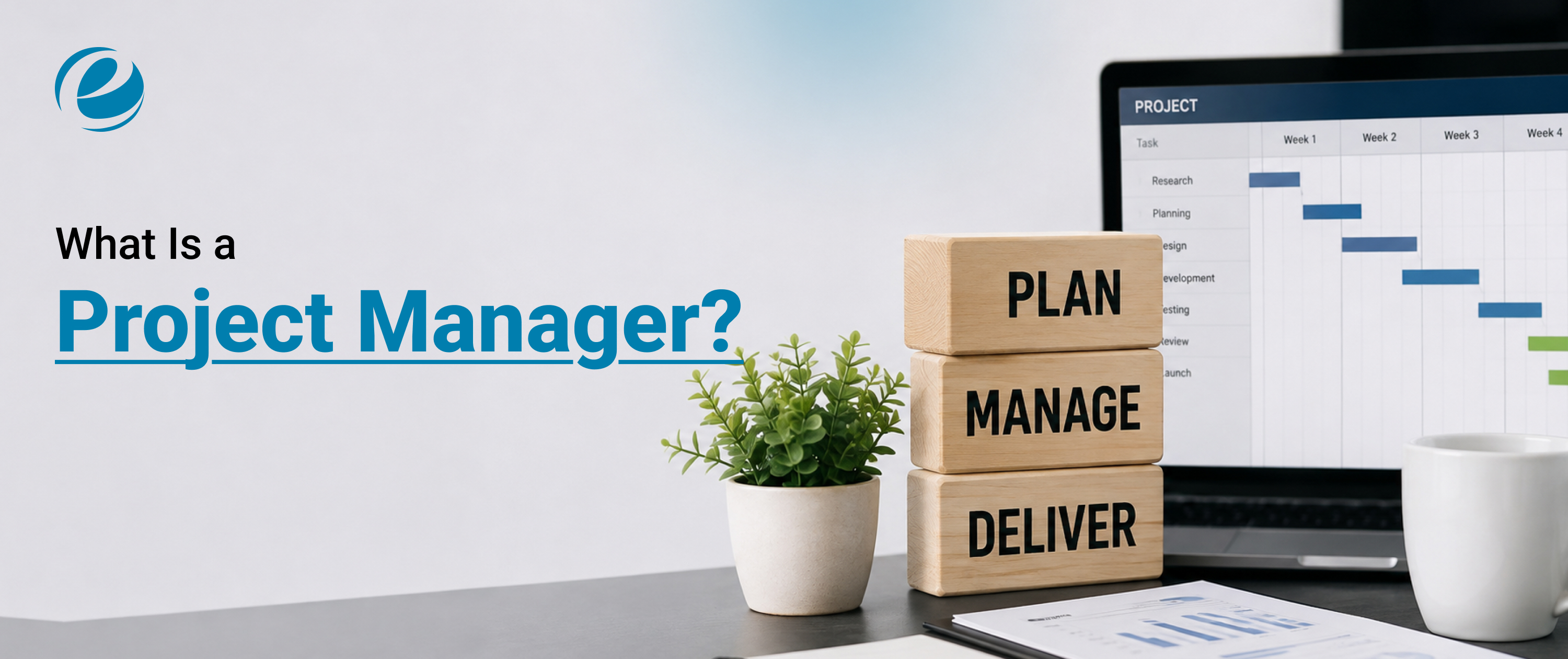
A project manager owns the project; they are general leaders who manage key business logistics such as budgets, timelines, and risks throughout the project. They ensure the entire project is delivered on time and within the budget.
Core Responsibilities
- Defines scope and keeps it from creeping.
- Tracks the budget and forecasts overruns before they happen.
- Manages the schedule and adjusts it when priorities shift.
- Owns risk mitigation across the project.
- Handles stakeholder alignment and reports progress upward.
- Negotiates deadlines with clients directly.
Key Skills
Planning is the foundation, but financial acumen matters just as much. A PM builds budgets, defends them, and catches cost overruns before they become a problem. Negotiation comes up constantly, whether that’s pushing back on scope creep or fighting for more headcount.
Methodologies a PM Works Across
Project managers move across waterfall, agile, and hybrid delivery depending on the client and the industry. Construction and manufacturing still lean heavily on Waterfall. Software teams tend to run hybrid, borrowing sprint cadences from Agile while layering traditional budget and milestone tracking on top.
Project Manager Certifications
These are the three certifications of a professional and experienced project manager.
- Certified Associate in Project Management (CAPM)
- PMP (Project Management Professional) from PMI
- PRINCE2 Practitioner (7th Edition)
Pro tip: Recruiters in 2026 favor PMs who can prove agile fluency and back decisions with data, not just PMP letters. Pair the certification with a real hybrid-methodology project on your resume.
In the next section you will learn about the 7 key differences that will give you more clarity for the scrum master vs project manager comparison.
7 Key Differences Between a Scrum Master and a Project Manager
The difference between scrum master and project manager can be summarized in seven concrete points listed below that clarify the key aspects:
- Focus: A Scrum Master focuses on the team’s process and sprint health. A project manager focuses on the entire delivery: scope, time, and cost.
- Authority: A Scrum Master has no formal authority over the team; they lead through authority. A project manager has direct control over budget, resources, and scope calls.
- Methodology scope: A Scrum Master works inside Scrum or Agile, period. A project manager crosses Agile, hybrid, or whatever the project needs.
- Problem-solving: A Scrum Master removes process blockers and pushes the team toward solving things themselves. A project manager solves problems head-on: reallocating budget and escalating when needed.
- Accountability: A Scrum Master answers for team velocity and process health. A project manager answers for the whole project outcome, including whether the client is happy.
- Success metrics: A Scrum Master is judged on sprint completion, velocity, and process improvement. A project manager is judged on on-time delivery, budget adherence, and scope accuracy.
- Budget ownership: A Scrum Master usually has zero budget authority. A project manager owns the budget from planning to closeout.
In short, the difference between a Scrum Master and a Project Manager is their scope of ownership. One owns the team’s rhythm. The other owns the outcome.
Where the Roles Overlap and How They Work Together
They overlap wherever delivery and process meet, and on most Agile teams, scrum master vs project manager isn’t a competition for the same job; they are covering two different jobs that both need doing. A Scrum Master runs the sprint mechanics. A project manager runs the client relationship, the budget, and whatever dependencies sit outside any single sprint.
On multi-team projects, this split becomes structural: each Agile team gets its own Scrum Master, while one project manager sits above all of them, tracking the overall budget and resolving cross-team dependencies that no single Scrum Master would even see.
The one place it genuinely blurs is in hybrid Agile teams, where some companies merge the two jobs into a single “Agile Project Manager” role, with that person running sprints like a Scrum Master while also owning budget and client communication. It’s a practical fix for mid-sized teams that can’t justify two full-time personnel.
Do You Need a Scrum Master, a Project Manager, or Both?
The right choice depends on your project’s size, complexity, and management approach. Below you will learn what you need: a scrum master, a project manager, or both to manage your projects conveniently:
- Choose a Scrum Master when your team follows Scrum or Agile and needs guidance on the process, team collaboration, and removing obstacles.
- Choose a project manager when your project needs planning, budget management, scheduling, risk management, and coordination with stakeholders.
- Choose both for large or complex projects where the Scrum master focuses on the agile process and team performance, while the project manager manages the overall delivery.
Also, consider reviewing software development services required for your project before deciding on structuring your team around these roles and posting a single job listing.
How to Interview and Hire for Each Role?
Hiring for either role means asking for evidence, not their opinions. The project manager vs scrum master interview process should look different for each because generic Agile philosophy sounds great and tells you almost nothing about whether the person can actually do the task.
For a Scrum Master candidate, consider asking:
- How have they handled a mid-sprint conflict between two developers?
- How do they coach a team toward self-organization instead of just directing it?
- How do they know whether a retrospective actually changed anything or if it was just a meeting?
For a project manager candidate, you can ask them:
- How did they recover a project that was already over budget or behind schedule?
- How do they deliver bad news to a client without losing the relationship?
- How have they handled scope creep without either caving or blowing up the timeline?
One trick that works for both roles: ask for a real example with a number attached, a specific velocity improvement, or a specific dollar amount recovered on a failed budget. Vague answers without numbers are often the most obvious warning sign in either interview.
If building an in-house team isn’t realistic right now, it’s often faster to work with a partner that has already vetted people in both roles. You can hire dedicated developers alongside a Scrum Master or PM who already knows how to run a distributed build, which saves months of hiring and onboarding.
Also Explore: How to hire a dedicated app development team
Conclusion
Scrum master vs project manager was never really about which role is “better”; that’s the wrong question. It’s about matching the role to what your project actually needs. Where the small Agile teams need just a Scrum Master, the bigger ones usually need a project manager too. Be honest about what’s actually at risk on your project: one team’s sprint rhythm or the entire budget and client relationship, and the answer settles itself. This will help you choose the right role for your project without overspending on unnecessary hires.
FAQs
Is a Scrum Master higher than a Project Manager?
No. They're not in the same hierarchy: a Scrum Master leads through facilitation within one team, while a Project Manager holds formal authority over budget, scope, and multiple stakeholders across a project.
Can a project manager be a Scrum master?
Yes. Plenty of PMs pick up a CSM or PSM certification and run both roles on smaller teams, though larger projects usually keep them separate so nobody's overloaded.
Can both work on the same project?
Yes, and it's the norm on larger builds. The Scrum Master runs sprint mechanics, while the Project Manager manages budget, client communication, and cross-team dependencies outside the sprint.
Does a Scrum Master manage people?
No. They coach and facilitate, but they don't assign tasks or hold formal authority over team members the way an actual manager does.
Who earns more in the scrum master vs project manager salary comparison?
It depends on the company and region. Scrum Master pay ranges between roughly $95,750 and $142,250, similar to many PM ranges, though senior PMs on large programs often exceed both.
Is a Scrum Master a technical role?
Not really. The position focuses on process, team coaching, and servant leadership rather than technical execution or coding.
What replaces the PM in a pure Scrum team?
In pure Scrum, the product owner and Scrum master split what a PM would normally do. The Product Owner handles priorities and scope, and the Scrum Master handles team process and delivery speed.
Do small teams need either role at all?
Usually just one. A single Agile squad typically needs a Scrum Master; a small team juggling multiple stakeholders or a hard external deadline needs a lightweight project manager.



 +1 (989) 535-9295
 info@emizentech.com
 emizentech


