
 Add us as a preferred source on Google
 The healthcare industry has changed a lot over the last few years, and telehealth apps have become a big part of that shift. People no longer want to spend hours sitting in waiting rooms for every small consultation. Most patients now prefer quick and easy access to doctors through their phones, whether it is for follow-ups, prescriptions, or regular health advice. In fact, recent reports suggest the global telehealth market could reach $2,458 billion by 2034 as more people continue choosing remote healthcare services.
This rising demand has opened new opportunities for healthcare providers, startups, and businesses investing in telehealth app development. From video consultations to remote patient monitoring, these apps are making healthcare more accessible, more convenient, and in many cases, far less stressful for patients. In this blog, you will learn the key features, costs, technologies, and development process involved in building a successful telehealth application in 2026.
What Is Telehealth App? And Why It Matters?
A telehealth app is a healthcare application that allows patients and doctors to connect online without needing to meet physically for every medical concern. With the help of a smartphone, tablet, or computer, patients can easily book their appointments, attend video consultations, get digital prescriptions, share reports, and even track their health records easily.
These are some of the reasons that show why a telehealth app matters in 2026:
- Makes it easier for patients to consult doctors from home
- It saves time spent traveling or waiting at clinics
- Helps hospitals manage appointments more smoothly
- Useful for elderly patients and people in remote areas
- Supports regular follow-ups and ongoing treatment
- Reduces unnecessary hospital visits for minor issues
The telehealth app is slowly becoming a normal part of healthcare. In many cases, they help both patients and doctors communicate more efficiently and manage routine medical concerns more effectively.
Must-Have Features of a Telehealth Mobile App
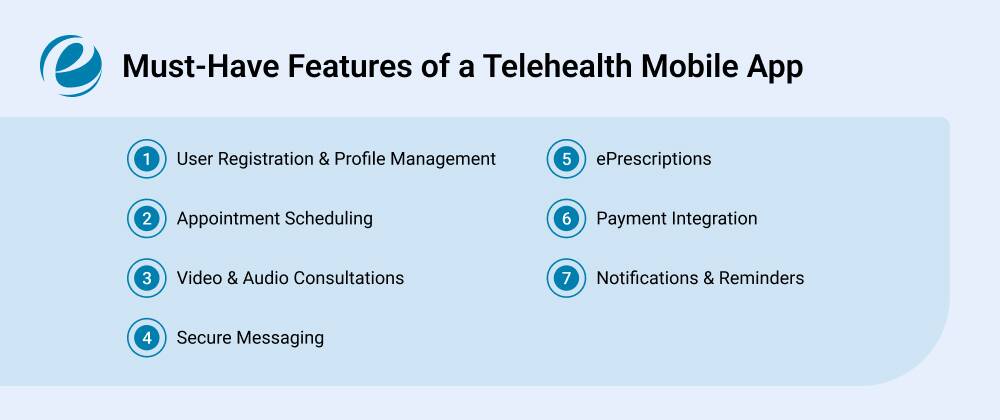
A telehealth app is only useful when it actually makes things easier for patients and doctors. People want something simple that works smoothly when they need medical help. That is why the right set of features matters so much.
- User Registration & Profile Management: The signup process must be quick. Patients should be able to manage their details, upload reports, and access their medical history without having to navigate multiple steps.
- Appointment Scheduling: A simple scheduling feature allows users to book, cancel, or reschedule consultations in just a few taps.
- Video & Audio Consultations: The smooth video and audio calling help patients talk to doctors from home without unnecessary clinic visits.
- Secure Messaging: Sometimes patients only need to ask a quick question or share a report. In-app messaging makes follow-ups much easier and more convenient.
- ePrescriptions: Doctors can send prescriptions digitally after consultations, which saves time and avoids paperwork.
- Payment Integration: Secure online payments make the consultation process much smoother for both patients and healthcare providers.
- Notifications & Reminders: Appointment reminders and medicine alerts help users stay on track with their treatment and follow-ups.
Advanced Features to Stay Competitive
As competition keeps growing, you should add some advanced features to make your telehealth app feel more useful and modern, instead of just another consultation platform.
- AI Symptom Checker: This feature can help users understand possible health concerns before booking a consultation. It is not a replacement for doctors, but it can still be helpful.
- Remote Patient Monitoring: Wearable devices can share health data like heart rate, oxygen levels, or blood pressure directly with doctors for ongoing monitoring.
- AI-Based Doctor Recommendations: Instead of patients searching endlessly, the app can suggest suitable doctors based on symptoms or medical needs.
- EHR Integration: With this feature, the patients and doctors can easily share medical reports, vitals, and treatment history during virtual visits.
- Voice Assistant Support: Voice navigation can make the app more comfortable for elderly users or people who are not very familiar with technology.
So, these are the features that you should include in your app to make it more useful for the users. If you want to know more about AI-related features that you can add, then check out the guide on AI in healthcare.
Types of Telehealth Applications in 2026

Over the last few years, healthcare apps have evolved into different categories, each designed to solve a specific healthcare need. As healthcare becomes more digital, businesses are building specialized telehealth solutions instead of one general app for everything.
Real-Time Consultation Apps
These are the most common telehealth applications people use nowadays. The patients can connect with doctors through video or audio calls for regular consultations, follow-ups, or basic medical advice without visiting a clinic physically.
Remote Patient Monitoring Apps
RPM apps are used for tracking patient health from a distance. With this, the doctors can monitor things like blood pressure, heart rate, glucose levels, or oxygen levels through connected wearable devices and smart health tools.
Mental Health & Therapy Apps
Mental health apps allow the users to connect with therapists, attend online counseling sessions, track mood changes, and access mental health support more privately and comfortably without any need to be physically present.
Chronic Disease Management Apps
The patients dealing with long-term illnesses like diabetes, hypertension, or heart disease often need regular monitoring. These apps help users track medications, health reports, appointments, and treatment progress in one place.
Medication & Prescription Apps
These are the pill reminder and medication tracker apps that focus on medicine reminders, digital prescriptions, and pharmacy integration. They help patients avoid missing doses and make prescription management much easier.
Fitness & Preventive Care Apps
There are some telehealth apps that are more wellness-focused. They combine fitness tracking, diet planning, sleep monitoring, and preventive healthcare features to help users maintain healthier lifestyles.
Telehealth Platforms for Hospitals
Large hospitals and healthcare organizations use custom telehealth platforms to manage virtual consultations, patient records, doctor schedules, billing, and internal communication more efficiently.
As healthcare needs continue changing, the telehealth apps are becoming more specialized. In 2026, users are not just looking for online consultations anymore. They want complete digital healthcare experiences that feel fast, simple, and easy to use.
Best Tech Stack for Telehealth App Development
The technologies used behind the app directly affect performance, scalability, user experience, and data security. Below, you will learn about the best tech stack that developers use, and you can also consider these telehealth app development tech stack:
| Development Areas | Technologies |
| Frontend | React Native, Flutter, Swift and Kotlin |
| Backend | Node.js, Python, Ruby on Rails and Java |
| Database | PostgreSQL, MongoDB, and MySQL |
| Video Calling APIs | Twilio, Agora and Vonage |
| Cloud Services | AWS, Google Cloud and Microsoft Azure |
| Authentication and Security | OAuth 2.0, JWT, SSL Encryption |
| Notifications | Firebase Cloud Messaging and OneSignal |
| Wearable Device Integration | Apple HealthKit and Google Fit |
| Analytics and Monitoring | Google Analytics and Mixpanel |
So, a strong tech stack helps the telehealth apps run smoothly while keeping patient information secure and accessible. It also makes future updates and feature expansion much easier as the platform grows.
Telehealth App Development Process
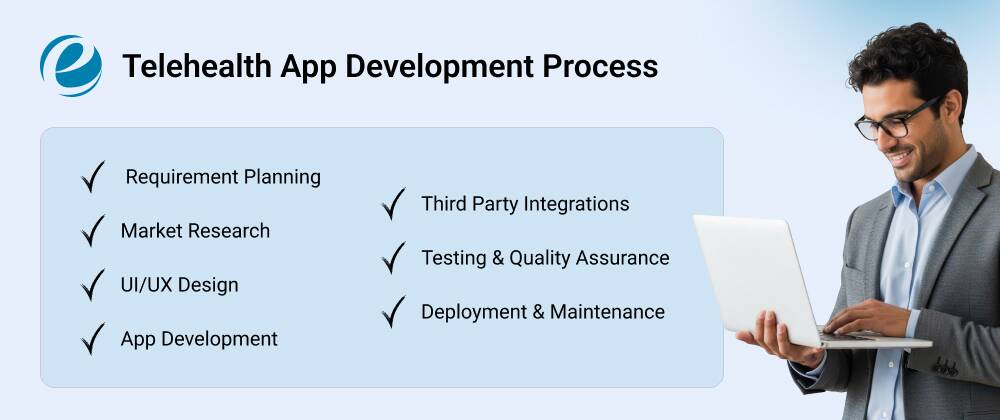
Building a telehealth app is not as simple as adding a few healthcare features and launching it online. Even a small issue in a healthcare app can affect the user experience badly. In the section below, you will learn about the structured process of telehealth app development:
Requirement Planning
Every project starts with understanding the actual purpose of the app. Businesses first decide the target audience, pain points, and features. This stage helps avoid confusion later during development.
Market Research
Before building the app, it is crucial to see the features that the popular telehealth platforms are already offering. It gives a clearer idea of current trends and gaps that new apps can improve on; for that, you can try some app market research tools also.
UI/UX Design
The healthcare apps should not feel complicated. Patients of different age groups use these platforms, so the design needs to stay clean, simple, and comfortable to navigate.
App Development
This is the stage when the developers start building the actual application. The team carefully develops the frontend, backend, database, APIs, and all major features.
Third-Party Integrations
Some telehealth apps need features like video calling, online payments, notifications, EHR systems, or wearable device support. If you think any feature is beneficial, then you can include it in your app too.
Testing & Quality Assurance
Before launch, the app is tested multiple times to catch bugs, resolve some technical issues, and make sure that the features work properly across different devices.
Deployment & Maintenance
Once the testing of the app is complete and you have it launched on Android, iOS, or web platforms successfully. After this, the app needs regular updates, maintenance, and security improvements to perform well over time.
Telehealth App Development Cost
When you are planning to hire a healthcare software app development company, it requires careful budgeting and planning for the time it will take. In the table below, you will see the general costing of the telehealth app development:
| App Complexity | Approximate Cost | Timeline |
| Basic MVP App | $30,000 to $60,000 | 2 to 3 months |
| Mid-Level App | $60,000 to $150,000 | 3 to 6 months |
| Advanced App | $150,000 to $300,000 | 6 to 9 months |
So, with the help of this, you can get an idea of the telemedicine app development cost, but more factors can affect the initial cost, such as features, platform choice, developers’ location, and compliance requirements.
Compliance & Security in Telehealth App Development
In healthcare apps, security is not just another feature sitting in the background. If users do not feel their data is secure, they are unlikely to trust the platform for long. This is the main reason that compliance and security are crucial in telehealth app development.
HIPAA Compliance
HIPAA sets the standard for protecting the Electronic Protected Health Information (ePHI). These are the sensitive data related to the patient’s health information that must be shared with third-party vendors.
GDPR Compliance
Telehealth apps in Europe must follow GDPR rules, which focus on patient consent, data minimization, and individual privacy rights. The apps must collect only the crucial data and provide mechanisms for users to exercise their “Right to be Forgotten.”
Secure Authentication
If you want to save your app from data breaches, you can implement multi-factor authentication for both the providers and patients. Also, implement the industry authorization framework OAuth 2.0 for secure API access.
Challenges in Telehealth App Development
Building a telehealth app is genuinely difficult, but if you know the challenges early, it helps you design around them instead of reacting later. Below there are some common challenges you may face:
Regulatory Complexity
The compliance rules are different by country, state, and even medical specialty. One region might allow something that another region heavily restricts.
Integration with Legacy Systems
A lot of hospitals still rely on the old EHR/EMR software development. However, connecting modern apps to those systems through stable APIs is slow, messy, and technically demanding.
User Trust & Adoption
The patients and doctors both need to feel comfortable when they are using the platform. It can only happen with a simple UX, strong security, and reliable uptime.
Data Privacy at Scale
As the platform grows, handling patient data securely becomes much harder. The storage, access control, monitoring, and audit trails all become more complex over time.
Licensing & Country Practice
The telemedicine regulations limit doctors from legally treating their patients. In many cases, the international consultations come with strict licensing barriers for both doctors and patients.
So, if you want to overcome these challenges without any delay in the output, then you can hire mobile app developers. You can provide them with your requirements, and they will give you reliable solutions.
Monetization Strategies for Telehealth Apps
You have to understand that building a telehealth app is not only about offering virtual healthcare services. As the demand for digital healthcare keeps growing, the companies investing in telehealth app development are exploring different ways to generate steady revenue.
- Subscription Plans: The users pay a fixed fee to access consultations or premium healthcare services regularly.
- Pay Per Consultation: The apps charge users for every doctor consultation that offers specialist appointments or medical support.
- Commission-Based Model: The app earns revenue by charging doctors or healthcare providers a commission for every appointment booked through the app.
- Freemium Services: The basic features are free, while the advanced services, like priority consultations or health tools need fees for premium access.
- In-App Ads: The healthcare ads, wellness products, or pharmacy partnerships can create revenue chances that do not affect the user’s experience with your app.
So, there are some more app monetization strategies that depend on the target audience, business goals, and the type of healthcare services the app provides.
Why Choose EmizenTech for Telehealth App Development
The healthcare platforms need strong security, smooth performance, and a user experience that actually feels simple for patients and doctors. This can only be possible with the help of EmizenTech if you want the real results.
With years of experience in healthcare technology, our team knows some great ways to build scalable telehealth solutions as per your business goals. Our developers manage your project very wisely from core design to cloud setup and advanced integrations within the app to make the work smooth.
Below, we list the things that set EmizenTech apart in custom mobile app development solutions for telehealth:
- HIPAA-compliant healthcare app development
- Knowledge in AI and wearable device integrations
- End-to-end development and post-launch support
- Transparent pricing with clear project communication
- Scalable solutions built for long-term growth
EmizenTech provides technical expertise and an understanding of the healthcare industry for businesses planning to build reliable telehealth platforms for their target audience.
Conclusion
Telehealth is not the future of healthcare anymore because it is already here. Patients are actively choosing providers that offer digital-first experiences. The real question isn’t whether you should build a telehealth app; it’s how to build one that’s secure, scalable, and actually useful for people using it every day.
For telehealth app development, the roadmap is pretty clear: start with a focused MVP, pick a compliant tech stack, build security into the product from day one, and work with a development team that is familiar with healthcare technology.
The opportunity is still wide open. The teams building carefully and thoughtfully today are the ones that will shape digital healthcare over the next decade.
FAQs
How long does telehealth app development take?
The development process of the telehealth app development takes 3 to 9 months; that is also dependent on the complexity and features of the app.
What is the average telehealth app development cost?
The general cost of telehealth app development ranges from $30,000 to $300,000. There are also some hidden costs that are added on to the initial cost of the development.
Which technologies are best for telehealth mobile app development?
The most popular technologies for telehealth app development are cross-platform mobile frameworks, robust backend APIs, secure cloud infrastructure, and API integrations.
Why is HIPAA compliance crucial in telehealth app development?
HIPAA compliance is crucial in telehealth app development to legally protect the sensitive Protected Health Information (PHI) transferred over the networks and maintain the patient's trust in the digital healthcare solutions.




 +1 (989) 535-9295
 info@emizentech.com
 emizentech


