Best 3rd Party App Stores Alternative for iOS & Android
Are you tired of the never-ending restrictions and limitations the official App Store imposes on Android and iOS users? Are…
Stay updated with the latest tech blogs, guides, in-depth articles, and industry insights. Explore our blogs on the latest technology, development, and digital trends. Our experts cover a broad spectrum of tech topics, from mobile app development industry statistics to the latest AI trends, revenue models, and monetization methods.
Are you tired of the never-ending restrictions and limitations the official App Store imposes on Android and iOS users? Are…
Just a few years ago, no one would have thought that in the coming years, machines would be able to…

After the release of Summer '14, it is possible to call the flows from apex classes using Flow. Interview Class…

With vehicles becoming “computers on wheels”, the importance of automotive software development remains unquestioned and unparalleled. Giant car manufacturers like…

After an app idea clicks, developing it feels urgent. However, timelines bring reality to the forefront. More than half of…
Mobile App Development
When you go through the questions to ask before hiring an eCommerce developer, are you sure you’re hiring a person…
Hire Ecommerce Developers
Are you ready to take advantage of the rapidly expanding digital lending market? This worldwide digital mortgage software industry is…
Fintech Development
The choice between an agency and a freelancer for an eCommerce business can be a deciding factor in its success…
Hire Ecommerce Developers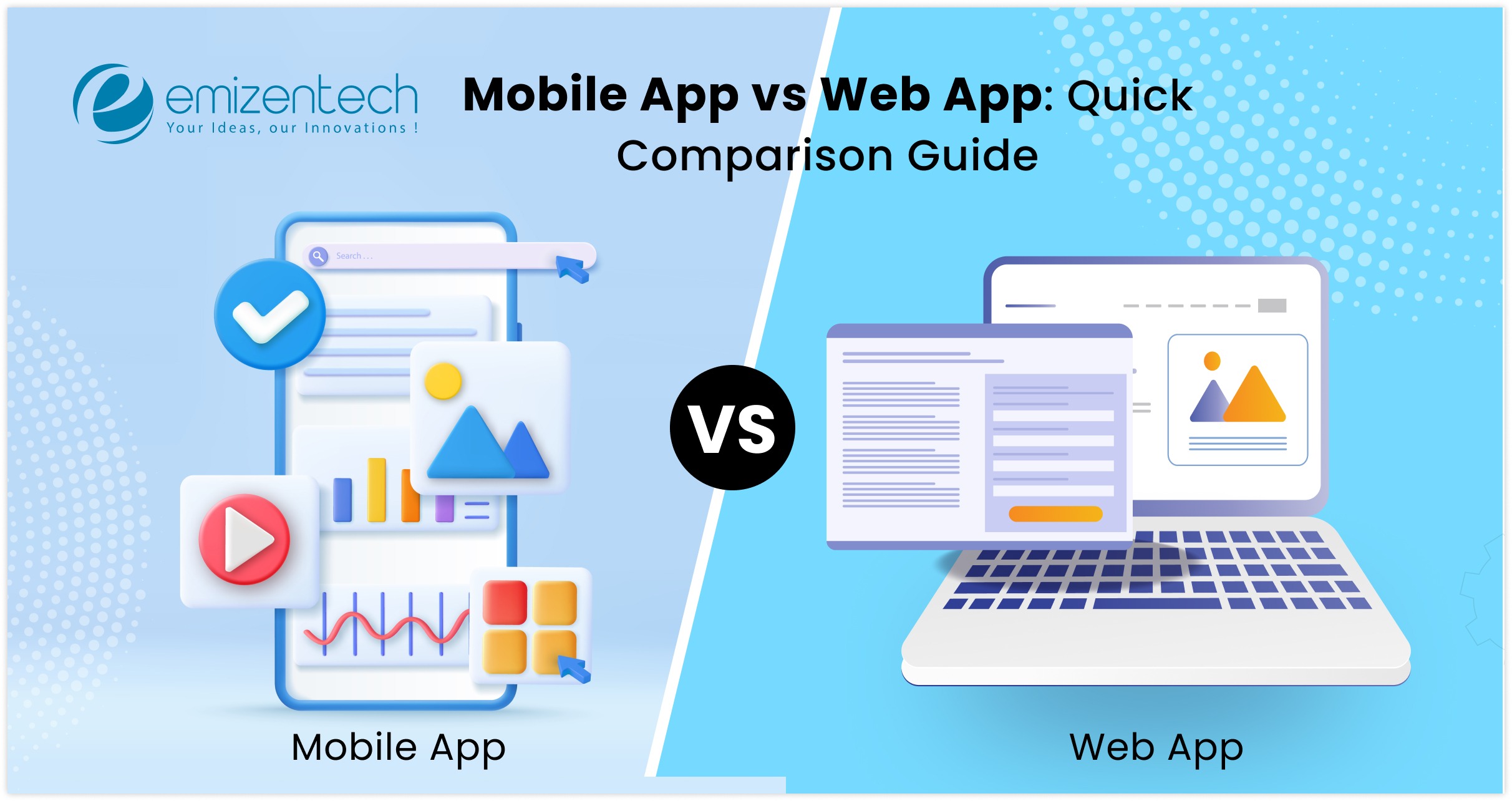
In 2026, mobile and web platforms are shaping the way users interact with businesses. According to TechCrunch, people spend an…
Comparison
The ability to quickly launch a digital product may be the determinant between a leading position in the market and…
Hire Web Developers

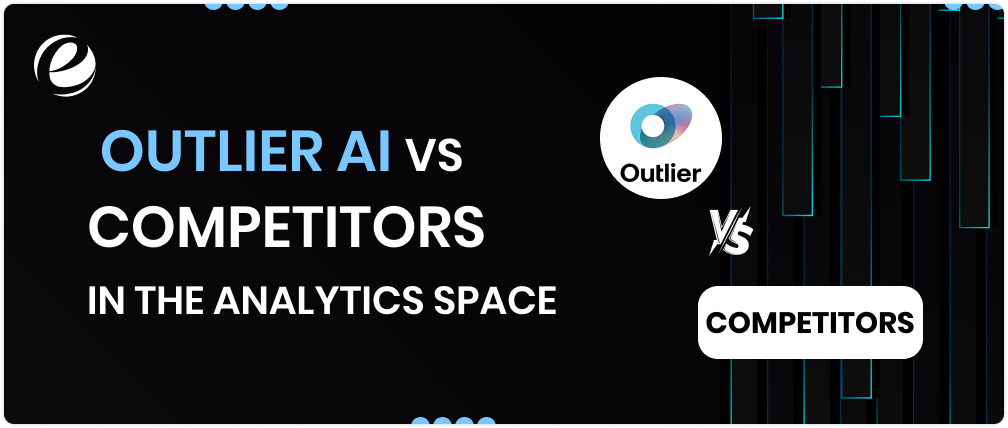 The fundamental aspect of every business is competition. This is the same for outlier AI as well. The main reason behind it is the increase in the demand for business monitoring and AI-driven outlier detection, which is growing exponentially. Even though it has a unique approach of helping freelancers to get opportunities and providing business solutions to them, it also contributes to their AI training. There are a few more who are trying to compete, but Outlier is in a league of its own. There are ample reasons for it.
| Tool/ Feature | Outlier AI | Tableau | Power Bi | Looker | Thought spot |
| Automated anomaly awareness | ✅ | ❌ | ❌ | ❌ | ✅ |
| Notifications and alerts | ✅ | ⚠️ | ✅ | ✅ | ✅ |
| Insights forecast | ✅ | ❌ | ⚠️ | ✅ | ✅ |
| Codeless dashboarding | ✅ | ✅ | ✅ | ✅ | ✅ |
| Machine learning integration | ✅ | Limited ⚠️ | ⚠️ | ✅ | ✅ |
| Proficiency in setup | High | Medium | Medium | Medium | Medium |
 Now that you understand the importance of technological advance tools like Outlier for the smooth functioning of your business. One should also understand the expertise needed behind the implication of this tech. As a leader in the world of IT and being an AI App development company we do our best to make it convenient for you with the help of our expertly trained tech integration team which consist of Certified data and AI experts. They do their best to align and implement AI solutions along with your business outcomes to make everything run smoothly for you.
Emizen, with its global presence, has assisted many global businesses and brands to reach their full potential with the help of AI ML consulting services and unlock the value of their data by integrating artificial intelligence automation tools, which led to scaling faster, driving operations, and driving ROI. Personalized plan of action and integration makes the tools fit your specific needs, and that is why we customize Outlier AI as per your unique workflow, whether it's operations monitoring, Ecommerce tracking, or financial modeling.
For the betterment of your team, train your team with training and workshops so that they can get the best understanding of the product to use it to its full potential and fulfill the long-term vision of success with Outlier AI. We also understand that our support can be needed even after the deployment; that is why we are available 24/7 and doing our best to optimize performance continuously to support your data needs, which are evolving quickly.
Now that you understand the importance of technological advance tools like Outlier for the smooth functioning of your business. One should also understand the expertise needed behind the implication of this tech. As a leader in the world of IT and being an AI App development company we do our best to make it convenient for you with the help of our expertly trained tech integration team which consist of Certified data and AI experts. They do their best to align and implement AI solutions along with your business outcomes to make everything run smoothly for you.
Emizen, with its global presence, has assisted many global businesses and brands to reach their full potential with the help of AI ML consulting services and unlock the value of their data by integrating artificial intelligence automation tools, which led to scaling faster, driving operations, and driving ROI. Personalized plan of action and integration makes the tools fit your specific needs, and that is why we customize Outlier AI as per your unique workflow, whether it's operations monitoring, Ecommerce tracking, or financial modeling.
For the betterment of your team, train your team with training and workshops so that they can get the best understanding of the product to use it to its full potential and fulfill the long-term vision of success with Outlier AI. We also understand that our support can be needed even after the deployment; that is why we are available 24/7 and doing our best to optimize performance continuously to support your data needs, which are evolving quickly.


| Year | eCommerce Generative AI Market | CAGR |
| 2024 | $0.88 B | — |
| 2025 | $1.04 B | 18.8% |
| 2029 | $2.06 B | 18.6% |
| 2034 (extended) | $3.52 B | 15.5% (2024–34) |
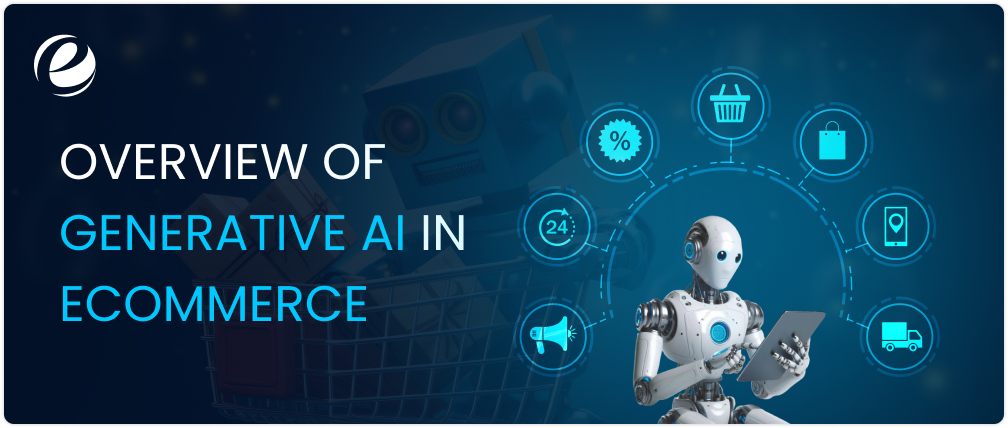 Generative AI in ecommerce revolutionizes the interaction between the business and customers and the management of operations. Through the utilization of Generative AI in machine learning models, businesses are able to produce content, generate product descriptions, and mimic customer queries.
This technology meets consumer needs and helps businesses save time and money. As Generative AI in retail and ecommerce advances, it is turning out to be the most important component of the digital strategies of today's world.
Advanced AI technologies continue to evolve, and they are becoming a vital part of modern digital strategies, making shopping smarter, faster, and more engaging.
Generative AI in ecommerce revolutionizes the interaction between the business and customers and the management of operations. Through the utilization of Generative AI in machine learning models, businesses are able to produce content, generate product descriptions, and mimic customer queries.
This technology meets consumer needs and helps businesses save time and money. As Generative AI in retail and ecommerce advances, it is turning out to be the most important component of the digital strategies of today's world.
Advanced AI technologies continue to evolve, and they are becoming a vital part of modern digital strategies, making shopping smarter, faster, and more engaging.
 Generative AI in ecommerce is definitely not only about the changes in the customer journey, but it also leads the way in simplifying and optimizing the internal business operations. To be more precise, the technology accomplishes the task of automating routine tasks, bringing about the decision-making process with data-driven insights, and many more. These help ecommerce businesses operate more efficiently and cost-effectively. The following are some examples of Gen AI in ecommerce that can revolutionize the business workflows on a day-to-day basis:
 A strategic approach is necessary for the implementation of Generative AI in ecommerce activities, in which the combination of tools, data, and human expertise is best exploited. Without it, you are just deploying AI features, rather than implementing them in any aspect that can accelerate workflows, augment customer experience, or uplift productivity.
If your line of trade is a small-sized online store or a considerable retail platform, the following list includes measures for successfully bringing Generative AI into your ecommerce operations:
A strategic approach is necessary for the implementation of Generative AI in ecommerce activities, in which the combination of tools, data, and human expertise is best exploited. Without it, you are just deploying AI features, rather than implementing them in any aspect that can accelerate workflows, augment customer experience, or uplift productivity.
If your line of trade is a small-sized online store or a considerable retail platform, the following list includes measures for successfully bringing Generative AI into your ecommerce operations:
 At Emizentech, we aim to build intelligent, customized solutions with the help of Generative AI for ecommerce. Developing for online companies in specific fields to be capable of automating operations, improving user experience, and scaling their business with next-generation AI technology.
Maybe you want to automatically develop product content, implement smart systems, or provide customer support via AI? You can rely on us. As a leading AI app development and ecommerce company, we offer deep domain knowledge combined with testing and tools to give you an outcome that matters.
At Emizentech, we aim to build intelligent, customized solutions with the help of Generative AI for ecommerce. Developing for online companies in specific fields to be capable of automating operations, improving user experience, and scaling their business with next-generation AI technology.
Maybe you want to automatically develop product content, implement smart systems, or provide customer support via AI? You can rely on us. As a leading AI app development and ecommerce company, we offer deep domain knowledge combined with testing and tools to give you an outcome that matters.


 While it is easy to have a rough idea of the benefits of Generative AI in education, let’s also understand what this concept even means and who it is meant for.
Generative AI in education is simply the implementation of advanced artificial intelligence systems (read multimodal generators and large language models). The AI systems are used to create original content for various educational purposes, including assessments and feedback, mainly for educators and learners. From learning pace to engagement to performance, these systems use and analyze a variety of data. And here’s what people in this industry get in turn: Study plans, quizzes, guides, and more.
For educators, solutions powered by generative AI work as a speed enabler. It enhances efficiency in lesson designing, administrative duties, and grading. And students can use it to get quick, personalized feedback on their performance. Gen AI is an excellent technology for fostering creativity, enhancing access to better education, and even personalizing lessons. These capabilities can help diverse learners adapt to educational practices flexibly.
While it is easy to have a rough idea of the benefits of Generative AI in education, let’s also understand what this concept even means and who it is meant for.
Generative AI in education is simply the implementation of advanced artificial intelligence systems (read multimodal generators and large language models). The AI systems are used to create original content for various educational purposes, including assessments and feedback, mainly for educators and learners. From learning pace to engagement to performance, these systems use and analyze a variety of data. And here’s what people in this industry get in turn: Study plans, quizzes, guides, and more.
For educators, solutions powered by generative AI work as a speed enabler. It enhances efficiency in lesson designing, administrative duties, and grading. And students can use it to get quick, personalized feedback on their performance. Gen AI is an excellent technology for fostering creativity, enhancing access to better education, and even personalizing lessons. These capabilities can help diverse learners adapt to educational practices flexibly.
 Digital learning systems are picking up a different pace with generative AI serving as a catalyst for change. Capabilities like personalization and automation are becoming primary goals for both: The institution looking to engage students more, and the education app development company building smarter solutions.
Are you a student wondering how you might access the benefits of generative AI in education? Or an edtech startup aiming at the smart use of AI in education app development? This list of use cases will give you a clue on what you can achieve.
Digital learning systems are picking up a different pace with generative AI serving as a catalyst for change. Capabilities like personalization and automation are becoming primary goals for both: The institution looking to engage students more, and the education app development company building smarter solutions.
Are you a student wondering how you might access the benefits of generative AI in education? Or an edtech startup aiming at the smart use of AI in education app development? This list of use cases will give you a clue on what you can achieve.
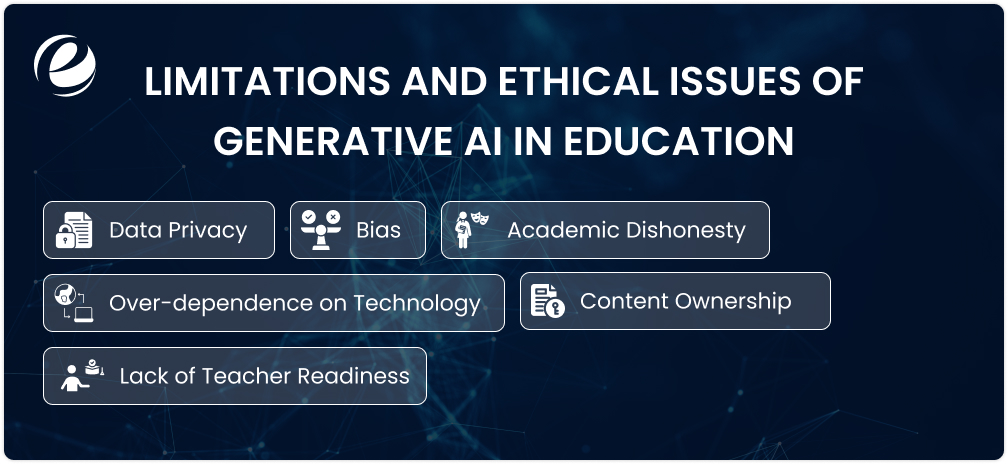 As per what we have discussed about generative AI in education so far, here is one thing that’s clear: This technology is here to reshape task management and learning experiences in the academic world. However, where there’s technology, there’s collective doubt about its ethical standards. There’s also a debate about the challenges that it might bring behind the pack of benefits.
Here’s a list of potential ethical concerns and challenges of implementing Gen AI in education:
As per what we have discussed about generative AI in education so far, here is one thing that’s clear: This technology is here to reshape task management and learning experiences in the academic world. However, where there’s technology, there’s collective doubt about its ethical standards. There’s also a debate about the challenges that it might bring behind the pack of benefits.
Here’s a list of potential ethical concerns and challenges of implementing Gen AI in education:
 Behind ground-breaking Gen AI solutions for the education industry, there are factors like expertise, flexibility, and scalability that help set a strong foundation for the future. At EmizenTech, a leading AI app development company, we bring them all together to create solutions for today and tomorrow.
The global Gen AI in education market is growing at a CAGR of 41%, depicting just the right time for you to set foot in the industry as the leader of these solutions. Here’s what our end-to-end AI development services do to make your vision a reality:
Behind ground-breaking Gen AI solutions for the education industry, there are factors like expertise, flexibility, and scalability that help set a strong foundation for the future. At EmizenTech, a leading AI app development company, we bring them all together to create solutions for today and tomorrow.
The global Gen AI in education market is growing at a CAGR of 41%, depicting just the right time for you to set foot in the industry as the leader of these solutions. Here’s what our end-to-end AI development services do to make your vision a reality:


 Kling AI is a highly capable AI-based platform that was developed for the purpose of turning simple texts or images into very realistic videos by making use of deep learning and generative AI technology. Aimed at creators, marketers, educators, and brands, the Kling AI app streamlines the video production process by automating all the stages, from scripting to scene generation.
Simply by giving a prompt or uploading an image, the AI video generator of Kling makes seamless, high-quality clips that reproduce real-life movements, expressions, and even cinematic camera angles. It is a revolutionary tool from the scope of AI video generation applications that reshuffles the creative industries.
Kling AI is a highly capable AI-based platform that was developed for the purpose of turning simple texts or images into very realistic videos by making use of deep learning and generative AI technology. Aimed at creators, marketers, educators, and brands, the Kling AI app streamlines the video production process by automating all the stages, from scripting to scene generation.
Simply by giving a prompt or uploading an image, the AI video generator of Kling makes seamless, high-quality clips that reproduce real-life movements, expressions, and even cinematic camera angles. It is a revolutionary tool from the scope of AI video generation applications that reshuffles the creative industries.
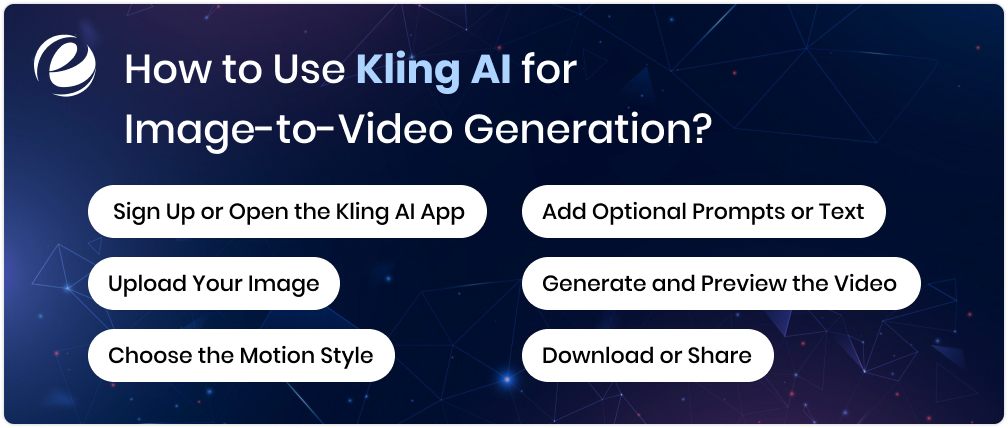 Turning pictures into videos with Kling AI is incredibly easy. There is no need to be a designer or video editor. The Kling AI app enables video creation to be effortless for every type of user: a content creator, a marketer, or a beginner. Simply upload an image, set your preferences, and let AI do the magic.
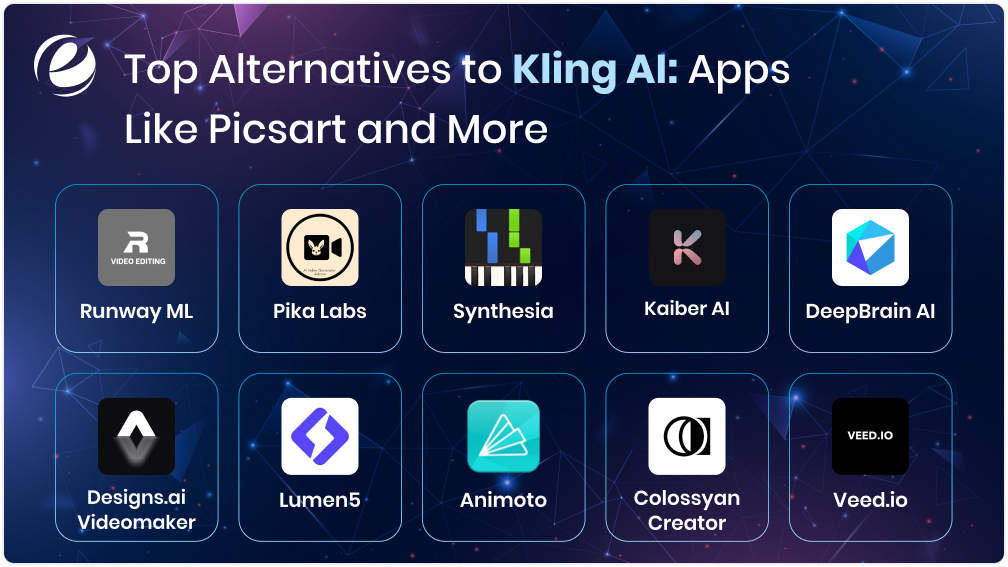 While Kling AI is at the centre of attention for its image and text-to-video features, it is also true that there are many other Kling AI alternative in the market that offer new video creation features. These alternatives can also enable content providers, marketers, and companies to become video gurus without having to spend too much time relying on AI.
| App Name | Launch Year | App Size (Approx.) | Platform | User Base (Est.) |
| Kling AI | 2024 | ~100 MB | Web, iOS, Android | 500K+ users |
| Runway ML | 2021 | ~150 MB | Web, Desktop (Mac/Win) | 1M+ creators |
| Pika Labs | 2023 | ~90 MB | Web | 300K+ early users |
| Synthesia | 2020 | Web-based only | Web | 50K+ companies |
| Kaiber AI | 2022 | ~80 MB | Web | 500K+ users |
| DeepBrain AI | 2016 | ~120 MB | Web | Enterprise-level clients |
| Designs.ai | 2019 | ~95 MB | Web | 100K+ marketers |
| Lumen5 | 2017 | ~85 MB | Web | 1M+ marketers |
| Animoto | 2006 | ~70 MB | Web, iOS | 1M+ users |
| Colossyan Creator | 2020 | ~100 MB | Web | Growing global base |
| Veed.io | 2019 | ~60 MB | Web | 2M+ creators |
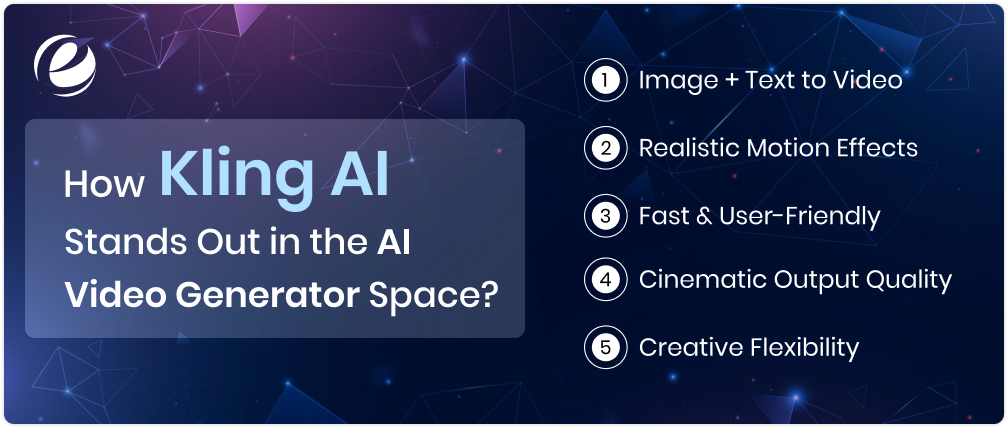 Kling AI is miles ahead of other AI video makers when it comes to the fact that it can not only convert text but also pictures into realistic, high-quality videos with smooth motion and detailed scenes. Many of those tools that concentrate solely on text-to-video or avatar-based content cannot match the Kling AI app, which is based on advanced generative AI to supply actual camera angles, human-like movements, and dynamic environments.
Being quick, simple to use for beginners, and not requiring any editing skills, it is suitable for creators, marketers, and even developers. The merge of simplicity and power that sets it apart in the growing AI video space is the unique blend of simplicity and power that it realizes with the help of its cutting-edge technology and creative flexibility.
Kling AI is miles ahead of other AI video makers when it comes to the fact that it can not only convert text but also pictures into realistic, high-quality videos with smooth motion and detailed scenes. Many of those tools that concentrate solely on text-to-video or avatar-based content cannot match the Kling AI app, which is based on advanced generative AI to supply actual camera angles, human-like movements, and dynamic environments.
Being quick, simple to use for beginners, and not requiring any editing skills, it is suitable for creators, marketers, and even developers. The merge of simplicity and power that sets it apart in the growing AI video space is the unique blend of simplicity and power that it realizes with the help of its cutting-edge technology and creative flexibility.
| Pros | Cons |
| Easy to use, even for beginners | May require stable internet due to cloud processing |
| Converts both images and text into videos | Limited customization options in free version |
| Fast video generation with high-quality output | Some advanced features may be paid |
| Offers realistic motion and camera effects | Still improving accuracy in complex scenes |
| Great for marketing, social media, and education | Not ideal for long-form video projects |
| Aspect | Kling AI App | Traditional Video Tools |
| Ease of Use | Very easy, no editing skills required | Requires technical skills and video editing knowledge |
| Input Needed | Text or image prompts | Footage, scripts, audio, and manual editing |
| Time to Create Video | A few seconds to minutes | Hours to days |
| Cost | Free basic plan, affordable AI plans | Often high—software + editors + equipment |
| Output Quality | High-quality, AI-generated visuals with motion | Professional, but depends on editor's skill |
| Learning Curve | Minimal | Steep for beginners |
| Best For | Quick content, social media, marketing, storytelling | Long-form content, commercials, studio-level work |
| Customization | Limited but growing with updates | Highly customizable, manual control |
| Platform | Web & Mobile (Cloud-based) | Desktop software requires powerful hardware |
| Role | Basic App ($) | Advanced App ($) | Complex App ($) |
| UI/UX Designer | 2,000 – 4,000 | 4,000 – 6,000 | 6,000 – 8,000 |
| Front-end Developer | 4,000 – 6,000 | 6,000 – 9,000 | 10,000 – 15,000 |
| Back-end Developer | 5,000 – 8,000 | 8,000 – 12,000 | 12,000 – 18,000 |
| AI/ML Engineer | — | 10,000 – 15,000 | 20,000 – 30,000 |
| DevOps Engineer | — | — | 5,000 – 7,000 |
| QA Tester | — | 2,000 – 3,000 | 3,000 – 5,000 |
| Project Manager | 2,000 – 3,000 | 3,000 – 5,000 | 5,000 – 7,000 |
| Total Estimated Cost | 15,000 – 25,000 | 35,000 – 55,000 | 60,000 – 100,000+ |
 Emizentech is the most wanted AI app development company that builds smart and feature-rich apps powered by AI. Our team of experts can transform your dream that comes from the use of platforms like Kling AI or create your own AI video generator app into a powerful and scalable product. In the whole process, from design to deployment, we have the right balance of creativity, technology, and strategy to make sure your app is going to be the one that shines in a competitive market.


| Region / Segment | 2024/25 Value | 2030 Forecast | Compound Annual Growth Rate (CAGR) |
| Global banking & finance (GenAI) | $1.26 B in 2024, rising to $1.68 B in 2025 | ~$21.8 B by 2034 | ~33% (2024–2034) |
| Banking & finance (GenAI) 2024 baseline | $1.29 B in 2024 | $21.6 B by 2034 | ~31.6% (2024–2034) |
| Overall AI market, including hardware/etc. | $103 B in 2023 | $1,037 B by 2030 | ~39% (2023–2030) |
| Generative AI subset of AI | $2.8 B in 2023 | $75.7 B by 2028 | ~93.7% (2023–2028) |
 Generative AI in banking refers to progressive AI models that have the ability to compose new information, insights, or solutions from examples of past instances. The application of generative AI in banking turns it into a mechanism for generating financial advice, customer service automation, fraudulent behavior detection, and decision-making improvement.
This kind of AI differs from the conventional one in the sense that it mainly performs data analysis, while generative AI in banking carries out the next step, which is the generation of intelligent outputs such as reports, emails, or chatbot responses. It's radically changing the way banks implement their customer service; the execution of operational processes becomes more accessible and faster.
Generative AI in banking refers to progressive AI models that have the ability to compose new information, insights, or solutions from examples of past instances. The application of generative AI in banking turns it into a mechanism for generating financial advice, customer service automation, fraudulent behavior detection, and decision-making improvement.
This kind of AI differs from the conventional one in the sense that it mainly performs data analysis, while generative AI in banking carries out the next step, which is the generation of intelligent outputs such as reports, emails, or chatbot responses. It's radically changing the way banks implement their customer service; the execution of operational processes becomes more accessible and faster.
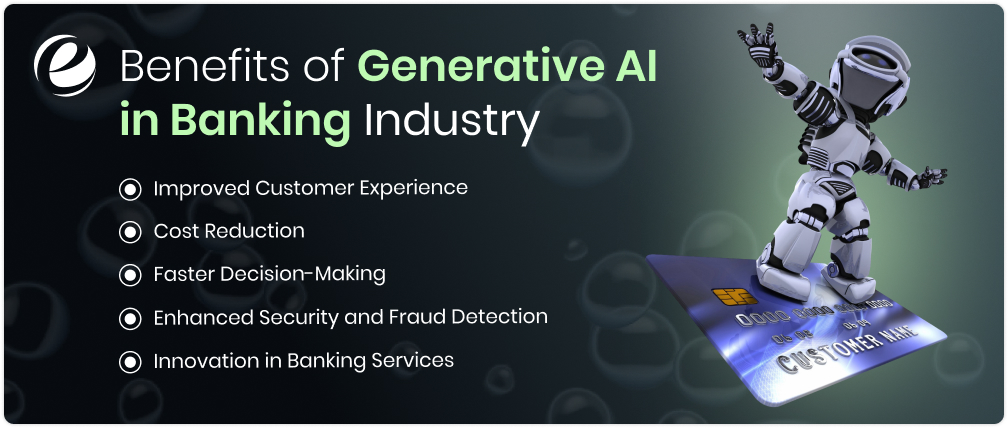 The banking sector has taken a course of digital revolution, and generative AI in banking is the driving force behind it. Banks use AI models that are capable of creating content, making decisions, and learning from the data to carve out new strategies to increase their effectiveness, improve their customer service, and decrease their risks.
Whether it is about making internal operations simpler or providing users with more intelligent financial tools, the employment of generative AI in banking is key to the realization of the power of AI innovation and competitiveness.
The banking sector has taken a course of digital revolution, and generative AI in banking is the driving force behind it. Banks use AI models that are capable of creating content, making decisions, and learning from the data to carve out new strategies to increase their effectiveness, improve their customer service, and decrease their risks.
Whether it is about making internal operations simpler or providing users with more intelligent financial tools, the employment of generative AI in banking is key to the realization of the power of AI innovation and competitiveness.
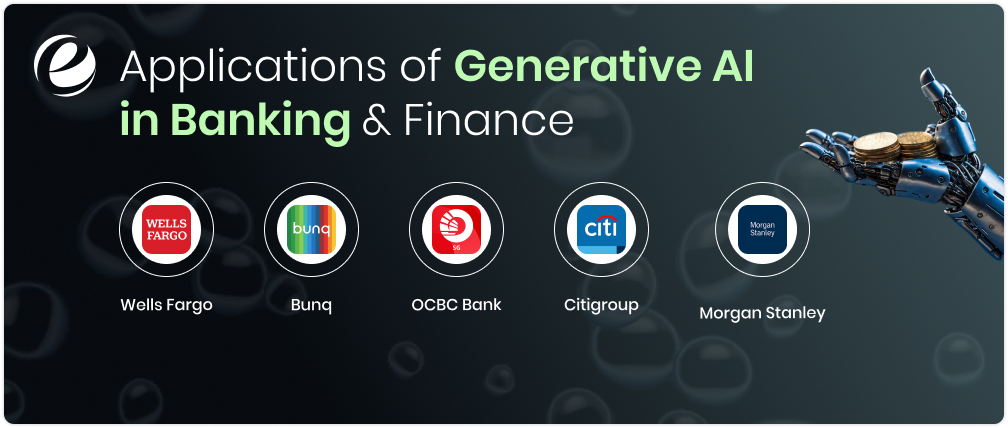 The banking industry is going through a massive transformation using generative AI, which is helping them improve customer service, compliance, investment analysis, and internal automation to boost.
Traditional banks and fintech players who have already embraced the power of generative AI-driven tools are able to not only hold their ground but also lead in a digital-first environment. We are considering the application of generative AI in banking now, that are quite practical, yet they are the most formal illustrations of AI in banking, profusely reshaping the industry.
So, let us find out who the most prominent financial institutions are that are using generative AI and how their platforms are influencing the market.
The banking industry is going through a massive transformation using generative AI, which is helping them improve customer service, compliance, investment analysis, and internal automation to boost.
Traditional banks and fintech players who have already embraced the power of generative AI-driven tools are able to not only hold their ground but also lead in a digital-first environment. We are considering the application of generative AI in banking now, that are quite practical, yet they are the most formal illustrations of AI in banking, profusely reshaping the industry.
So, let us find out who the most prominent financial institutions are that are using generative AI and how their platforms are influencing the market.
| Bank/Institution | Launch Year | Platform | App Size | Key Features | AI-Powered Use Case |
| Wells Fargo (Fargo AI Assistant) | 2023 | iOS, Android | ~90 MB | Smart banking assistant, balance checks, and financial tips | AI chatbot for financial guidance and customer service |
| Bunq | 2022 | iOS, Android, Web | ~75 MB | Smart budgeting, expense tracking, and insights | AI-driven money management and financial automation |
| OCBC Bank (AI Chat Advisor) | 2023 | iOS, Android | ~85 MB | Transaction summaries, budget insights, and fraud alerts | AI assistant for financial advice and security monitoring |
| Citigroup (AI Research Tool) | 2024 | Web-based Platform | N/A | AI-generated market research, data visualization, investment reports | Research automation and decision support for clients |
| Morgan Stanley (GPT-4 Advisor Tool) | 2023 | Web, Internal Tool | N/A | Document summarization, investment query handling | Internal knowledge assistant for financial advisors |
 At EmizenTech, we leverage our combined industry knowledge and AI capabilities to connect with banks and financial institutions to implement and expand generative AI in banking sector smoothly.
Whether it is that you want to improve the customer experience, automate operations, or create intelligent financial solutions, we are with you all the way. Our professional team is well aware of the peculiar challenges of the banking sector, and they provide secure, scalable, and compliant AI solutions that are just made for you.
At EmizenTech, we leverage our combined industry knowledge and AI capabilities to connect with banks and financial institutions to implement and expand generative AI in banking sector smoothly.
Whether it is that you want to improve the customer experience, automate operations, or create intelligent financial solutions, we are with you all the way. Our professional team is well aware of the peculiar challenges of the banking sector, and they provide secure, scalable, and compliant AI solutions that are just made for you.


 Well, generative AI in healthcare is the enhancement of human capabilities through the use of advanced artificial intelligence computer algorithms. These AI models are capable of generating novel material. They include medical images, reports, drug compositions, and treatment plans. On the other hand, a traditional AI system, basing its work mainly on data analysis, is enabled to produce informative outputs that serve as the decision-making support for a doctor, a researcher, or a healthcare provider.
The healthcare sector is undergoing a powerful change with the utilization of this technology in testing, drug discovery, and the customization of patient care. The rise of generative AI usage in healthcare is benefiting medical experts in giving speedy, more intelligent, and efficient service to their patients.
Well, generative AI in healthcare is the enhancement of human capabilities through the use of advanced artificial intelligence computer algorithms. These AI models are capable of generating novel material. They include medical images, reports, drug compositions, and treatment plans. On the other hand, a traditional AI system, basing its work mainly on data analysis, is enabled to produce informative outputs that serve as the decision-making support for a doctor, a researcher, or a healthcare provider.
The healthcare sector is undergoing a powerful change with the utilization of this technology in testing, drug discovery, and the customization of patient care. The rise of generative AI usage in healthcare is benefiting medical experts in giving speedy, more intelligent, and efficient service to their patients.
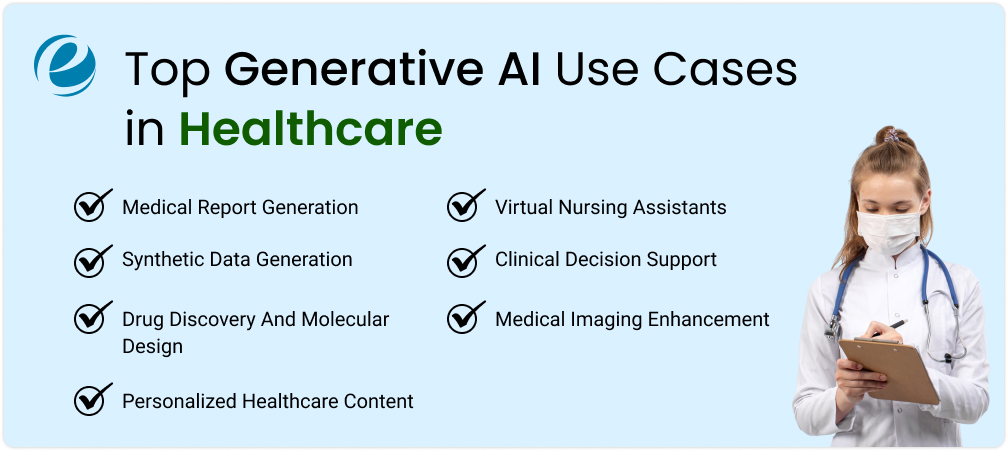 Generative AI adoption in healthcare is beyond words in the medical industry. It’s not all about just automating jobs; it’s about creating valuable data, improving care management, and backing up innovation.
Below are the most influential generative AI use cases in healthcare that are revolutionizing the industry's security:
Generative AI adoption in healthcare is beyond words in the medical industry. It’s not all about just automating jobs; it’s about creating valuable data, improving care management, and backing up innovation.
Below are the most influential generative AI use cases in healthcare that are revolutionizing the industry's security:
 Generative AI has changed the healthcare sector beyond recognition through its ability to produce brand-new content that is based on medical data and that assists doctors in providing quicker, more accurate, and individualized treatment.
The generative AI in healthcare examples, such as diagnostics to operational workflows, are numerous, and these are growing very fast. Below is an overview of the most popular and widely applied applications nowadays in the healthcare sector:
Generative AI has changed the healthcare sector beyond recognition through its ability to produce brand-new content that is based on medical data and that assists doctors in providing quicker, more accurate, and individualized treatment.
The generative AI in healthcare examples, such as diagnostics to operational workflows, are numerous, and these are growing very fast. Below is an overview of the most popular and widely applied applications nowadays in the healthcare sector:
 Generative AI is positively affecting patients' healthcare by helping them with more efficient, accurate, and deeper care processes. Patients are getting better results and more convenient healthcare journeys with faster diagnoses and treatments.
Let us first review what regenerative AI brings to the healthcare sector that benefits patients directly.
Generative AI is positively affecting patients' healthcare by helping them with more efficient, accurate, and deeper care processes. Patients are getting better results and more convenient healthcare journeys with faster diagnoses and treatments.
Let us first review what regenerative AI brings to the healthcare sector that benefits patients directly.
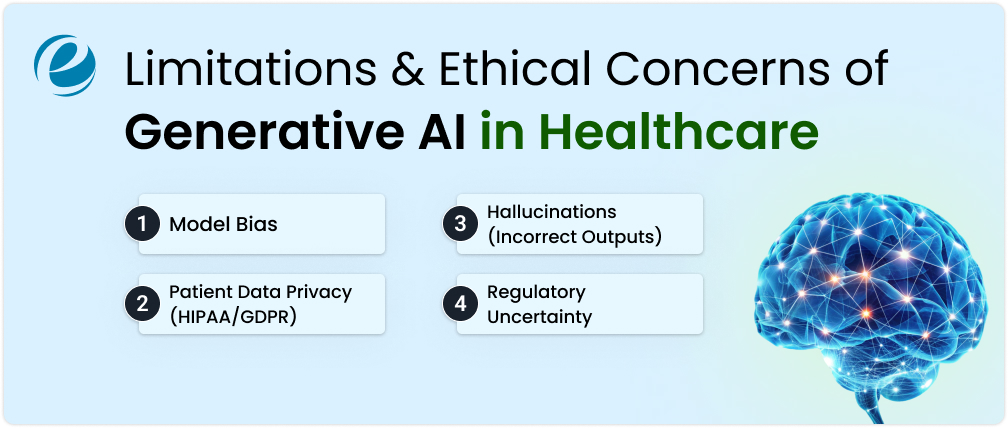 Generative AI has the potential to revolutionize the healthcare industry, but it comes with its own limitations. The technology carries risks to data privacy, and it can produce unexpected outputs.
Such ethical issues are raised by the technology, which developers, providers, and regulators must solve through teamwork. Partially solving these issues is the way forward to building safe, trustworthy, and efficient AI systems in healthcare.
Generative AI has the potential to revolutionize the healthcare industry, but it comes with its own limitations. The technology carries risks to data privacy, and it can produce unexpected outputs.
Such ethical issues are raised by the technology, which developers, providers, and regulators must solve through teamwork. Partially solving these issues is the way forward to building safe, trustworthy, and efficient AI systems in healthcare.
| Category | Technologies/Tools | Purpose |
| Programming Languages | Python, R, JavaScript | For AI model development, data analysis, and web interface |
| AI/ML Frameworks | TensorFlow, PyTorch, Scikit-learn, Keras | To train and deploy generative AI models |
| Cloud Platforms | AWS, Google Cloud, Microsoft Azure | For scalable infrastructure, storage, and AI tools |
| Databases | PostgreSQL, MongoDB, Firebase | To store and manage patient data securely |
| APIs & Integrations | HL7, FHIR, RESTful APIs | For integrating with existing hospital and EHR systems |
| DevOps Tools | Docker, Kubernetes, Jenkins | For continuous deployment, testing, and app scaling |
| Security Tools | OAuth 2.0, JWT, HIPAA-compliant data encryption tools | To protect sensitive healthcare data and ensure compliance |
| Frontend Technologies | React, Angular, Vue.js | To build user-friendly interfaces for patients and doctors |
| NLP & Language Models | GPT (OpenAI), BERT, spaCy | For chatbot, report generation, and text understanding |
 EmizenTech acknowledges that the healthcare sector is going through a transformation with the help of technologies such as generative AI. We leverage our healthcare and AI-powered knowledge to empower medical organizations, startups, and hospitals to develop intelligent, secure, and high-performing applications. Automating clinical processes or creating patient-centric experiences, we provide full end-to-end support aligned with your vision. These are some of the benefits of partnering with us.

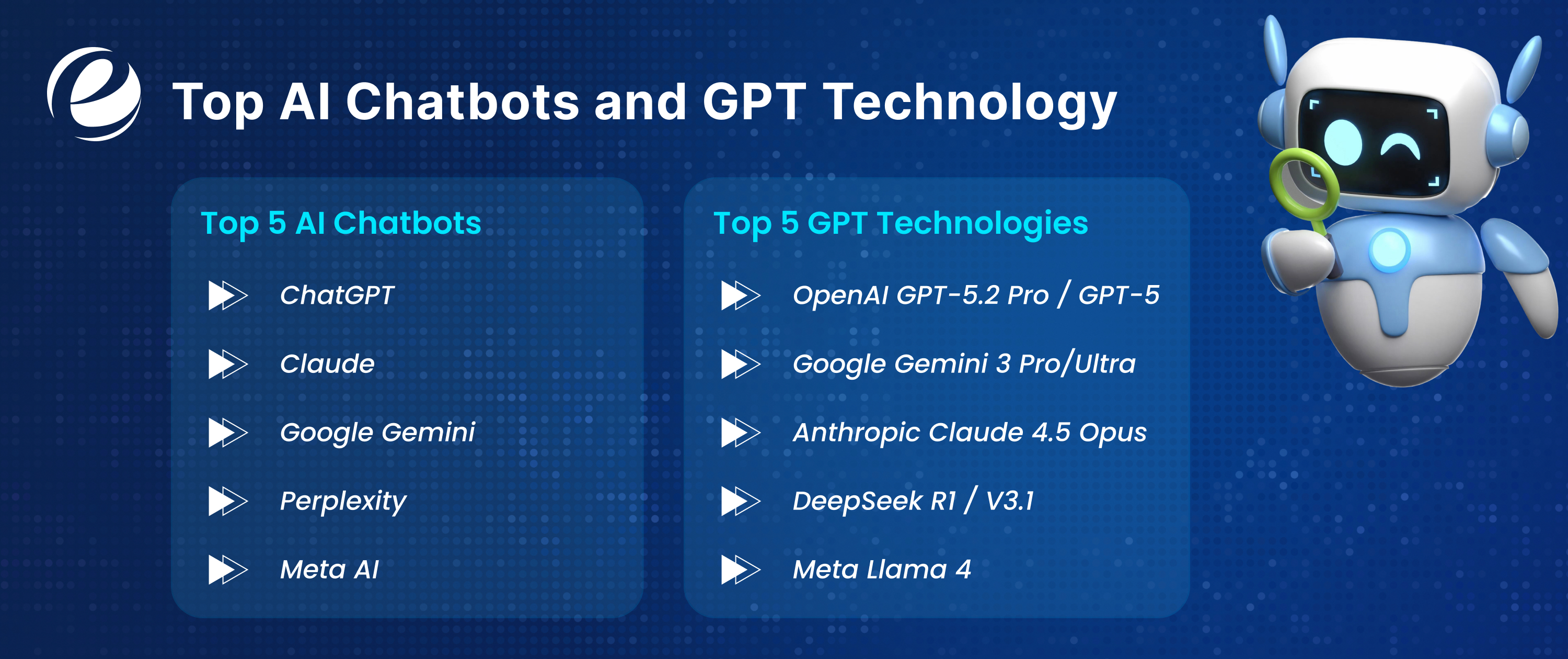 These technologies used to feel like science inventions, but in 2026, they’re a vital part of everyday business. Below we will discuss top AI chatbots and GPT technology:
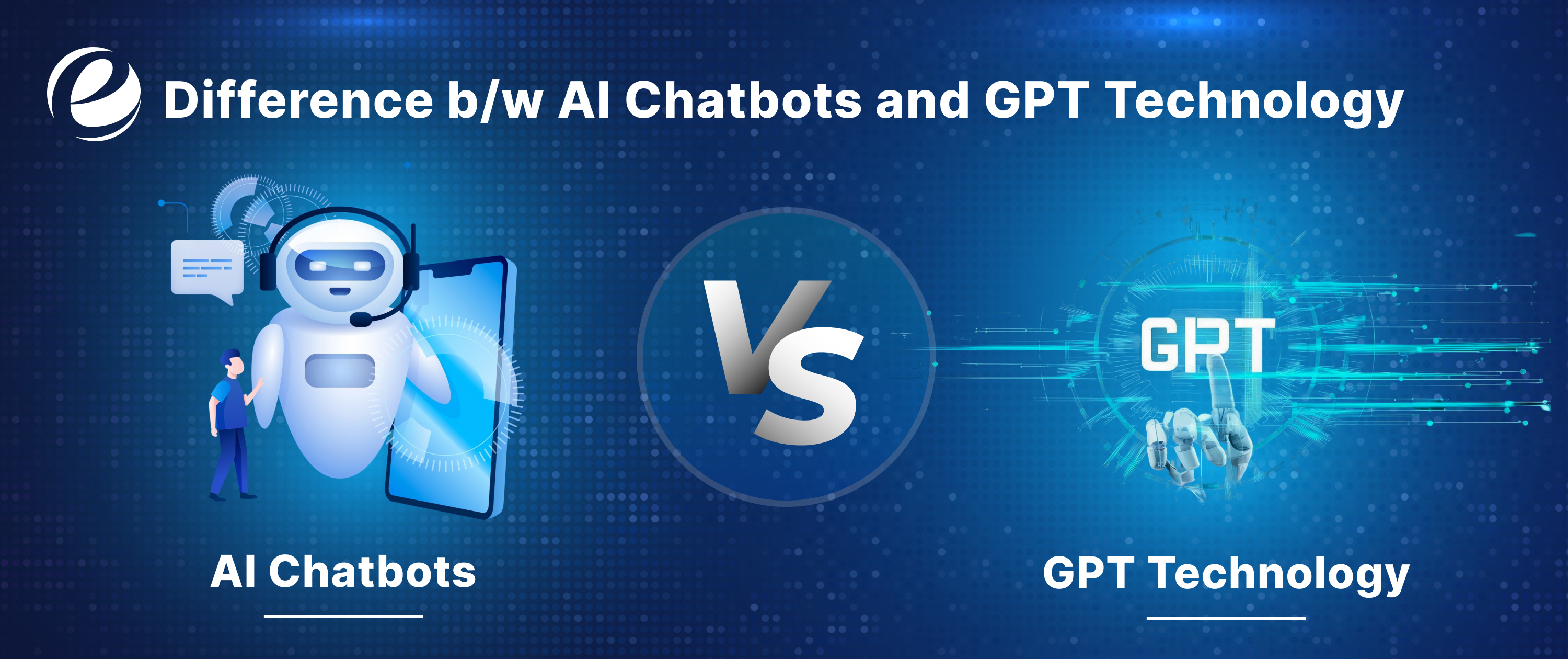 Chatbots adhere to pre-programmed rules, while GPT employs contemporary language models to enhance the versatility of conversations. In this section, we will look at how AI chatbots and GPT technology are different.
| Features | AI Chatbot | GPT Technology |
| Definition | An AI chatbot is a software app that communicates with users via text or voice. | A type of deep learning neural network model that is designed to comprehend and create text. |
| Role | The customer-facing communicative agent. | This agent act as the "brain" or engine that drives the conversation forward. |
| Scope | It is designed for certain tasks, for instance, support and booking. | It is adaptable and used for diverse tasks, which include writing and coding. |
| Training | Training can be either rule-based (without AI) or AI-powered (using LLMs). | Transformer architecture enables training on vast and diverse datasets. |
| Flexibility | It depends; some are rigid, whereas advanced ones are dynamic. | They are highly adaptable, generating fresh, context-sensitive solutions instantly. |
| Context | May find it difficult to handle long-term context | Do not struggle to manage context over long conversations |
| Integration | It seamlessly incorporates into websites, apps, and CRMs. | It is accessed via an API, which needs a wrapper application. |
| Pros | Quick, rule-based replies. | Context-aware conversations |
| Cons | Cannot handle complex queries | High computational cost |
| Examples | Zendesk Bot, Drift, and Intercom | GPT-5.2 Pro |

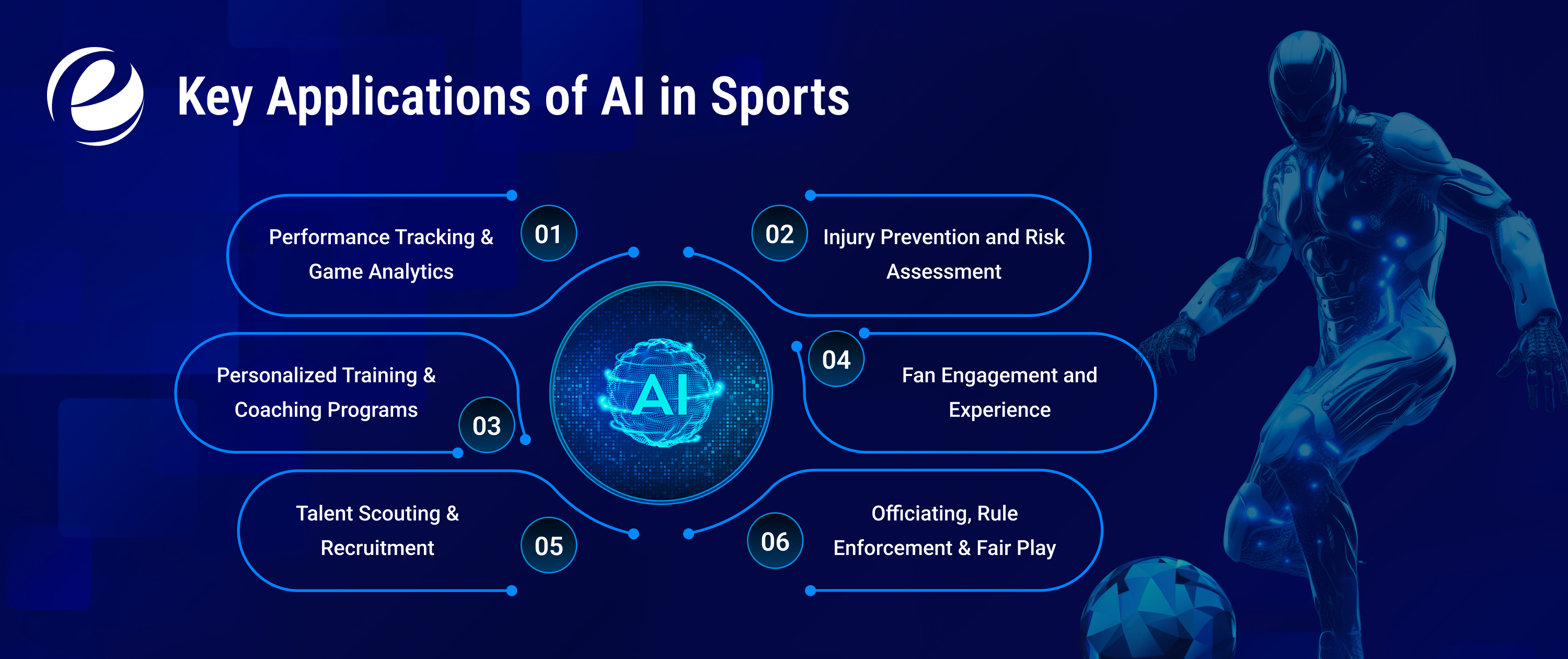 AI in sports has evolved simply from presenting scores and schedules. Today, its role is far more significant, allowing teams to develop smarter strategies, helping athletes to improve performance, and delivering more engaging and personalized experiences for fans.
Artificial intelligence in sports allows for processing the data of live matches together with years of historical data to deliver insights that are timely, relevant, and actionable. This transformation has led to a significant change in the training, competition, and fan interaction managed in the digital sports ecosystem.
The following are some of the use cases that depict the way AI is applied in sports app development:
AI in sports has evolved simply from presenting scores and schedules. Today, its role is far more significant, allowing teams to develop smarter strategies, helping athletes to improve performance, and delivering more engaging and personalized experiences for fans.
Artificial intelligence in sports allows for processing the data of live matches together with years of historical data to deliver insights that are timely, relevant, and actionable. This transformation has led to a significant change in the training, competition, and fan interaction managed in the digital sports ecosystem.
The following are some of the use cases that depict the way AI is applied in sports app development:
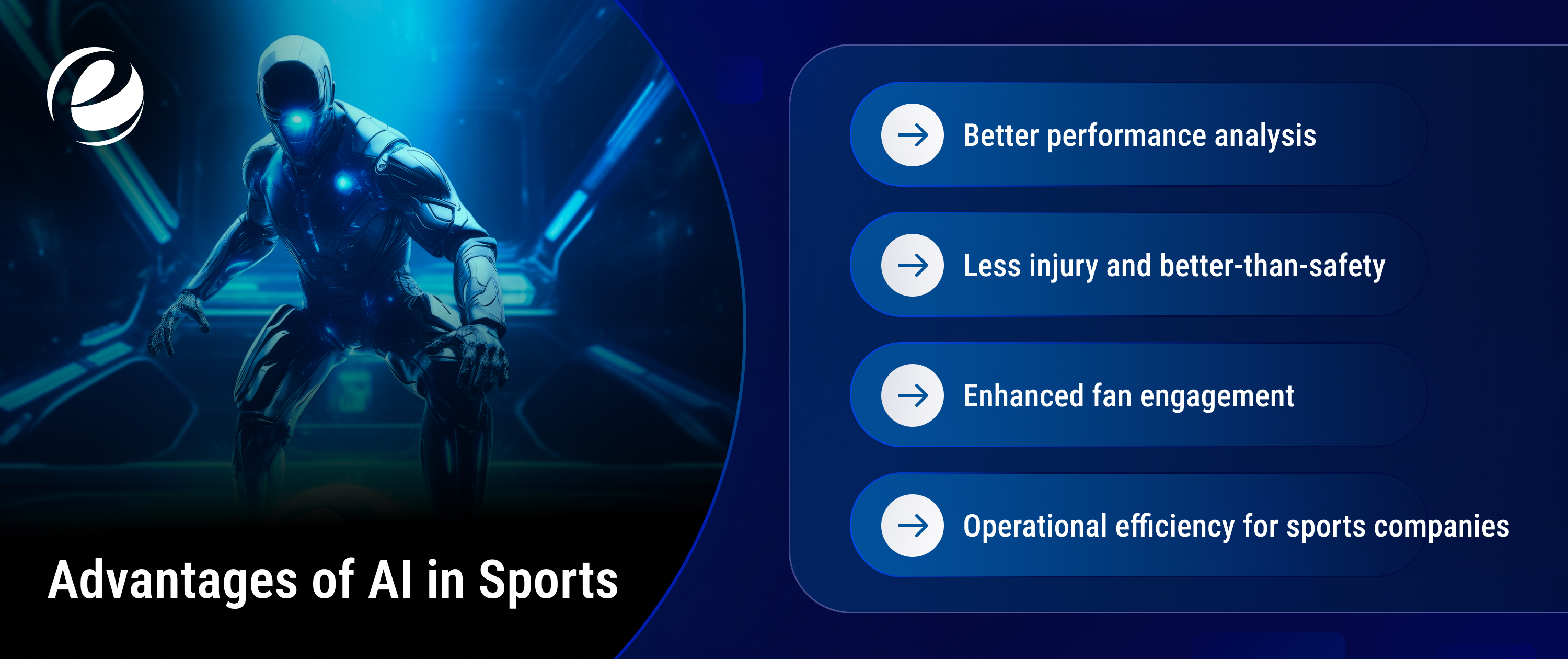 AI has turned out to be one of the most important assets in modern sports. The biggest achievement that AI has accomplished is converting huge amounts of user-friendly data and insights.
The advantages of AI in sports are:
AI has turned out to be one of the most important assets in modern sports. The biggest achievement that AI has accomplished is converting huge amounts of user-friendly data and insights.
The advantages of AI in sports are:
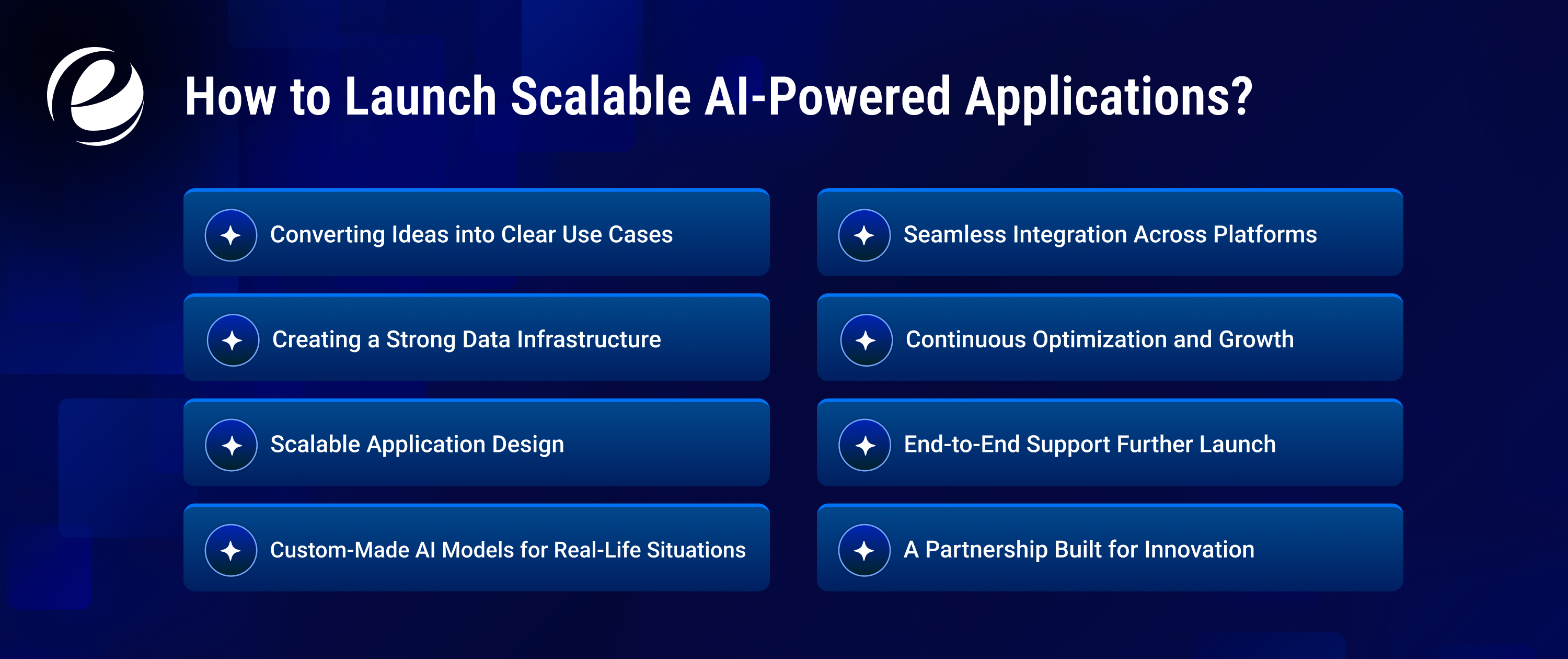 The launch of an AI application nowadays is not solely a matter of technology; rather, it is a matter of developing a product that is capable of growing, adapting, and performing consistently under increased demand. At this point, Emizentech Imaginovation takes the lead, as it facilitates the transition from idea to scalable reality for businesses through a well-structured and practical approach.

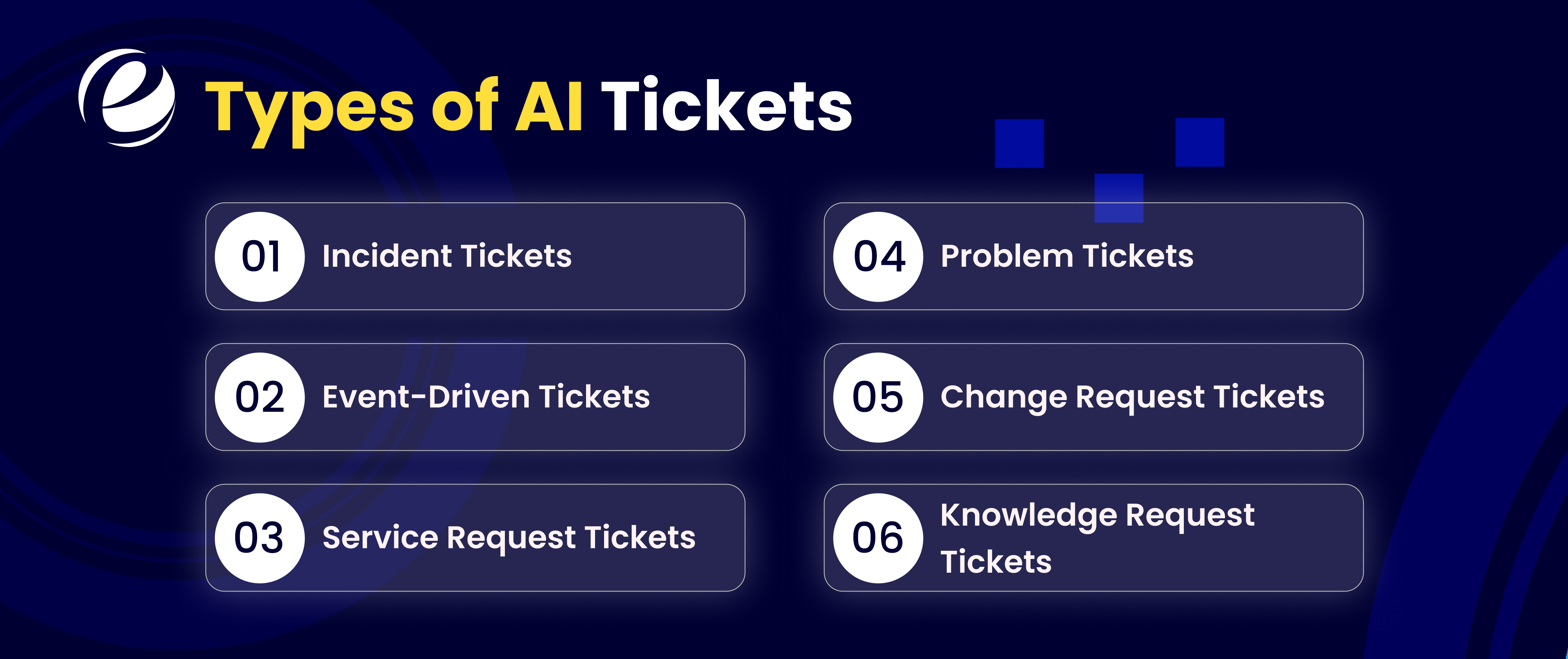
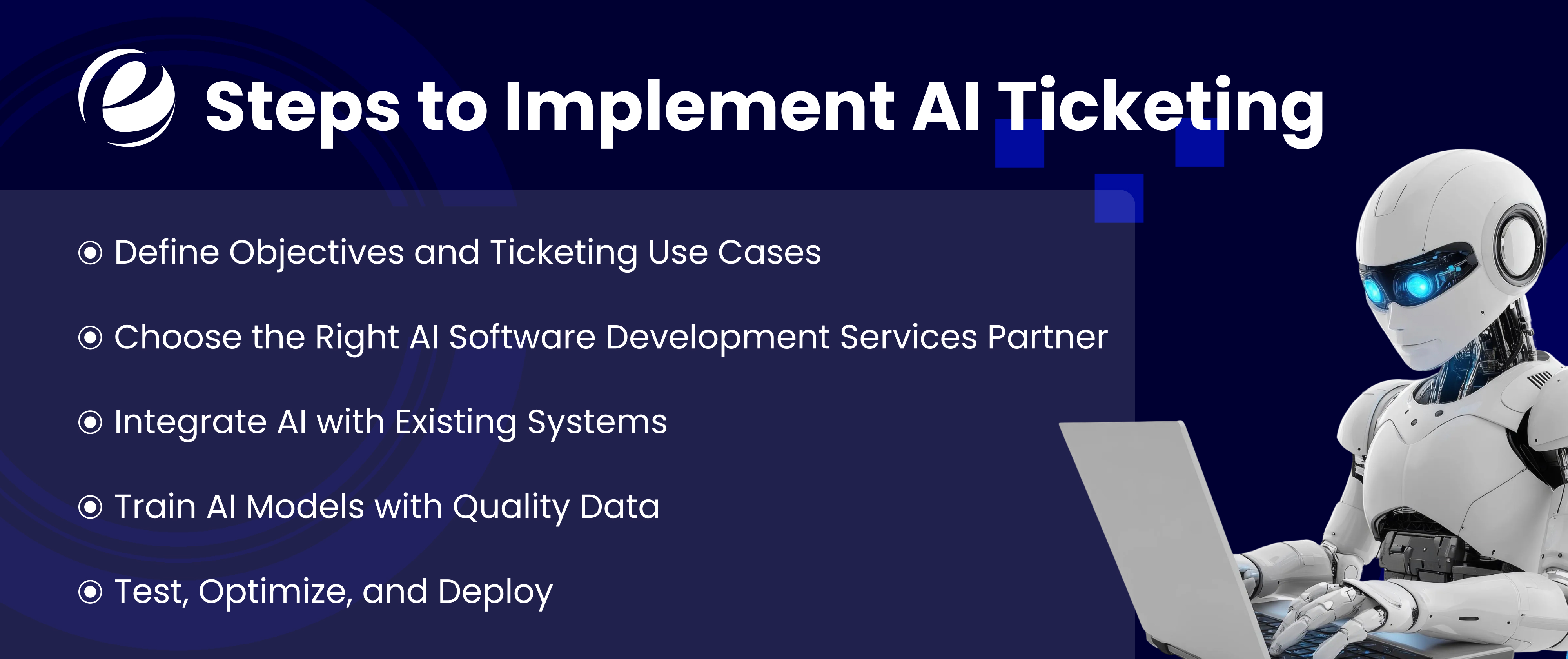

 AI voice cloning is a technological revolution that, through the best voice cloning AI techniques, accurately reproduces a person's voice to an incredible degree. Unlike text-to-speech (TTS) or voice synthesis that produce artificial voices, AI voice cloning captures the real thing, thus making it sound personal, such as tone, accent, and emotion.
The leading AI voice cloning technologies are making a significant impact in the industry by creating a human-like sound experience in sectors like virtual assistants, audiobooks, and gaming.
AI voice cloning is a technological revolution that, through the best voice cloning AI techniques, accurately reproduces a person's voice to an incredible degree. Unlike text-to-speech (TTS) or voice synthesis that produce artificial voices, AI voice cloning captures the real thing, thus making it sound personal, such as tone, accent, and emotion.
The leading AI voice cloning technologies are making a significant impact in the industry by creating a human-like sound experience in sectors like virtual assistants, audiobooks, and gaming.
| Technology Stack Category | Specific Technologies / Tools |
| Programming Languages | Python, C++, JavaScript |
| Deep Learning Frameworks | TensorFlow, PyTorch, Keras |
| Speech Processing Libraries | Librosa, PyDub, Kaldi |
| Natural Language Processing (NLP) | Hugging Face Transformers, NLTK |
| Machine Learning Platforms | OpenAI, Google Cloud AI, AWS SageMaker |
| Voice Synthesis Engines | WaveNet, Tacotron, DeepVoice |
| Audio Data Management | AWS S3, Google Cloud Storage, Azure Blob Storage |
| Open Source Voice Cloning Tools | Mozilla TTS, Coqui TTS, Respeecher |
| Containers & Orchestration | Docker, Kubernetes |
| Frontend Integration | ReactJS, Angular |
| Backend APIs | Flask, FastAPI, Node.js |
| Security & Privacy Tools | OAuth, JWT, Encryption libraries |
 AI voice cloning is one of the most powerful means available today to take various industries to a higher level through the provision of good voices that are user-friendly and accessible. It has a very broad range of applications from entertainment to education, thereby making communication more engaging and personalized.
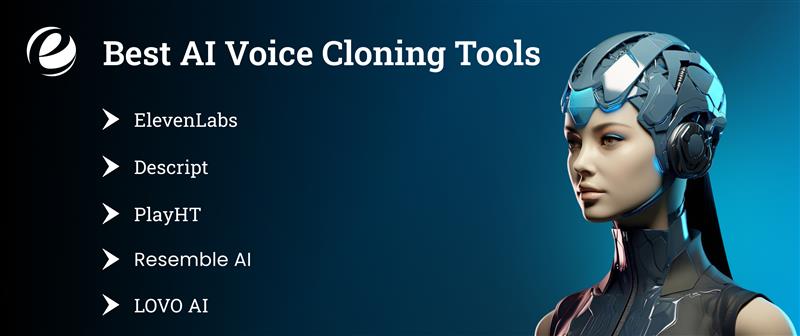 The best Artificial Intelligence voice cloning is now a must-have for users who want to make lifelike and incredibly realistic voices for different purposes. The top companies, including ElevenLabs, Descript, PlayHT, Resemble AI, and LOVO AI, have different and great features that are suitable for creators, developers, and businesses.
However, these tools are distinguished by their pricing, voice quality, languages supported, and unique capabilities such as emotional tone control and real-time voice modulation.
The best Artificial Intelligence voice cloning is now a must-have for users who want to make lifelike and incredibly realistic voices for different purposes. The top companies, including ElevenLabs, Descript, PlayHT, Resemble AI, and LOVO AI, have different and great features that are suitable for creators, developers, and businesses.
However, these tools are distinguished by their pricing, voice quality, languages supported, and unique capabilities such as emotional tone control and real-time voice modulation.
| Platform | Pricing (Monthly) | Features | Free vs Paid |
| ElevenLabs | Starts ~$20 | High fidelity, emotional tone, API access | Limited free trial |
| Descript | Starts ~$15 | Collaborative editing, overdub, easy cloning | Free tier with limitations |
| PlayHT | Starts ~$20 | 600+ voices, 140+ languages, API | Free trial available |
| Resemble AI | Starts ~$30 | Security features, deepfake detection | Trial available |
| LOVO AI | $19 - $99 | Multi-language, marketing and e-learning focus | 14-day free trial |
| Alternative Type | Key Features | Pros | Cons |
| Non-AI TTS Tools | Rule-based or concatenative speech synthesis; simpler voice models | Usually cheaper, faster setup, less complex | Voices sound robotic, with limited expressiveness |
| Manual Voiceover Services | Human voice actors recording scripts | Most natural and emotionally rich voices | Expensive, time-consuming, and less scalable |
| Hybrid Voiceover Services | Use TTS with human post-processing or editing | Balances cost and quality | Moderate cost, some unnatural transitions |
 The AI voice cloning technology is a gift that keeps on giving, and it is so versatile that the aforementioned groups have been its most active users and benefactors. It has the ability to save time and reduce costs using a process that is more efficient than the traditional voiceover recording methods.
One of the most impactful and critical positives is the scalability, which allows the brands to create voice content that is still consistent and personalized, but this is done through different platforms and languages at the same time.
Furthermore, the brand voice clone perfectly mirrors the original brand tone and style, thus aiding the branding process and making the audience more engaged.
The AI voice cloning technology is a gift that keeps on giving, and it is so versatile that the aforementioned groups have been its most active users and benefactors. It has the ability to save time and reduce costs using a process that is more efficient than the traditional voiceover recording methods.
One of the most impactful and critical positives is the scalability, which allows the brands to create voice content that is still consistent and personalized, but this is done through different platforms and languages at the same time.
Furthermore, the brand voice clone perfectly mirrors the original brand tone and style, thus aiding the branding process and making the audience more engaged.

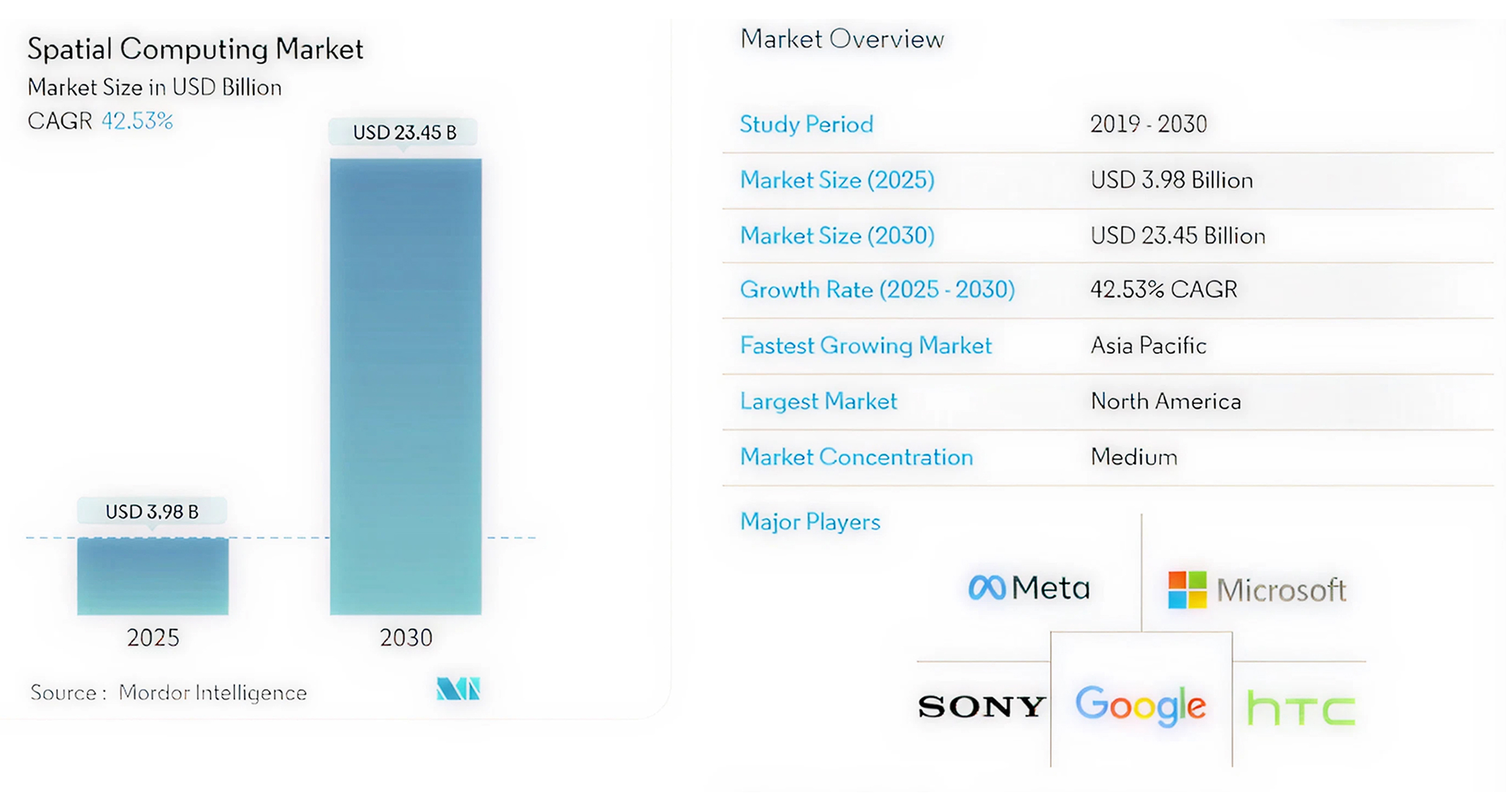
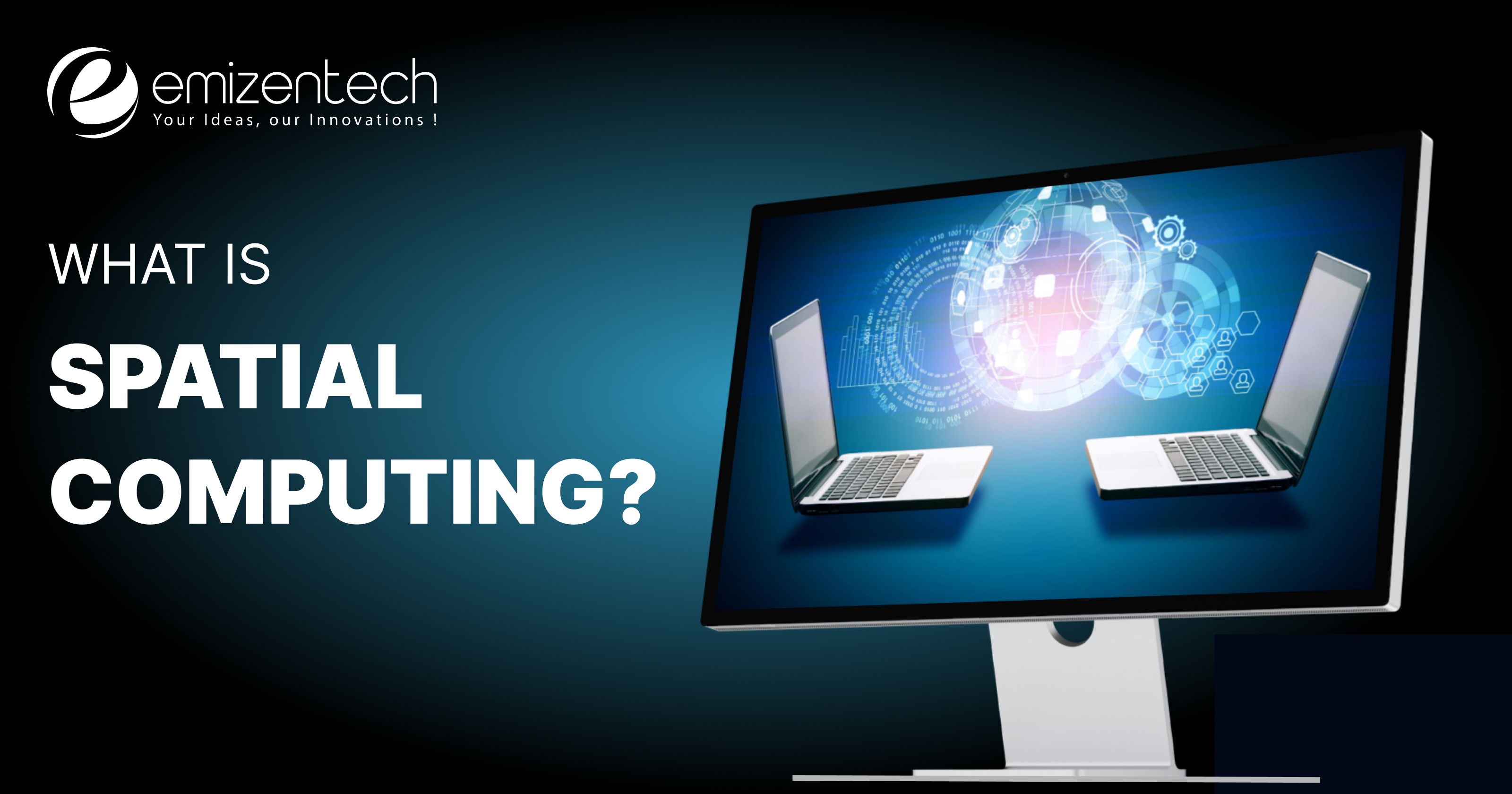 Spatial computing refers to a technology that fuses the physical and digital worlds of the space around us and creates interactive experiences. In this case, the question of what is spatial computing? These are systems that understand space and allow digital objects to interact with the real world. This idea is the concept of how we view interaction between humans and machines, and how our connection with the environment around us will change over time.
In the 3D interaction definition, it is about the ability of computers to process, interpret, and respond to data from real 3D spaces. Think about it: using gestures to control digital content, voice commands, or even using your eyes to look at what you want to engage with, this is part of the concept of this computing meaning the thinking and direction of technology is more human-centered and human-like in thinking.
In terms of “how does spatial computing work”, it consists of advanced tools such as augmented reality (AR), virtual reality (VR), artificial intelligence (AI), and cloud computing that make all of this happen. When you have all of this technology together, the device senses depth, maps a space, and allows you to overlay digital content to the real world, removing barriers that have stifled potential interactions in ways of thinking.
Spatial computing refers to a technology that fuses the physical and digital worlds of the space around us and creates interactive experiences. In this case, the question of what is spatial computing? These are systems that understand space and allow digital objects to interact with the real world. This idea is the concept of how we view interaction between humans and machines, and how our connection with the environment around us will change over time.
In the 3D interaction definition, it is about the ability of computers to process, interpret, and respond to data from real 3D spaces. Think about it: using gestures to control digital content, voice commands, or even using your eyes to look at what you want to engage with, this is part of the concept of this computing meaning the thinking and direction of technology is more human-centered and human-like in thinking.
In terms of “how does spatial computing work”, it consists of advanced tools such as augmented reality (AR), virtual reality (VR), artificial intelligence (AI), and cloud computing that make all of this happen. When you have all of this technology together, the device senses depth, maps a space, and allows you to overlay digital content to the real world, removing barriers that have stifled potential interactions in ways of thinking.
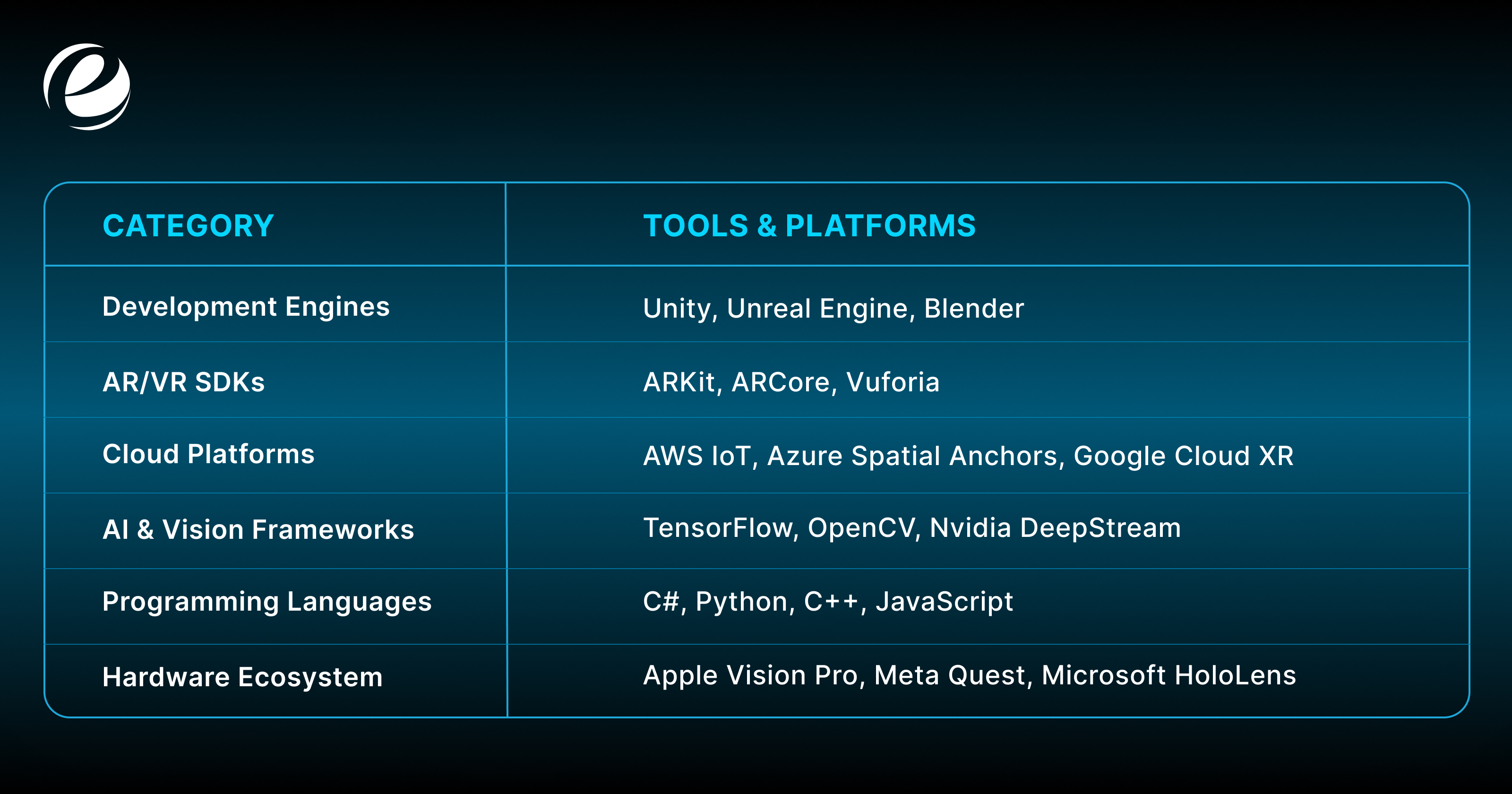

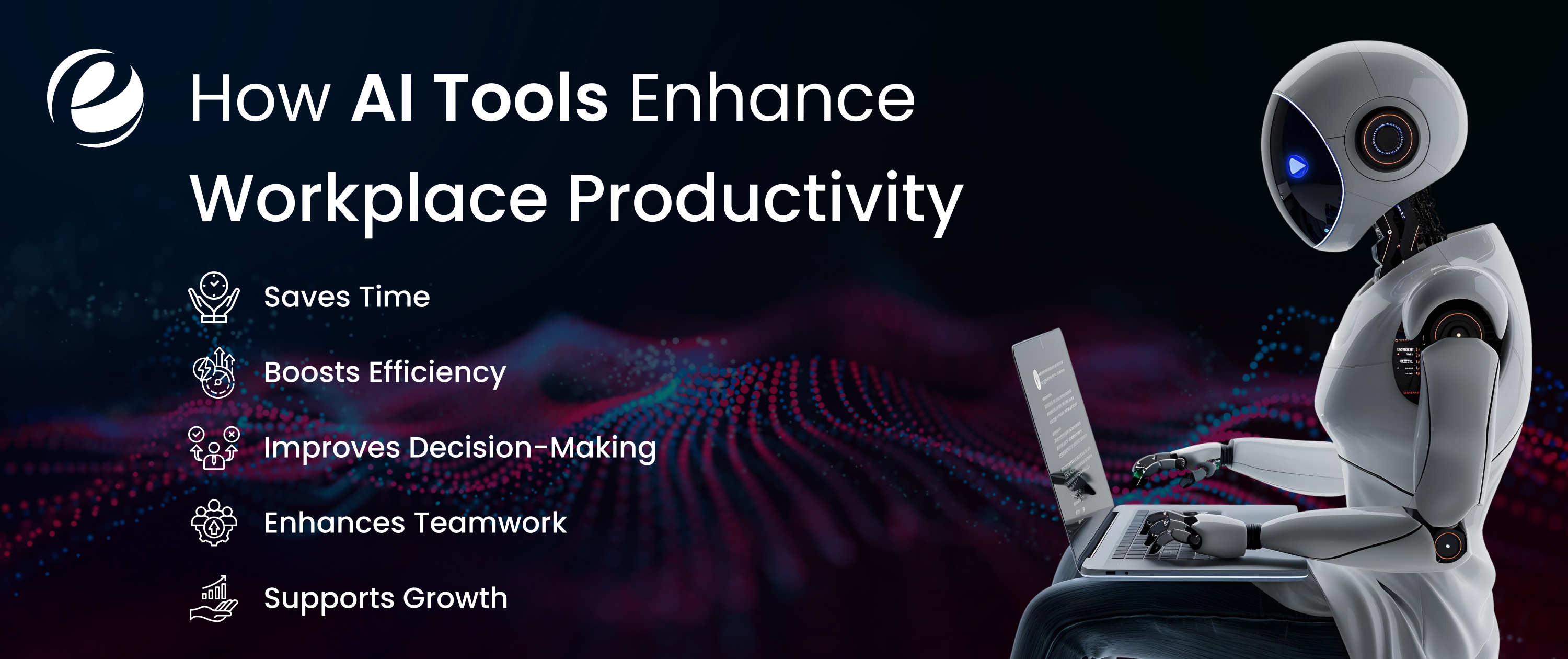 Productivity tools being able to speed up, smarten, and ease work for everybody are thus very important. The best AI productivity tools enable teams or individuals to put their time to better use, carry out monotonous tasks, and increase output on a daily basis.
The AI productivity tools essentially employ smart technology to accomplish the boring tasks for you, organize information, and streamline workflow so you can focus on what's significant.
Key Benefits of Using AI Productivity Tools
Productivity tools being able to speed up, smarten, and ease work for everybody are thus very important. The best AI productivity tools enable teams or individuals to put their time to better use, carry out monotonous tasks, and increase output on a daily basis.
The AI productivity tools essentially employ smart technology to accomplish the boring tasks for you, organize information, and streamline workflow so you can focus on what's significant.
Key Benefits of Using AI Productivity Tools
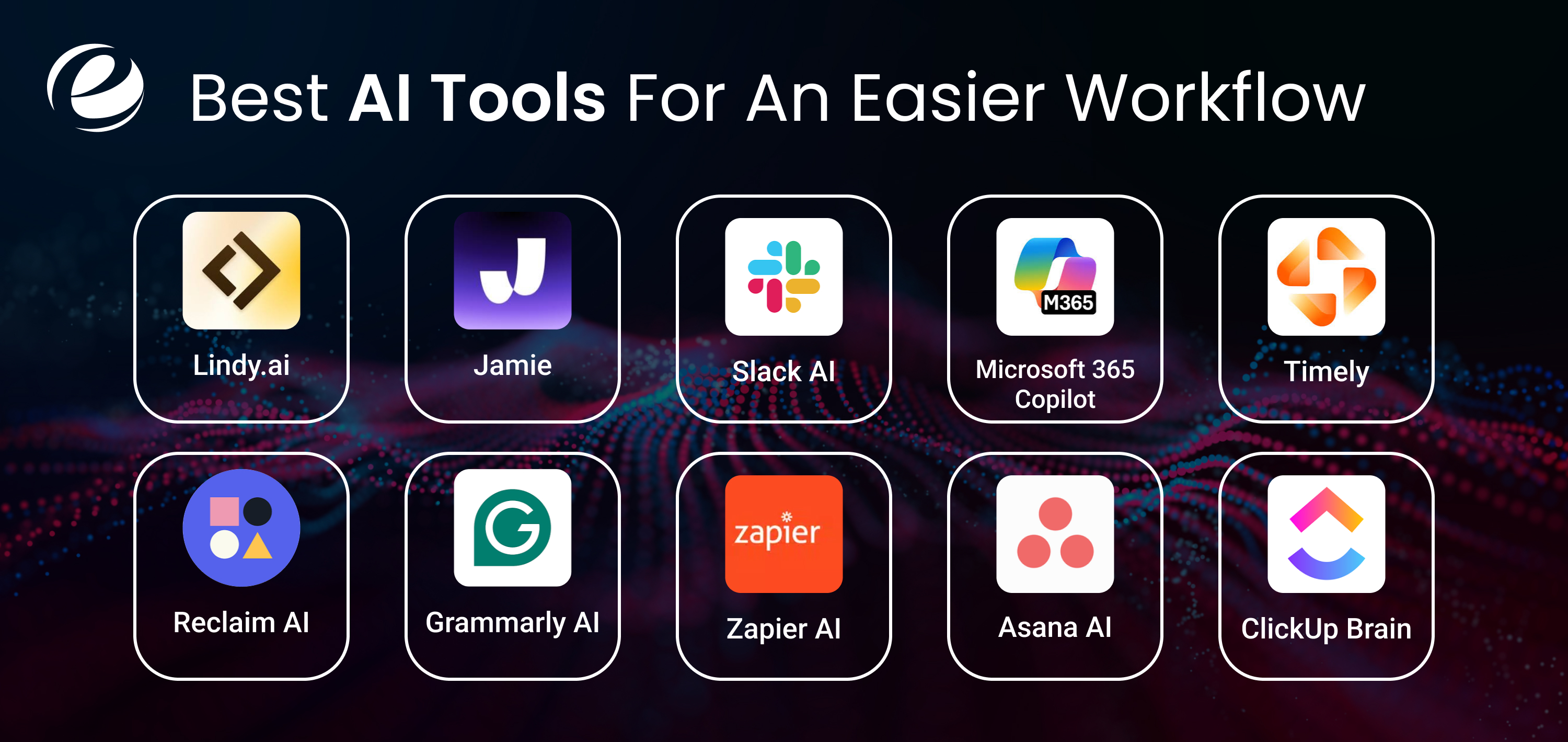 Well, during rush hour, the best AI tools out there for productivity smooth out one's workflow. The tools automate tasks, which go hand-in-hand with working, organizing them, and enhancing collaboration to provide a perfectly apt environment wherein teams and individuals can just focus on what matters most.
These best productivity AI tools save lots of time and promote efficiency for any number of platforms and industries, from smart meeting summarizers to AI scheduling assistants and AI writing assistants.
Well, during rush hour, the best AI tools out there for productivity smooth out one's workflow. The tools automate tasks, which go hand-in-hand with working, organizing them, and enhancing collaboration to provide a perfectly apt environment wherein teams and individuals can just focus on what matters most.
These best productivity AI tools save lots of time and promote efficiency for any number of platforms and industries, from smart meeting summarizers to AI scheduling assistants and AI writing assistants.
| Tool | Launch Year | App Size (MB) | Platforms | Features (Short) |
| Lindy.ai | 2024 | 50 | Web, iOS, Android | AI meeting capture & smart summaries |
| Jamie | 2023 | 40 | Web, Mobile | Real-time meeting notes, AI topic detection |
| Slack AI | 2024 | 150 | Web, iOS, Android | AI chat enhancement, message summarization |
| Microsoft 365 Copilot | 2023 | 200 | Windows, Mac, Web | AI content & data assistant across MS apps |
| Timely | 2022 | 70 | Web, iOS, Android | Automatic time tracking with AI |
| Reclaim AI | 2021 | 60 | Web, Mobile | Smart scheduling & calendar optimization |
| Grammarly AI | 2020 | 80 | Web, iOS, Android | AI writing correction & text suggestions |
| Zapier AI | 2025 | 100 | Web | AI-driven workflow automation |
| Asana AI | 2024 | 130 | Web, iOS, Android | AI task management & collaboration |
| ClickUp Brain | 2023 | 120 | Web, iOS, Android | AI project planning, task prioritization, summaries |
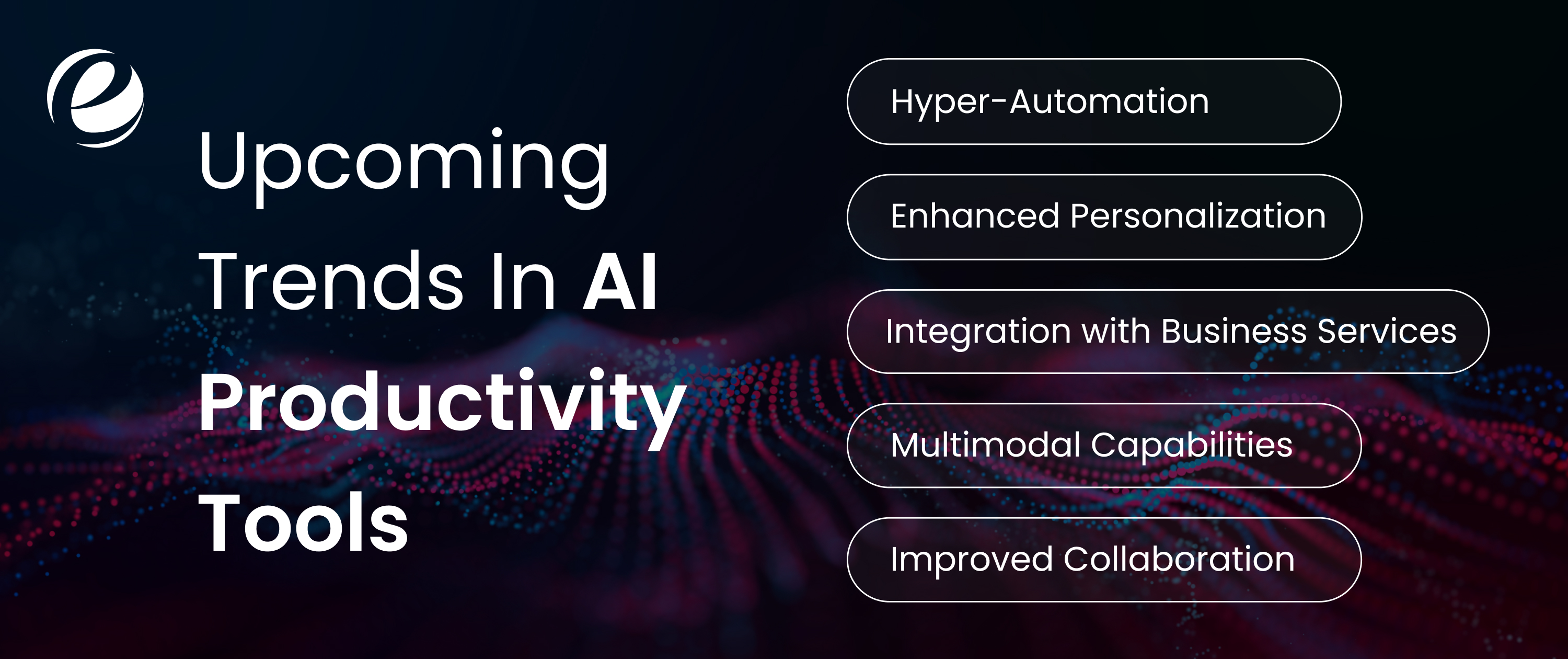 AI-assisted productivity tools are revolutionizing the future of work, as these tools are creating smarter, faster, and efficient workflows. The latter is really helping professionals to focus on activities like creativity and strategy, while, as a matter of fact, they are automating the part of the world that is the routine one.
In brief, whether it is a Android App Development Company or a Web Development Services team, the future of the best AI tools for productivity unfolds possibilities of systems that are not only intelligent but also evolve with businesses.
Key Trends Shaping the Future of AI Productivity Tools
AI-assisted productivity tools are revolutionizing the future of work, as these tools are creating smarter, faster, and efficient workflows. The latter is really helping professionals to focus on activities like creativity and strategy, while, as a matter of fact, they are automating the part of the world that is the routine one.
In brief, whether it is a Android App Development Company or a Web Development Services team, the future of the best AI tools for productivity unfolds possibilities of systems that are not only intelligent but also evolve with businesses.
Key Trends Shaping the Future of AI Productivity Tools

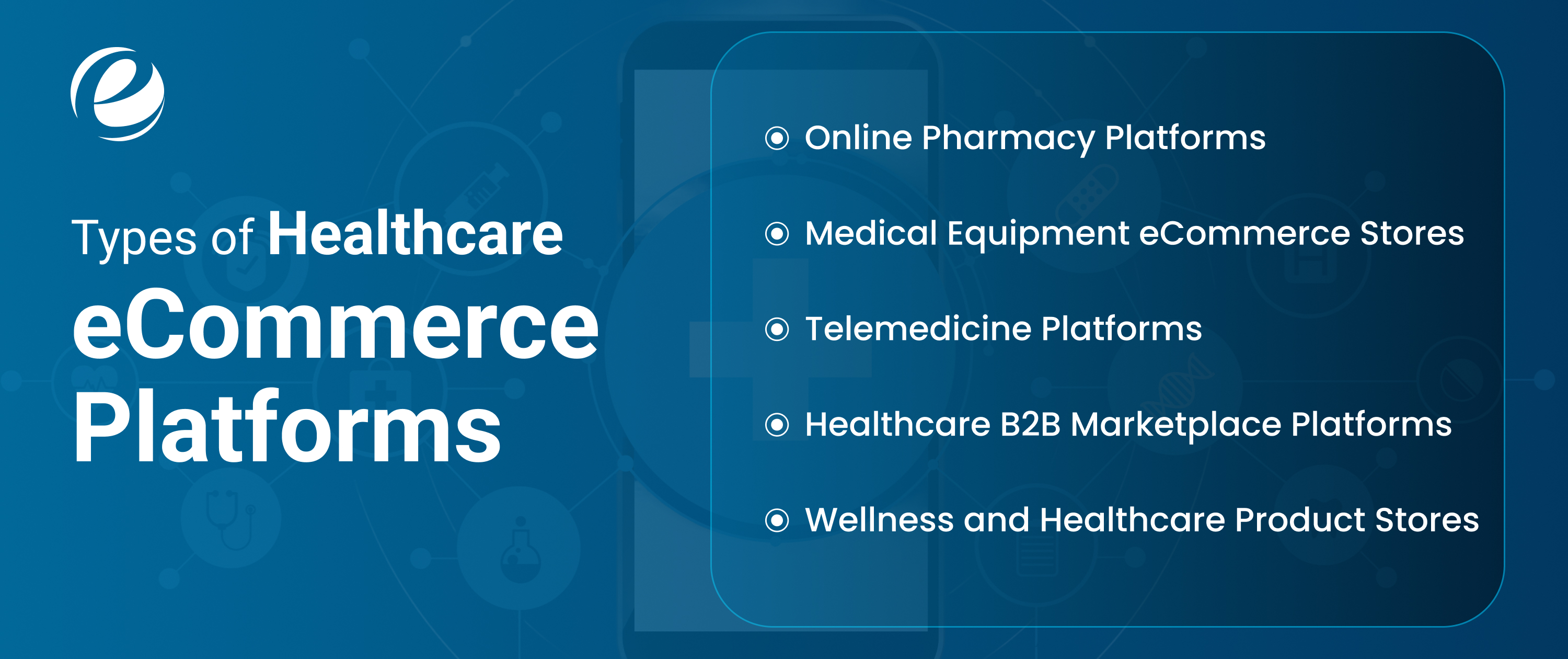 The healthcare industry is changing. fast, and more people are looking for ways to access medical products and services online. From ordering medicines to consulting doctors virtually, there are different types of platforms that are designed to meet these needs.
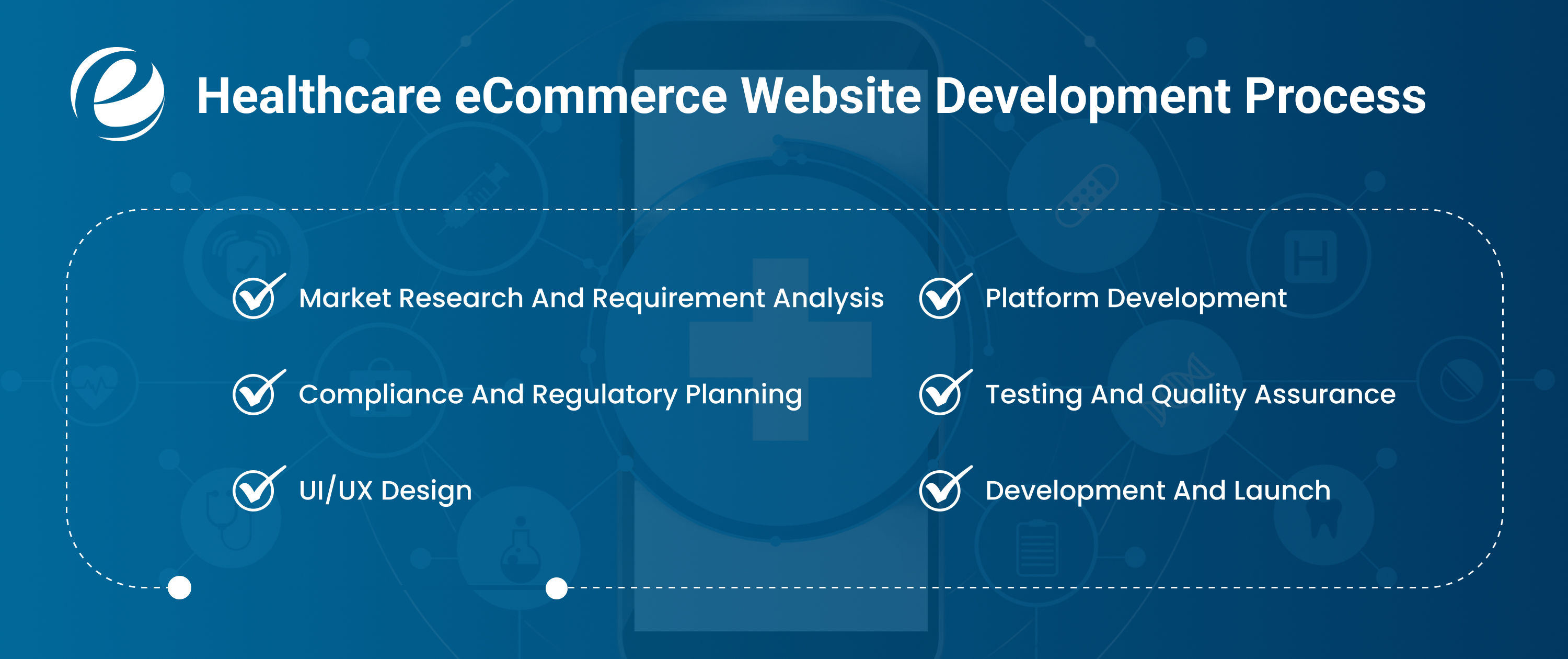 Now that you have learned about the types, features, and top trends of ecommerce healthcare platforms, it is ideal to understand the development process to make informed decisions.
| Size of website | Approximate Cost |
| Small Healthcare Website | $3,000-$10,000 |
| Mid-Level healthcare Website | $3,000-$10,000 |
| Complex Healthcare Website | $30,000-$100,000+ |
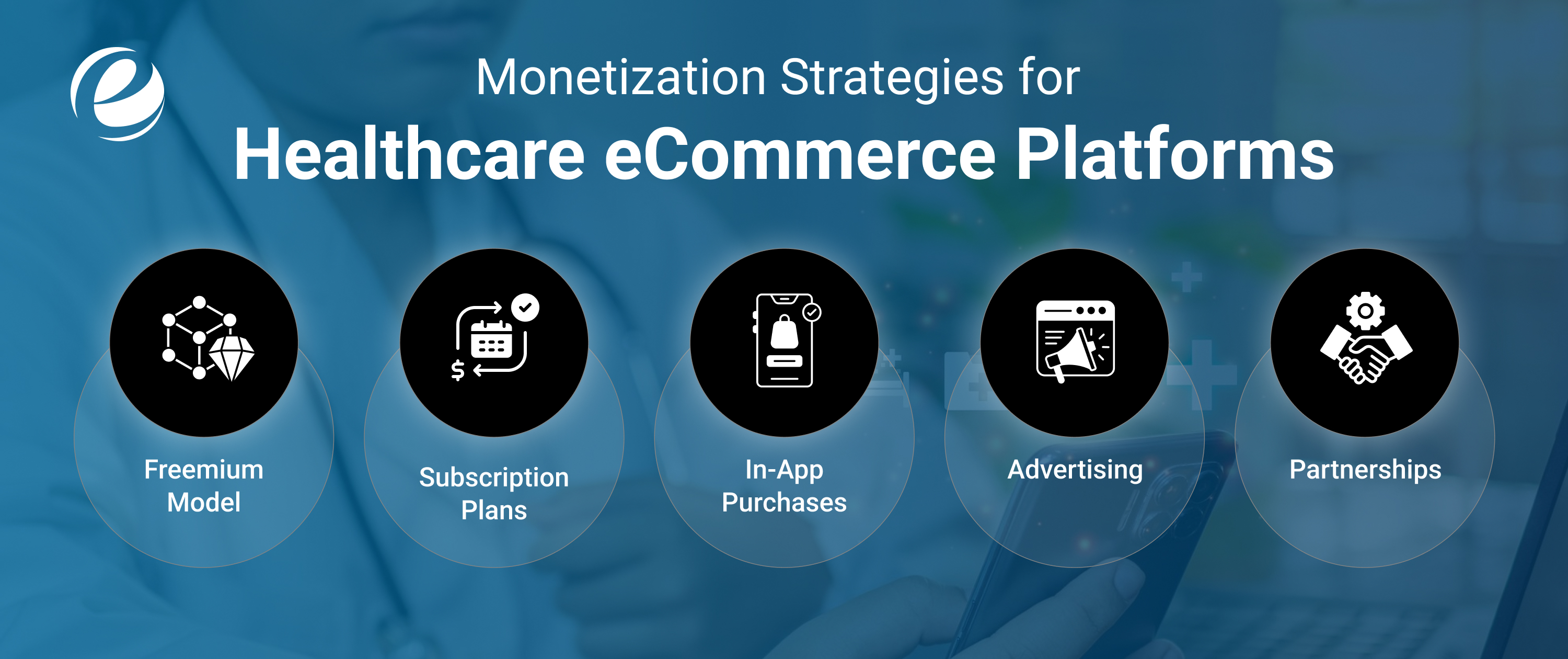 Healthcare eCommerce platforms can generate revenue through multiple monetization models while delivering convenient digital healthcare services. You can adapt the strategies that are mentioned below to improve the service accessibility for users.
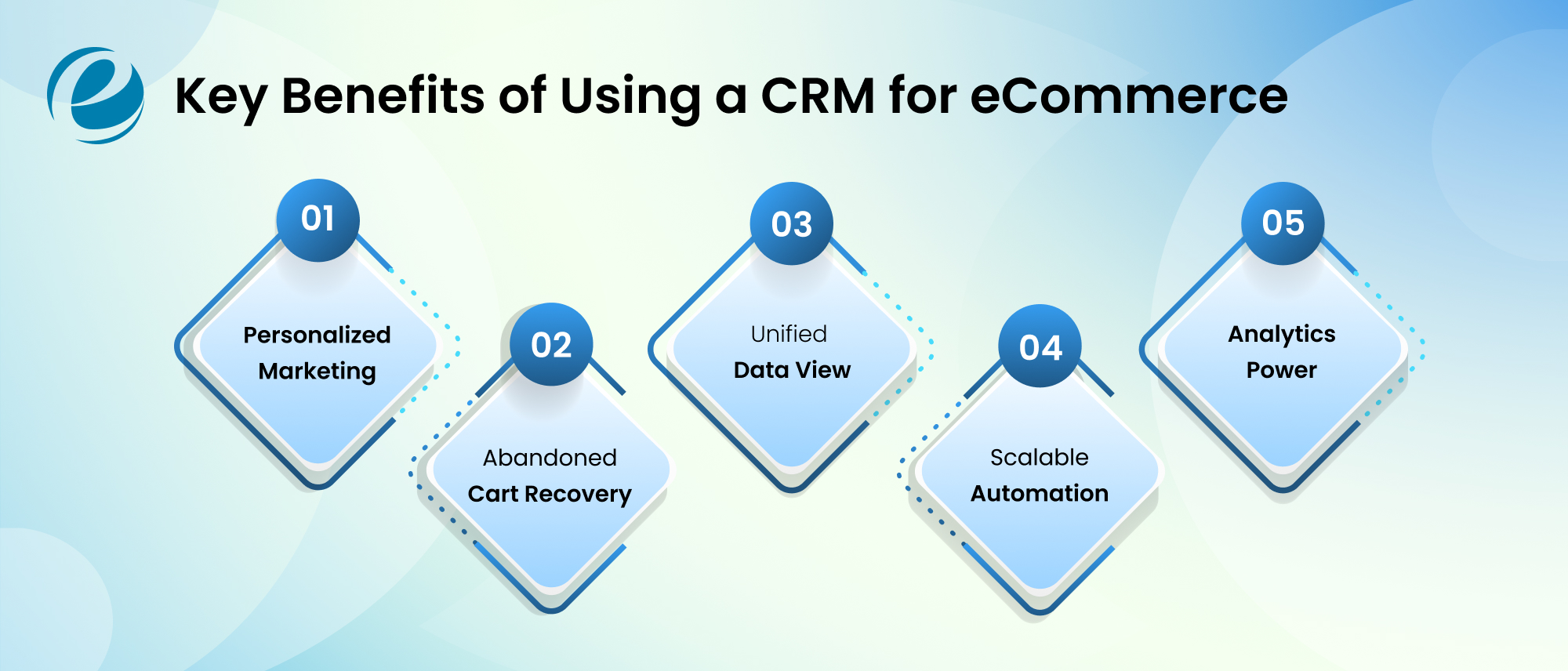 CRM software gives more than one perk through eCommerce CRM, spreading the loyalty and the sales through the seamless integration of CRM in eCommerce. Discover these key advantages.
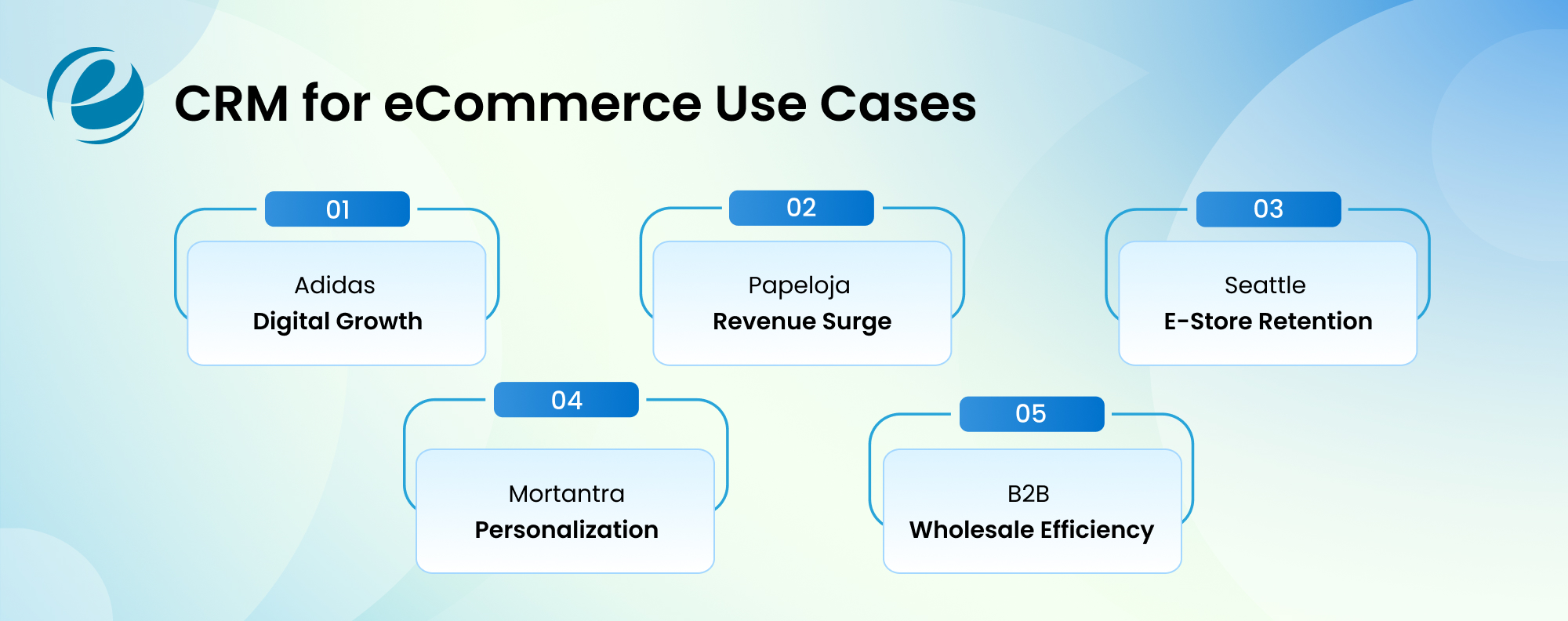 Proven CRM software implementations for eCommerce lead to the discovery of real-world examples. The use cases presented here illustrate the driving of tangible results through CRM eCommerce integration across different industries and sizes of stores.
| CRM Software | Best For | Starting Price (per user/mo) | Key Strengths | eCommerce Integrations | Ratings (G2/Capterra) |
| HubSpot CRM | SMBs/Startups | Free (premium $20+) | Automation, inbound marketing | Shopify, WooCommerce | 4.4/5 |
| Zoho CRM | Budget SMBs | $14 | Custom workflows, AI (Zia) | Shopify, BigCommerce | 4.3/5 |
| Salesforce Commerce Cloud | Enterprises | $25 | Scalability, AI personalization | All major (Magento, Shopify) | 4.2/5 |
| Klaviyo | Marketing-focused | $20 (usage-based) | Email/SMS flows, segmentation | Shopify-native | 4.6/5 |
| Pipedrive | Sales teams | $14 | Pipeline management | Zapier, Shopify | 4.5/5 |
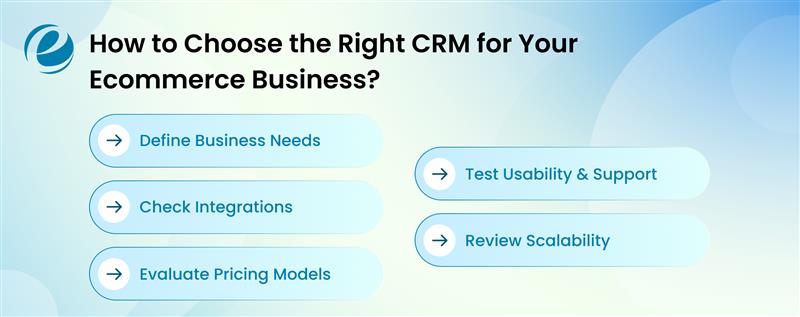 Integrate the right eCommerce CRM with your needs, budget, and growth plans while evaluating eCommerce CRM software. Choose seamless integration and scalability to get the most out of your ROI.
Also, choose the CRM for eCommerce according to your size: HubSpot (free) for startups, Zoho ($14/user) for SMBs, and Salesforce for big companies. Evaluate sales volume, channels (Shopify/one), budget, and tech skills. Ask: "Is eCommerce integration with CRM compatible with my stack? Will eCommerce CRM software support the growth of the company without hiring developers?"
Integrate the right eCommerce CRM with your needs, budget, and growth plans while evaluating eCommerce CRM software. Choose seamless integration and scalability to get the most out of your ROI.
Also, choose the CRM for eCommerce according to your size: HubSpot (free) for startups, Zoho ($14/user) for SMBs, and Salesforce for big companies. Evaluate sales volume, channels (Shopify/one), budget, and tech skills. Ask: "Is eCommerce integration with CRM compatible with my stack? Will eCommerce CRM software support the growth of the company without hiring developers?"
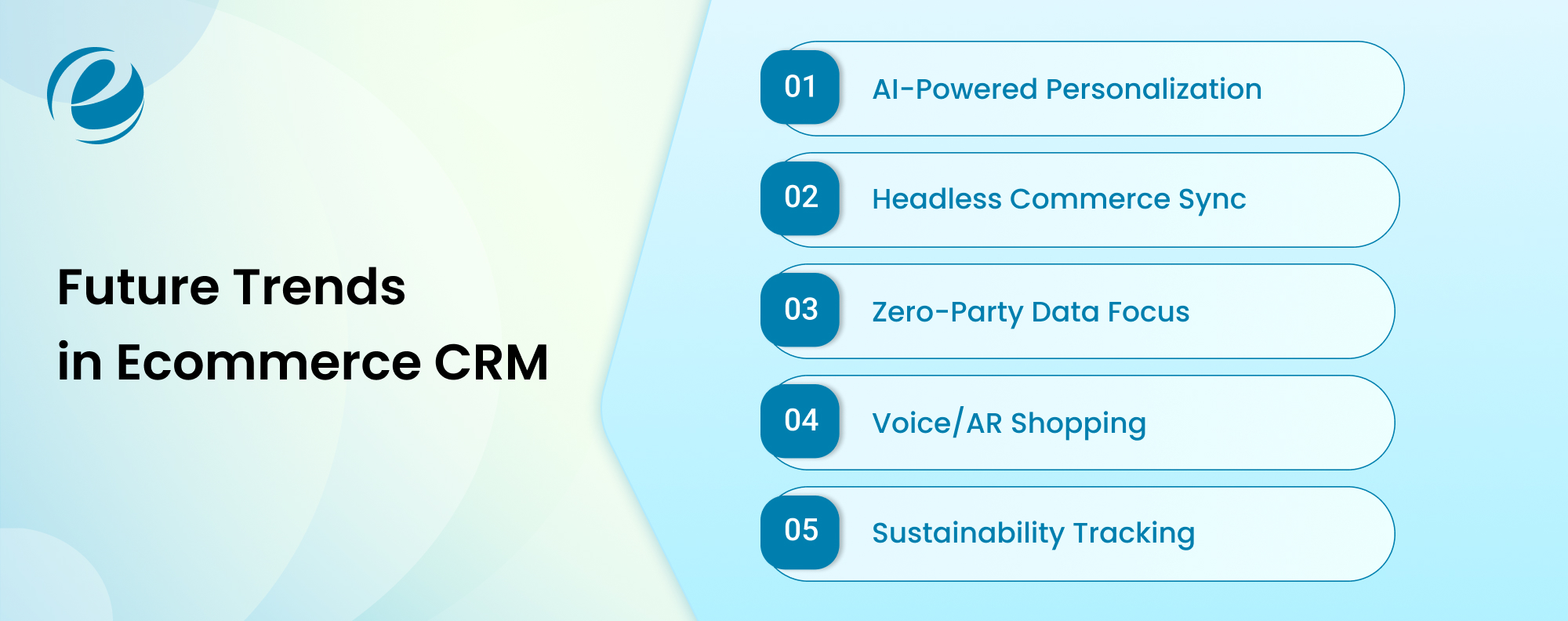 The use of AI and the adoption of multiple channels lead to rapid changes in the eCommerce CRM software; thus, the eCommerce area is constantly changing. Smart CRM integration will definitely take you to the future.

 Ecommerce cybersecurity is the shield against technological threats like hacking and disorder by malware throughout the internet ecosystem, but eCommerce fraud prevention controls the financial scams, such as stolen cards and chargebacks. It is a must for dual eCommerce security in the retail landscape of today.
| Aspect | eCommerce Cybersecurity | eCommerce Fraud Prevention |
| Primary Focus | Broad protection of infrastructure, data, networks | Specific transaction validation and scam detection |
| Key Tools | Firewalls, antivirus, encryption for eCommerce security | AI scoring, CVV checks to prevent eCommerce fraud |
| Threats Addressed | Hacking, phishing, DDoS attacks | Chargebacks, stolen cards, bot attacks |
| Scope | Entire eCommerce website security ecosystem | Payment gateways and order flows |
| Metrics | Uptime, compliance (PCI DSS) | Fraud rate <1%, chargeback ratio |
| Integration | During eCommerce development | Real-time in checkout for eCommerce cybersecurity |
 New Stores require basic security standards, Growing Stores step up their security, and Enterprises expect the highest level of eCommerce fraud prevention. This 5-step checklist adjusts the eCommerce security according to the different levels of the market.
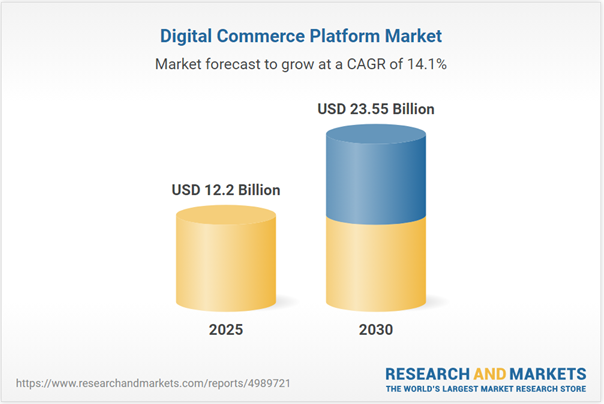 This boom is caused by advancements in AI, cloud computing, and mobile commerce, among rising consumer demand for localized, omnichannel shopping. Top platforms help businesses with scalable, feature-enriched, and secure solutions to prosper in an ever-evolving market landscape.
In this blog, you will discover about digital commerce: everything you want to know, like what a digital commerce platform is, the top 10 platforms, factors to consider while choosing the perfect one for your business, and why choose the best one, and much more.
This boom is caused by advancements in AI, cloud computing, and mobile commerce, among rising consumer demand for localized, omnichannel shopping. Top platforms help businesses with scalable, feature-enriched, and secure solutions to prosper in an ever-evolving market landscape.
In this blog, you will discover about digital commerce: everything you want to know, like what a digital commerce platform is, the top 10 platforms, factors to consider while choosing the perfect one for your business, and why choose the best one, and much more.
 These platforms are central to any contemporary digital business because digital commerce keeps pace with evolving consumer demands, new technologies, etc. EmizenTech is a leading digital commerce and eCommerce development company, renowned for providing scalable, innovative solutions worldwide. If you want to understand more about E commerce Development, you can check EmizenTech's Digital Commerce page.
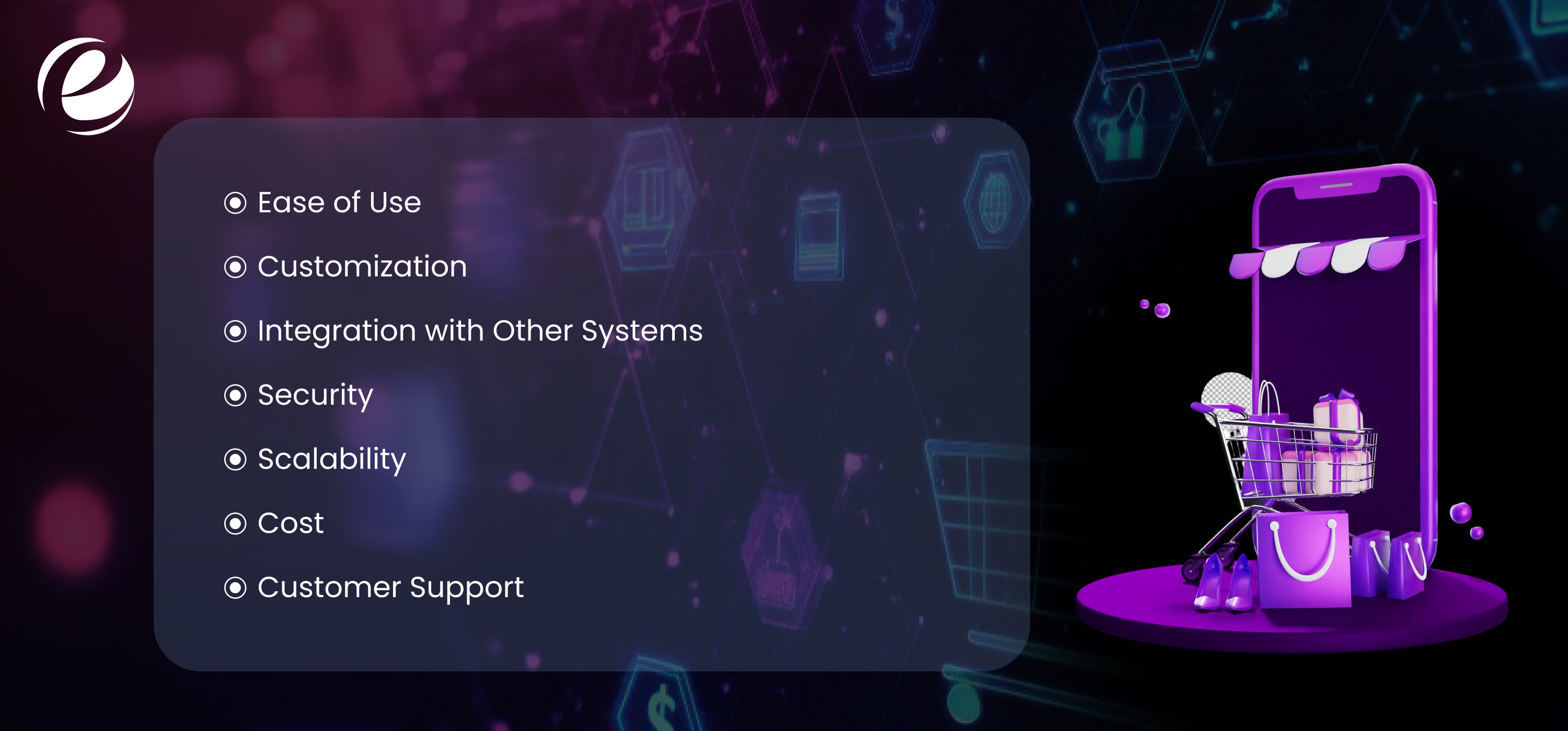 One of the most critical decisions is choosing the right digital commerce platform for your business. In general, the following factors, such as ease of use, customization, integration, security, and scalability, have an impact on the overall. An in-depth examination of these different parts will guarantee a platform that will meet not only your current needs but also your future ones.
| Platform | Best For | Customization | Integrations | Security | Scalability | Cost Structure | Customer Support | Mobile Optimization |
| Shopify | Small to medium businesses | Moderate | Extensive (Apps marketplace) | High (PCI compliant, SSL) | High | Monthly + transaction fees (if no Shopify Payments) | 24/7 support, docs | Mobile-responsive themes |
| WooCommerce | WordPress users, budget-conscious | High (Open-source) | Strong (WP plugins) | Depends on hosting | High | Free base + hosting + plugins cost | Community & docs | Responsive |
| Magento (Adobe Commerce) | Large enterprises | Very high | Extensive | Very high | Very high | License + hosting + development | Enterprise-level | Mobile-optimized |
| BigCommerce | Growing businesses, high volume | Moderate | Excellent | High | High | Monthly, no transaction fees | 24/7 support | Mobile-friendly |
| Wix eCommerce | Small businesses, beginners | Moderate | Limited | Good | Low to moderate | Fixed monthly fees | 24/7 support | Mobile-responsive |
| Squarespace | Creative entrepreneurs | Moderate | Limited | Good | Moderate | Monthly subscription | 24/7 support | Responsive |
| PrestaShop | Open-source enthusiasts, growing | Very high | Good | Depends on hosting | High | Free + hosting + modules | Community, limited paid | Mobile-friendly |
| Shopware | European businesses (Germany) | High | Good | High | High | License + hosting + add-ons | Good community | Responsive |
| Salesforce Commerce Cloud | Enterprises with advanced needs | Very high | Extensive | Very high | Very high | Enterprise pricing | Enterprise-level | Mobile-optimized |
| Volusion | Online retail businesses | Moderate | Moderate | Good | Moderate | Monthly + transaction fees | Support & docs | Mobile-friendly |
 Choosing the right one is vital to business success. The right software will support current operations, encourage growth, improve experience, and encourage operational efficiency.

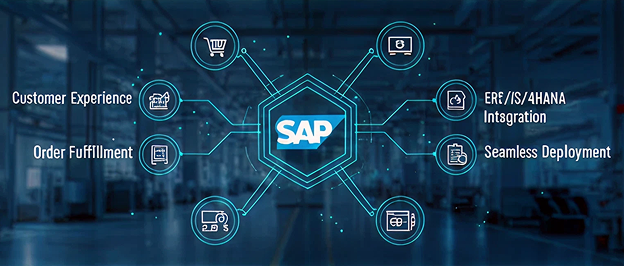
Pricing Model
Users pay monthly or yearly fees to use SAP Commerce Cloud software during the subscription period.
The subscription usually comes with named-user licenses, which means that each user who needs access must have their own license.
There are different pricing tiers for different types of users, such as professionals, functional users, and self-service users, to meet their needs for usage and access.
Prices are often shown as a fee per user or unit, and sometimes there are tiered discounts for larger orders.
For business contracts, billing usually happens once a year in advance, but in some cases, it might be possible to negotiate monthly billing.
| Features | SAP commerce cloud | Magneto | Salesforce Commerce | Shopify Plus | Big Commerce |
| Core Audience | Multinational corporations ranges from B2C and B2B | Ranges from large corporations to mid-size corps, tailored solutions | Multinational B2C brands with native Saas and marketing automation | Exponentially well growing organizations and company level business | Large organization to middle market for B2C and B2B |
| Architecture Model | Headless commerce with API-first and solid backend, separate frontend | Works on APIs like GraphQL and REST for seamless compatibility with headless commerce and service-oriented architecture. | Assist you with the framework for storefronts with composable headless solutions and separate backend and frontend. | Allows the leverage of storefront API for tailored frontends for seamless and flexible approach. | Tailored frontends with headless architecture with API first and cloud based approach for enterprises scalability. |
| Integration | Pre-built integration with seamless compatibility, SAP ecosystem with CRM, S/4HANA, ERP , frequent fine-tuning for custom development. | Flexible integration with a third party system with an open source community with enhanced and extensive solutions. | Easy integration with salesforce products and cloud marketing with pre-built integrations. | Assist you with the leverage of low-code approach with strong API, complex enterprise-level integration. | Extensive API with easy integration with external systems with frequent fine-tuning and enhanced connectivity with CRM,s and ERP,s . |
| Tailored solutions | Industry specific solutions for fast-tracking B2B and other sectors with pre-configured solutions and customization. | Leverage of Building custom models as well core modification with seamless customization with open source platforms. | Focused approach on industry solutions and AI for B2C and B2B for product personalization and extensive suite of tools. | Custom scripts for frequent tailoring and personalized checkout experience with deep level of coding and customization. | Varied range of built-in features for B2B and B2C that reduce the need for apps with headless architecture and robust backend. |
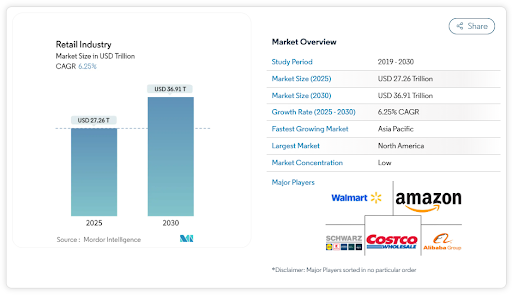 According to Mordor Intelligence, it is expected that the global retail industry will reach nearly $27.26 trillion in 2025 and about $36.9 trillion by 2030, with an almost assured rate of growth in online and mobile commerce buying at a compound annual growth rate (CAGR) of over 11%, which is a clear shift to digital sales alongside traditional retail.
The e-commerce platform market is expected to double from 'just under $9 billion in 2025' to over $16.5 billion by 2030, with a CAGR of 12.7%. This growth is a direct result of a rapid acceleration of smartphone user adoption because of personalization in shopping experiences that deliver access and convenience to digital experiences.
According to Grand View Research, the global e-commerce market was valued at $25.9 trillion in 2023 and expected to reach $83.3 trillion by 2030, with a CAGR rate between 2024 and 2030 approaching 19%. Some of the trends influencing growth in the e-commerce market are mobile commerce, secure payment platforms, and risk stemming from social amplification by social media.
Similarly, the global smart retail market (advanced technology used in physical retail stores, or AI & IoT to track and manage inventory and customers) is expected grow from around ~$43 billion in 2024 to over $450 billion in 2033 at a CAGR over 30%, which showcases the substantial amount of innovation that modern physical retail requires in light of these changes (Source: Grand View Research).
According to Mordor Intelligence, it is expected that the global retail industry will reach nearly $27.26 trillion in 2025 and about $36.9 trillion by 2030, with an almost assured rate of growth in online and mobile commerce buying at a compound annual growth rate (CAGR) of over 11%, which is a clear shift to digital sales alongside traditional retail.
The e-commerce platform market is expected to double from 'just under $9 billion in 2025' to over $16.5 billion by 2030, with a CAGR of 12.7%. This growth is a direct result of a rapid acceleration of smartphone user adoption because of personalization in shopping experiences that deliver access and convenience to digital experiences.
According to Grand View Research, the global e-commerce market was valued at $25.9 trillion in 2023 and expected to reach $83.3 trillion by 2030, with a CAGR rate between 2024 and 2030 approaching 19%. Some of the trends influencing growth in the e-commerce market are mobile commerce, secure payment platforms, and risk stemming from social amplification by social media.
Similarly, the global smart retail market (advanced technology used in physical retail stores, or AI & IoT to track and manage inventory and customers) is expected grow from around ~$43 billion in 2024 to over $450 billion in 2033 at a CAGR over 30%, which showcases the substantial amount of innovation that modern physical retail requires in light of these changes (Source: Grand View Research).
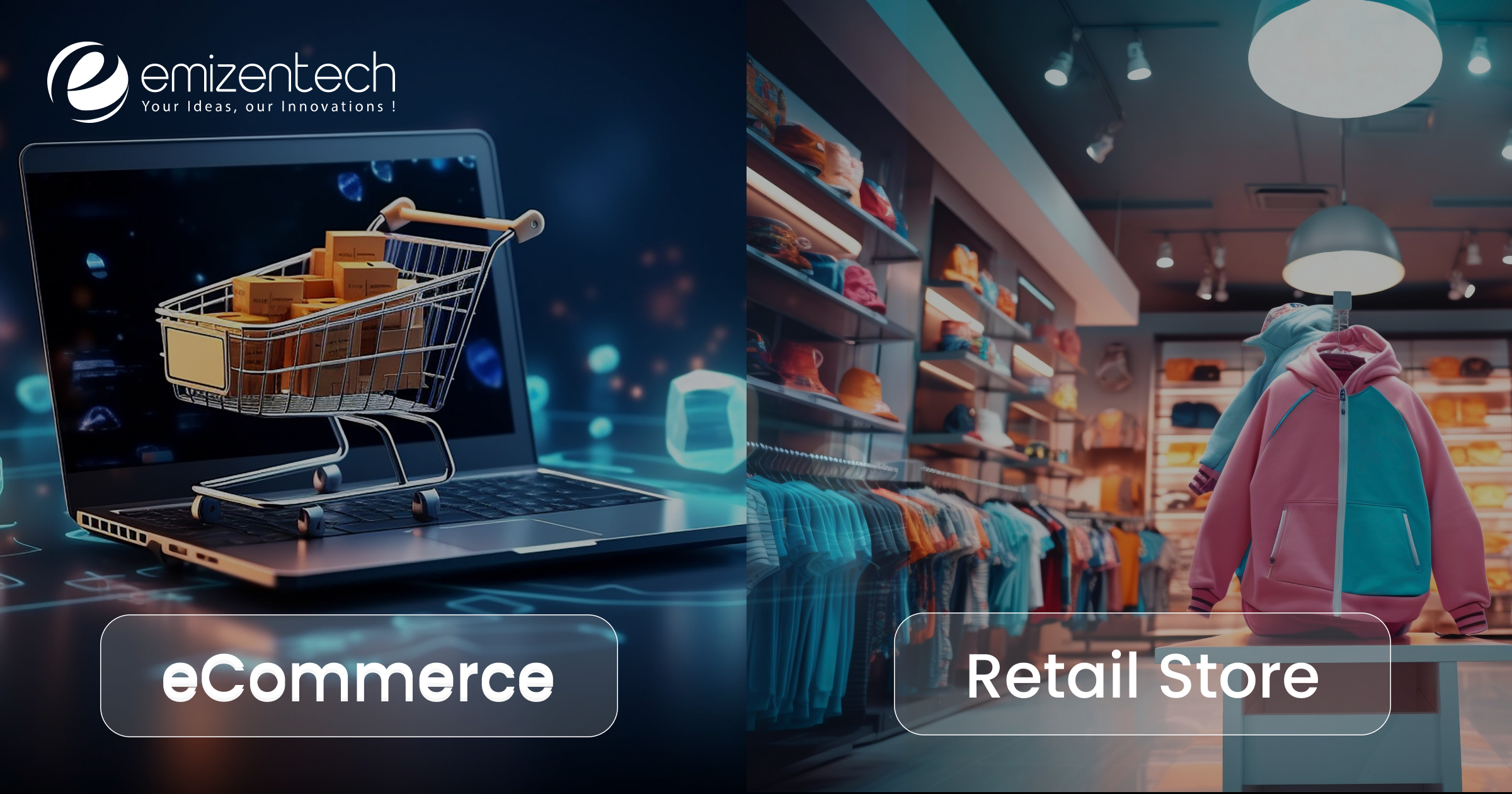
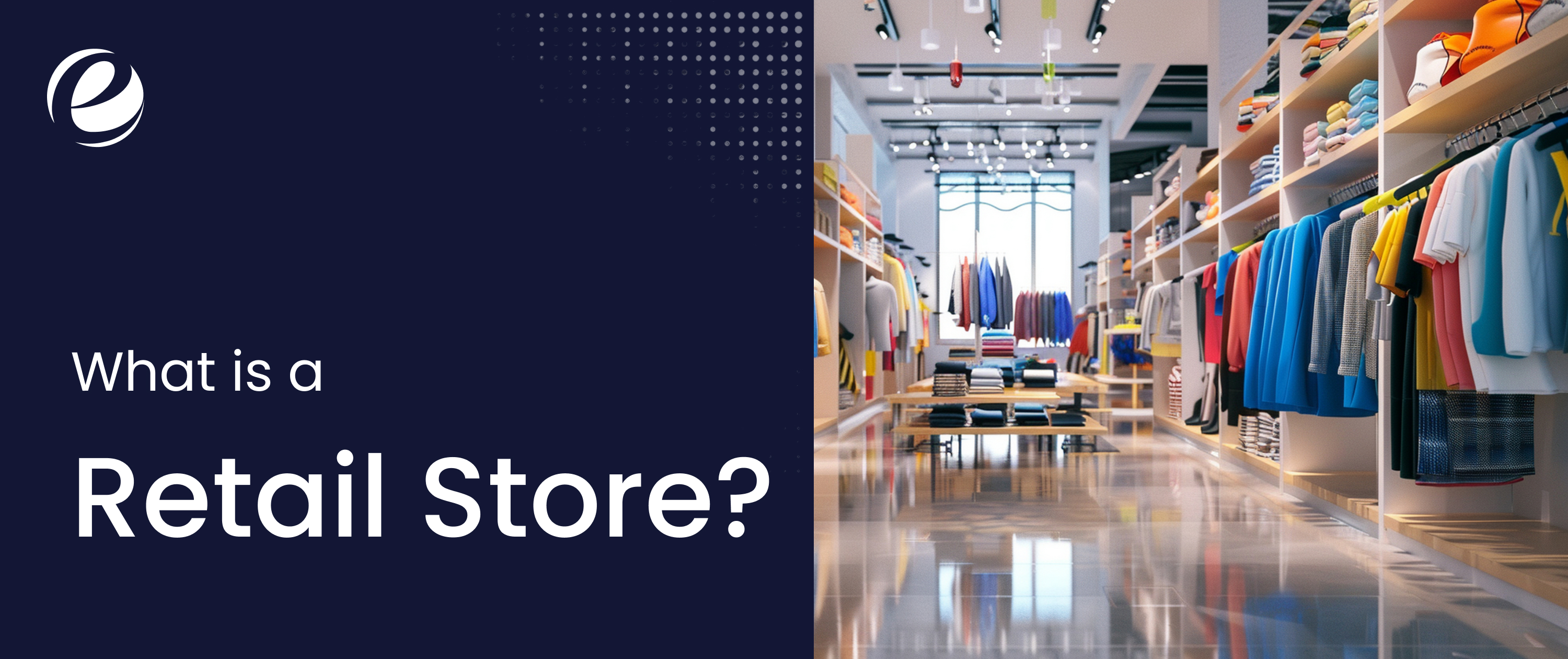 Retail stores represent where purchases are made, and they help create jobs. Even more importantly, retail stores help stimulate consumer spending. The location, the layout, product line offerings, product assortment, and knowledgeable retail sales staff are all important to the overall shopping experience. Many retail stores sell food, clothing, electronics, or just about everything used on an everyday basis. If there are retail stores in your area, they are designed to make purchasing everyday items easier and more convenient.
 The seller and customer could read, look at pictures, and videos of a large variety of products online from the comfort of their own personal devices, shop, and ultimately purchase products from the seller of the customer's choice without going to a home or store.
E-commerce stores can be found on websites or apps where customers can purchase items online through a secure checkout process. Sellers can operate either online as a business or maintain a physical store or a combination of both. A wide range of shoppers are shopping online every day; consequently, e-commerce stores are becoming more important than ever to the everyday overall shopping experience.
The seller and customer could read, look at pictures, and videos of a large variety of products online from the comfort of their own personal devices, shop, and ultimately purchase products from the seller of the customer's choice without going to a home or store.
E-commerce stores can be found on websites or apps where customers can purchase items online through a secure checkout process. Sellers can operate either online as a business or maintain a physical store or a combination of both. A wide range of shoppers are shopping online every day; consequently, e-commerce stores are becoming more important than ever to the everyday overall shopping experience.
 Well, the pattern of how people shop and how businesses sell the product is changing, and customers and businesses have both adopted the technology for better improvement and growth. Both e-commerce and retail stores have their own unique challenges, and blending both has its own unique challenges. A business is able to effectively cater to the needs of its customers if and only if it understands the demands of its customers and is able to fulfill them in the most effective way possible.
| Aspect | E-Commerce Store | Retail Store |
| Reach | Global, anyone with internet access | Local or regional customers |
| Startup Costs | Lower (website, inventory management) | Higher (rent, utilities, staff) |
| Customer Interaction | Online chat, email, calls | Face-to-face, personalized service |
| Convenience | 24/7 shopping from anywhere | Fixed hours, requires physical visit |
| Product Experience | Photos, videos, descriptions | Physical touch, try-before-you-buy |
| Delivery | Shipping/handling time involved | Immediate purchase and possession |
| Marketing | Digital ads, social media, SEO | Local ads, events, storefront promotions |
| Scalability | Easier to scale with less physical limitation | Limited by physical space and location |
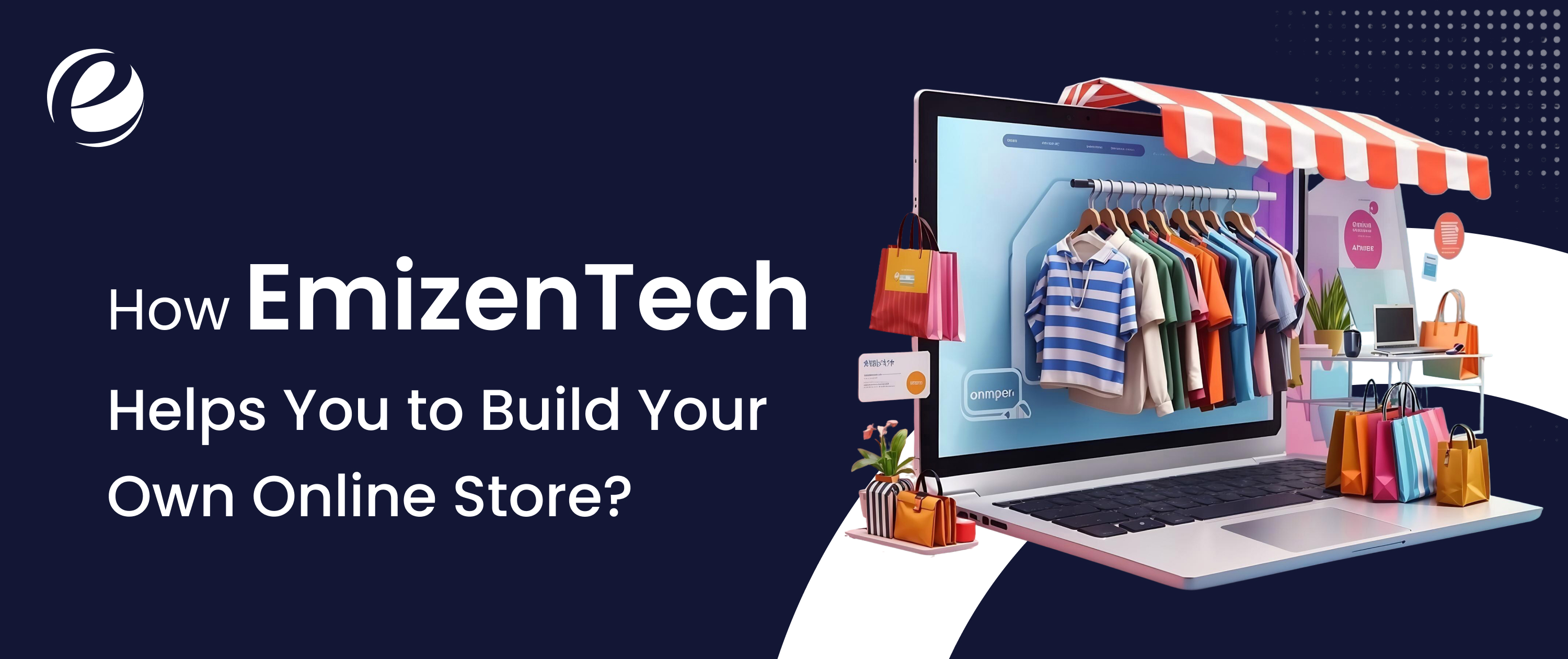 Our professional developers specialize in ecommerce app development, allowing you to focus on the products. We make sure to provide an e-commerce site that will optimize and convert visitors into sales while at the same time keeping things user-friendly and secure. Our experts take care of it all, designing an appealing look to your layout, integrating credit card payment gateways, inventory management systems, and all other services associated with running an online shop.
After your store is live, we continue to support and update when necessary to keep your business trending. Partnership is at the core of what we do; our relationship will continue to flourish even outside of the ecommerce store development. We want to provide support with ongoing changes to adhere to trends while keeping your business adapting to new technology. By working with us, you will not only have a website but also a team dedicated to your e-commerce success.
Our professional developers specialize in ecommerce app development, allowing you to focus on the products. We make sure to provide an e-commerce site that will optimize and convert visitors into sales while at the same time keeping things user-friendly and secure. Our experts take care of it all, designing an appealing look to your layout, integrating credit card payment gateways, inventory management systems, and all other services associated with running an online shop.
After your store is live, we continue to support and update when necessary to keep your business trending. Partnership is at the core of what we do; our relationship will continue to flourish even outside of the ecommerce store development. We want to provide support with ongoing changes to adhere to trends while keeping your business adapting to new technology. By working with us, you will not only have a website but also a team dedicated to your e-commerce success.

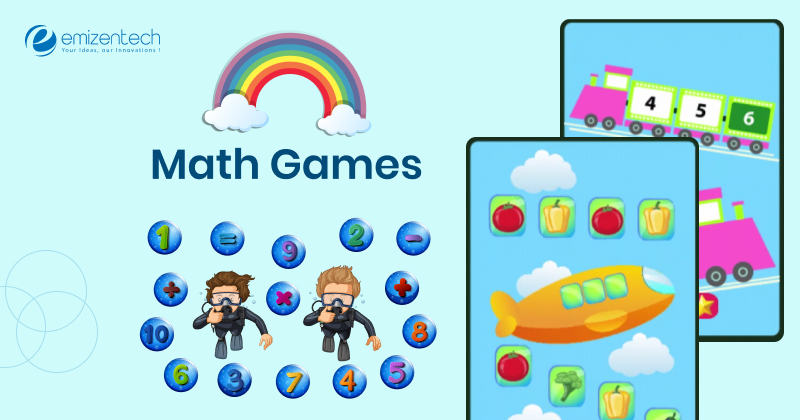
 Math games are engaging and fun activities that were created to make math interesting for kids and students. These math games combine education with interactive features, such as puzzles, rewards, and challenges, to motivate students to practice different math skills.
From the very primal addition and subtraction operations to more complicated subjects like algebra and geometry, the best cool math games provide a wide variety of topics for diverse levels of students.
One of the most impressive features of these cool math games is that they have the power to make math lessons enjoyable experiences. Instead of traditional problem-solving on paper, kids actually play games that challenge their brains and exercise their problem-solving skills and logical thinking. Math games are the best in any place of usage, i.e., online, in apps, or in classrooms. These apps make math a less scary subject and more approachable.
Well, math games become a powerful resource for the teaching staff as well as for the parents. They are beneficiaries of active learning, kids are carried along in their interests, and this results in a fun way of math improvement.
Math games are engaging and fun activities that were created to make math interesting for kids and students. These math games combine education with interactive features, such as puzzles, rewards, and challenges, to motivate students to practice different math skills.
From the very primal addition and subtraction operations to more complicated subjects like algebra and geometry, the best cool math games provide a wide variety of topics for diverse levels of students.
One of the most impressive features of these cool math games is that they have the power to make math lessons enjoyable experiences. Instead of traditional problem-solving on paper, kids actually play games that challenge their brains and exercise their problem-solving skills and logical thinking. Math games are the best in any place of usage, i.e., online, in apps, or in classrooms. These apps make math a less scary subject and more approachable.
Well, math games become a powerful resource for the teaching staff as well as for the parents. They are beneficiaries of active learning, kids are carried along in their interests, and this results in a fun way of math improvement.
 Cool math games are numerous and available in different varieties, matching various learning levels, interests, and math topics. The diverse categories of cool math games facilitate kids and students to enjoy while learning and, at the same time, enable them to focus on specific skills such as counting, problem-solving, logic, or even time management. Whether you are a basic or advanced learner, there's a customized category for you in Cool Math Games.
Here are the main categories of math games:
Cool math games are numerous and available in different varieties, matching various learning levels, interests, and math topics. The diverse categories of cool math games facilitate kids and students to enjoy while learning and, at the same time, enable them to focus on specific skills such as counting, problem-solving, logic, or even time management. Whether you are a basic or advanced learner, there's a customized category for you in Cool Math Games.
Here are the main categories of math games:
 Finding the right math games for your kid or students can be time-consuming, so here’s a quick-access guide to over 100 cool math games that cover all age groups and skill levels. The games are either free or paid and are easy to use at home or in the classroom. We have divided them into different grade levels and topics so that the selection of the most suitable ones can be made quickly.
 These games mainly focus on number recognition, counting, and simple addition or subtraction.
 These cool math games focus on advanced operations, decimals, algebra, and critical thinking:
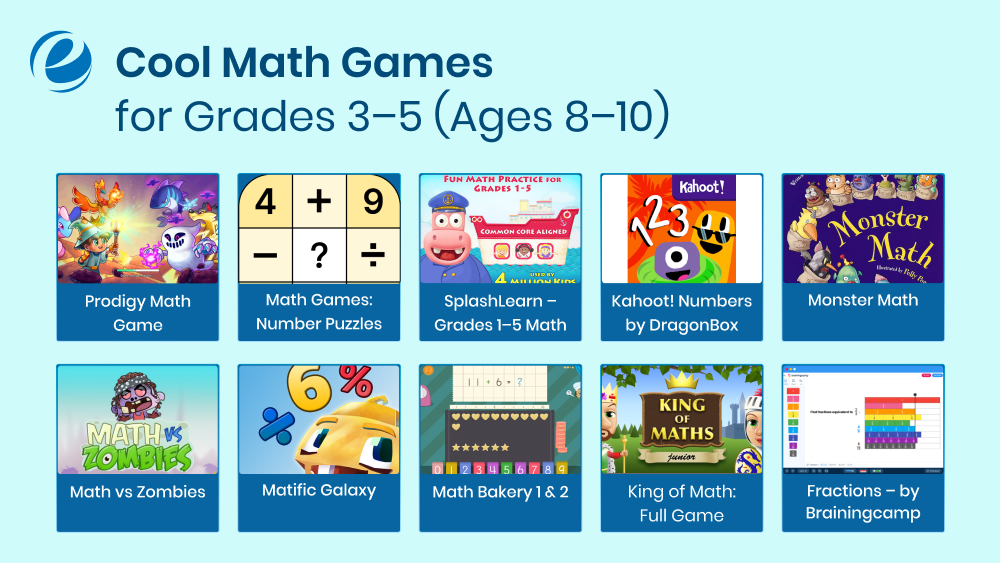 These games are helping to strengthen multiplication, division, fractions, and logic skills:
 Great for all ages because these games are fun, competitive, and boost problem-solving:
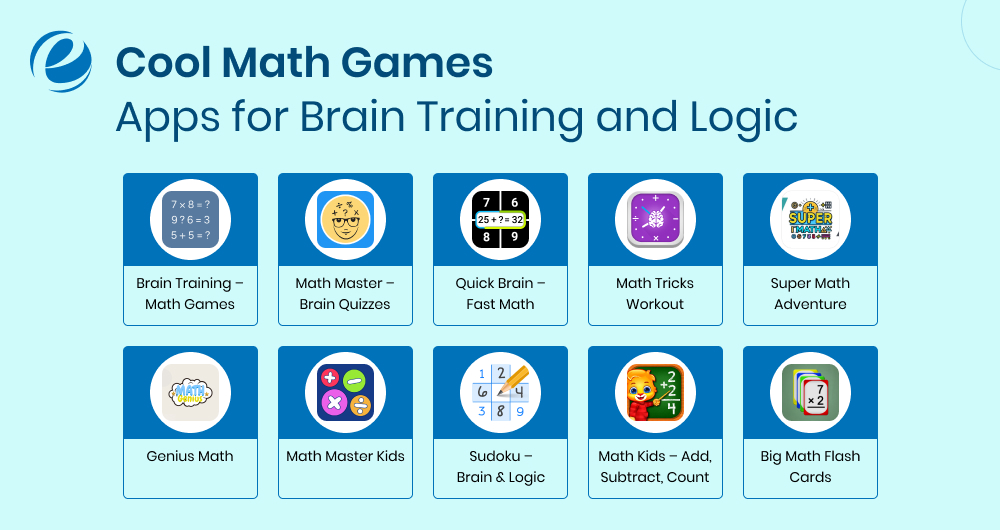 These game apps are ideal for on-the-go learning because they include many mini-games in one place:

| Platform Name | Launched Year | App Size | Platform Availability | Age Group | Key Features | Offline Access |
| CoolmathGames.com | 1997 | Web-based | Web, iOS, Android | 6–18 years | Logic puzzles, brain games, and arithmetic practice | No |
| SplashLearn | 2011 | ~120 MB | Web, iOS, Android | PreK–Grade 5 | Interactive visuals, progress tracking | Yes (App only) |
| Prodigy Math Game | 2011 | ~180 MB | Web, iOS, Android | Grade 1–8 | RPG-style game, curriculum-aligned | No |
| Math Playground | 2002 | Web-based | Web only | Grades 1–6 | Problem-solving, geometry, logic games | No |
| Khan Academy Kids | 2018 | ~160 MB | iOS, Android | Ages 2–8 | Animated characters, full lessons, and offline mode | Yes |
| MathGames.com | 2015 | ~90 MB | Web, iOS, Android | K–8 | Skill-based games, quizzes, and timed challenges | Yes (App only) |
| Mathletics | 2005 | ~200 MB | Web, iOS, Android | Grade 1–12 | Gamified learning, global competitions | Yes |
| IXL Math | 2007 | ~150 MB | Web, iOS, Android | PreK–Grade 12 | Personalized learning, detailed analytics | Yes |
| Funbrain | 1997 | Web-based | Web only | Grades K–8 | Comic-style games, stories, and arcade math games | No |
| BBC Bitesize Maths | 1998 | Web-based | Web only (UK-focused) | KS1–KS4 (UK) | Curriculum-based videos, quizzes, and games | No |
 Emizentech is a reputable and reliable technology partner primarily known for developing highly engaging and educational mobile applications. Here, we have a track record of creating cool math game apps. If you are planning to create an app that integrates fun and learning, Emizentech is the best option.
Our team of experts understands the methods that they need to use in designing games that are not only interactive but also suitable for various age groups and learning levels. Our professionals' primary focus is to provide a smooth user experience, eye-catching design, and robust performance, ensuring that your cool math games work seamlessly on all devices.
Regardless of whether it is for schools, ed-tech companies, or personal learning apps, Emizentech is dedicated to delivering customized solutions that allow children to have fun and learn math effectively.
Emizentech is a reputable and reliable technology partner primarily known for developing highly engaging and educational mobile applications. Here, we have a track record of creating cool math game apps. If you are planning to create an app that integrates fun and learning, Emizentech is the best option.
Our team of experts understands the methods that they need to use in designing games that are not only interactive but also suitable for various age groups and learning levels. Our professionals' primary focus is to provide a smooth user experience, eye-catching design, and robust performance, ensuring that your cool math games work seamlessly on all devices.
Regardless of whether it is for schools, ed-tech companies, or personal learning apps, Emizentech is dedicated to delivering customized solutions that allow children to have fun and learn math effectively.


 What is a Polo Game App?[/caption]
A Polo game app is a digitized version of Polo, a traditional horse-mounted team sport. Tailored for both mobile and web platforms, these solutions unlock an immense experience for sports enthusiasts, leveraging physics, advanced graphics, and many other top-notch features.
From stick control and strategy simulation to multiplayer mode and virtual horse riding, the app sets up quite a realistic gameplay environment. So, for anyone who loves Polo and is looking to play the game from the comfort of their fingertips, this app is an absolute digital treat.
The sports app development landscape is zooming in. And Polo apps are carving a niche of their own under the big umbrella of horse sports apps. These solutions aren’t just products of entertainment but also a way to engage and make people aware of the long-lived game of Polo.
What is a Polo Game App?[/caption]
A Polo game app is a digitized version of Polo, a traditional horse-mounted team sport. Tailored for both mobile and web platforms, these solutions unlock an immense experience for sports enthusiasts, leveraging physics, advanced graphics, and many other top-notch features.
From stick control and strategy simulation to multiplayer mode and virtual horse riding, the app sets up quite a realistic gameplay environment. So, for anyone who loves Polo and is looking to play the game from the comfort of their fingertips, this app is an absolute digital treat.
The sports app development landscape is zooming in. And Polo apps are carving a niche of their own under the big umbrella of horse sports apps. These solutions aren’t just products of entertainment but also a way to engage and make people aware of the long-lived game of Polo.
 Key Features of Polo Game Apps[/caption]
A Polo sports app can transform an elite field sport into an accessible and thrilling digital challenge, all with a buffet of fantastic features. Let’s read about some of them in the list below.
Key Features of Polo Game Apps[/caption]
A Polo sports app can transform an elite field sport into an accessible and thrilling digital challenge, all with a buffet of fantastic features. Let’s read about some of them in the list below.

 8 Key Steps in Polo Game App Development[/caption]
Now, let’s quickly discuss the essential steps you should add to the checklist when building a Polo horse sports app.
8 Key Steps in Polo Game App Development[/caption]
Now, let’s quickly discuss the essential steps you should add to the checklist when building a Polo horse sports app.

| Component | Ideal Technology |
| Game Engine | Unity 3D, Unreal Engine |
| Frontend (Mobile) | Flutter, React Native |
| Backend | Node.js, Firebase, AWS |
| Database | MongoDB, PostgreSQL |
| 3D Modeling & Animations | Blender, Maya |
| Multiplayer Sync | Photon Engine, WebRTC |
| Authentication | Firebase Auth, OAuth 2.0 |
| Analytics | Google Analytics, Mixpanel |
| Payment Gateways | Stripe, Razorpay |
 How to Monetize a Polo Game App?[/caption]
This topic takes the center stage when we talk about sports app development. It becomes a greater concern when you plan a project in a niche such as polo game app development.
For starters, monetization largely depends on the type of solution you are building and the audience you are targeting. Moreover, it also has a lot to do with the range of features you are offering and the scale at which you are planning to launch the product.
Once you have clarity on these areas, here are the different ways to monetize your app:
How to Monetize a Polo Game App?[/caption]
This topic takes the center stage when we talk about sports app development. It becomes a greater concern when you plan a project in a niche such as polo game app development.
For starters, monetization largely depends on the type of solution you are building and the audience you are targeting. Moreover, it also has a lot to do with the range of features you are offering and the scale at which you are planning to launch the product.
Once you have clarity on these areas, here are the different ways to monetize your app:

 What is Poki Games?[/caption]
Poki Games is an online gaming platform that offers a massive collection of free games spanning multiple genres. Whether you are into high-speed racing, chill idle games, simulations, or classic arcade superhits, Poki has something that will definitely fit your mood.
The platform is user-friendly and accessible. You don’t have to download a game or set up a payment method or even sign up for that matter. That said, you can jump right into this space and play the game whenever you want. These are the features that make Poki Games the ultimate gaming platform loved by millions of users worldwide.
And here’s the most special thing about this game platform: It is versatile. There are games on Poki that are keyboard-controlled, mobile-friendly, and even multiplayer. So, whatever your mood is, you’re in for a treat.
What is Poki Games?[/caption]
Poki Games is an online gaming platform that offers a massive collection of free games spanning multiple genres. Whether you are into high-speed racing, chill idle games, simulations, or classic arcade superhits, Poki has something that will definitely fit your mood.
The platform is user-friendly and accessible. You don’t have to download a game or set up a payment method or even sign up for that matter. That said, you can jump right into this space and play the game whenever you want. These are the features that make Poki Games the ultimate gaming platform loved by millions of users worldwide.
And here’s the most special thing about this game platform: It is versatile. There are games on Poki that are keyboard-controlled, mobile-friendly, and even multiplayer. So, whatever your mood is, you’re in for a treat.
 Action & Adventure Games[/caption]
 Puzzle & Brain Games[/caption]
 Racing & Driving Games[/caption]
 Fighting & Strategy Games[/caption]
 Sports & Skill-Based Games[/caption]
 Arcade & Classic Games[/caption]
 Multiplayer & Social Games[/caption]
 Simulation & Life Games[/caption]
 Creative & Kids’ Games[/caption]
 Poki Games for Boys[/caption]
 Poki Games for Girls[/caption]

There are 2,144,877 apps available on the Apple App Store, of which 250,059 are gaming apps. If you are wondering how to make an iPhone game, there are many things you need to understand before venturing into this space, including its market stats.
iPhone game development is gaining popularity in the mobile app development space and will generate over US $98.74 billion in revenue worldwide in 2024. And this will lead to the projected market volume of US$118.90 Billion by 2027.
These stats reflect the user inclination towards mobile games, specifically in the iOS game segment. So, before investing in this segment, you should understand the process of mobile game development for iOS.
In this article, we will discuss how to create iOS games and the essential features, along with the cost of developing an iOS gaming app.
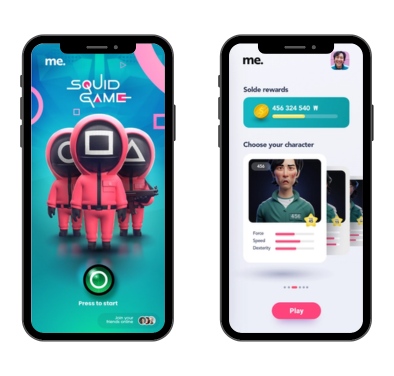
iOS games are video games that are designed to run on Apple’s iOS operating system, which powers devices like the iPhone, iPad, and iPad Touch. These games can be downloaded and played through the App Store, Apple’s digital distribution platform.
They come in various genres, including action, adventure, puzzle, simulation, and more. The games often leverage the unique features of iOS devices, such as touch controls, motion sensors, and high-resolution displays, to create engaging and interactive experiences.
Some of the popular iOS games are Pokemon Go, Candy Crush Saga, Among Us, and Fortnite. These gaming platforms have a vibrant community and are continuously growing with new releases and updates.
With this being said, let’s understand the nitty-gritty of iPhone game development.
The iOS gaming app development process involves creating and designing the game specifically for the iOS operating system. iOS mobile application development starts with market research, designing, developing, testing, and deploying games on the iOS platform.
iOS game development requires a deep understanding of game design principles, user experience, and mobile device capabilities. Game developers use programming languages like Swift or Objective-C, along with development frameworks like SpriteKit, to develop a game with Unity.
Moreover, these frameworks provide tools and libraries for creating interactive graphics, handling user input, managing game physics, and implementing game logic.
The iOS gaming landscape has undergone a significant transformation in 2024. Honor of Kings was the top-grossing gaming app for iPhone worldwide and generated over 136.4 million U.S. dollars from iPhone users in September 2024.
The Apple Arcade continues to reshape subscription-based gaming while hyper-casual games maintain their strong appeal among casual players.
In 2023, iOS generated $47.7 billion in revenue from mobile games, which was 59% of the total mobile game revenue, according to BOA.
The rise of cloud gaming services and cross-platform titles has created new opportunities for iOS developers, with significant publishers increasingly bringing console-quality experiences to iOS devices.
The gaming apps accounted for around 12 percent of all the mobile iOS apps hosted in the App Store during the second quarter of 2024, according to Statista.

Source: Statista
This surge in iOS gaming app development is due to the integration of advanced technologies like AR, powered by iPhone’s LiDAR sensors, which has made immersive gaming experiences possible.
Another trend in the iOS gaming community is the social gaming feature, which is crucial with multiplayer and community-driven games.
With the continuous advancement of mobile hardware capabilities, the line between mobile and console gaming grows, creating a pool of opportunities for entrepreneurs and iOS gaming developers to push creative boundaries.
The App Store is filled with millions of games of different genres. So, before investing in creating an iOS game app, consider researching the market to provide game enthusiasts with a unique gaming concept loved by the iOS gaming community. Here is a list of top iPhone gaming apps ruling the market for quite a long time.
| Game | Available on | Year of launch | Number of downloads |
|---|---|---|---|
| Wordle | iOS/Android | 2022 | Over 2 million |
| Genshin impact | iOS/Android | 2020 | Over 50 million |
| Call of Duty | iOS/Android | 2019 | Over 100 million |
| Fortnite | iOS/Android | 2018 | Over 350 million |
| Among Us | iOS/Android | 2018 | Over 100 million |
| Pokemon Go | iOS/Android | 2016 | Over 1 billion |
| Clash of Clans | iOS/Android | 2012 | Over 500 million |
| Minecraft | iOS/Android | 2009 | Over 200 million |
One of the major reasons for investing in iOS gaming app development is that gaming apps are the most popular Apple App Store categories as of the 2nd quarter of 2024 by share of available apps. So, when you create a new iPhone game, it offers several benefits for entrepreneurs planning to enter this segment.
Take a look at why investing in iOS game development is a smart move:
The iOS ecosystem, which includes millions of iPhones and iPads worldwide, provides access to a substantial and active user base. The Apple App Store is one of the most popular and trusted platforms, making it easier for users to find and download your game.
iOS devices are known for their reliable and consistent performance, which can greatly enhance the gaming experience. Apple’s strict design guidelines and quality standards ensure that iOS games come with smooth, polished visuals and interfaces that players appreciate.
iOS users are more likely to spend money on in-app purchases and premium content, making monetization easier. Whether you choose a freemium model, paid downloads, or in-app purchases, iOS offers solid opportunities to generate revenue.
Apple’s App Store and iOS devices are known for their secure environment, thanks to rigorous app review processes and built-in security features. This reduces the risk of malware and security issues, helping to build trust with players and improve retention rates.
iOS games can easily connect with other Apple services like Game Center, iCloud, and Siri, providing added features and a more enriched user experience. This can allow for cross-platform gameplay, leaderboards, and social sharing options, making your game more engaging and appealing.
Launching a successful game on iOS can enhance your studio’s reputation and brand presence, as the App Store is known for its high-quality offerings. Success in this competitive space can open doors to more opportunities and further establish your brand as a reputable game developer.
The app store is full of millions of games, all of which have been made from scratch, ranging from arcade to adventure. The end point is you can prefer working on any of the app types that you idealize. However, it is always good with the trend to get the most players for your game.
| Types of Game Type | |
|---|---|
| 1. Battle Royale Games | 2. Sports Game |
| 3. Multiplayer Games | 4. MMO Games |
| 5. Adventure Games | 6. Strategy Games |
| 7. Card Game | 8. Puzzle Games |
| 9. RPG | 10. Arcade Games |
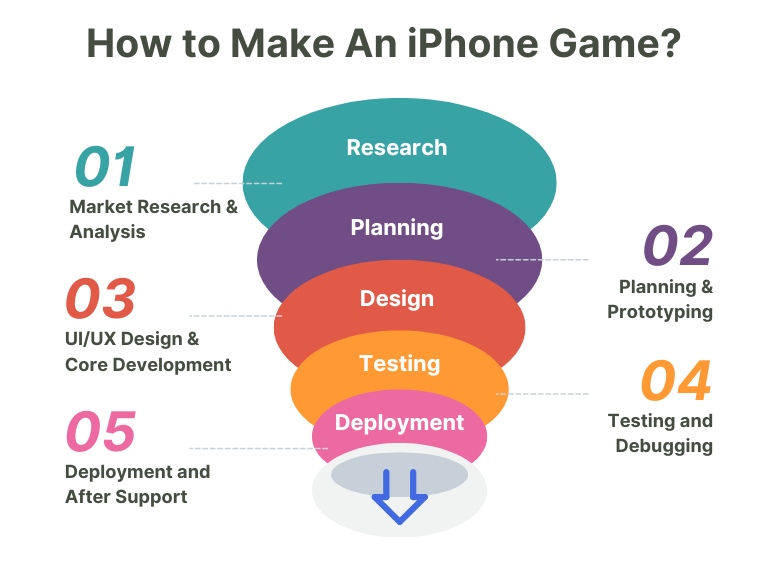
How to Make An iPhone Game? (Update) 300
Developing a successful iOS mobile gaming app is no small feat. The development process consists of different phases and steps, including technical and non-technical ones. By following these steps, you can make an iOS game, take a look:
Start with brainstorming and sketching out your game concept because the development of the iOS gaming app must be based on strong research and analysis. Think about what type of game you want to create (e.g., puzzle, action, adventure) and what will make it stand out. Consider gameplay mechanics, storyline, graphics, and what kind of experience you want your players to have.
Moreover, analyzes the existing competitors in the iOS gaming landscape and evaluates all the requirements in prior, such as features and strategies. This will help you when you create a new game for your iPhone.
Outline the specifics of your game, such as levels, characters, and objectives. When considering a top game development company, mostly after this, the team concentrates on developing an app blueprint in the second stage so that the project’s developers can start to work on the project’s prototype.
The prototype presents a basic notion of the project. Create a simple storyboard or game design document (GDD) to map out how everything will come together. Additionally, if required, alter the prototype as appropriate.
Once the prototype has been approved, it could be an expensive and time-consuming effort to execute the change.
This helps keep your project organized and gives a clear vision of what to build.
Still, it is wise to make the necessary changes before actual development.
Now, to bring your vision to life, you’ll need the right set of tools. Most developers use game engines like Unity or Unreal Engine because they are powerful, user-friendly, and support iOS development.
If you’re new to iOS game development, Unity’s C# scripting is beginner-friendly, while Unreal Engine uses Blueprint for visual scripting.
After the prototype has been approved, the app’s user interface and user experience are designed. Gamers will be more engaged if the UI/UX is lucrative. Also, work on the sound effects and music of the game. If you don't have a team of artists, you can hire freelancers or use asset stores like Unity.
Just make sure the style of your visuals matches the theme and tone of your game. The app's fundamental coding work is being done concurrently with the app’s core development. The essential functionality of the game is ensured by programmers, who also develop the code.
Now, it’s time to combine your assets and gameplay mechanics. Develop each feature step-by-step:
- Write code for character movement, interactions, and game logic.
- Implement physics and collision detection to make the game world feel real.
- Add audio for an immersive experience.
This is the final stage of development an app goes before release. Use tools like TestFlight, Apple's beta testing platform, to have others play and provide feedback. The quality assurance team continuously tests the app.
Unit tests, component tests, integration tests, performance tests, end-to-end tests, regression tests, sanity tests, system tests, graphics tests, and many other types of tests are carried out. Make sure your game works well on various iPhone and iPad models and that any bugs or issues are resolved.
Once all issues have been resolved and the software is functioning flawlessly, it’s time to prepare it for app store submission. Ensure your game follows Apple’s guidelines for apps.
Prepare screenshots, an appealing description, and other marketing materials for your game’s App Store page. Set up your App Store listing in App Store Connect.
Submit your game to the App Store for review. While waiting for approval, start building hype by promoting your game on social media, game forums, or with a trailer on YouTube.
The approval will take time, but once it is approved, your game will be live for players to download. However, there is still a lot more work to be done to market the app and make it more well-known.
After launch, timely updates are an essential part of the process. You can monitor player feedback and track in-app analytics, then use this data to improve your game through updates, fix any remaining bugs, and add new features to keep players engaged.
So, you are wondering what it takes to build an iPhone game these days. You're probably looking at spending anywhere from $30,000 to $300,000 or more.
The cost to build an iPhone gaming app can be significantly lower for simple casual games compared to more advanced iOS gaming apps with complex features and functionality. The final price really depends on how complex your iOS gaming concept is. Whether you want 3D graphics, multiplayer features, or fancy animations, all bump up the cost.
Let’s break down the main costs:
First, you'll need a game developer who can run you $50-150 per hour, depending on their experience and location. Art and design work is another big chunk - character designs, backgrounds, UI elements, and all that visual stuff typically costs $25-100 per hour. If you want music and sound effects, budget another $500-2,000 for basic audio.
Consider starting with a simpler version of your game idea. Launch with core features first, then add the fancy stuff later based on player feedback. That way, you can keep initial costs lower while testing if people actually enjoy your game concept.

To build an iPhone game app, you need the right set of tech stack, which includes selecting the appropriate programming languages, frameworks, and tools that will optimize performance and user experience.
| Category | Tech stack |
|---|---|
| Game Engine | Unity, Unreal Engine |
| Programming Language | Swift, Objective-C |
| Development Environment | Xcode, AppCode, Visual Studio |
| Frameworks | SpriteKit for 2D, SceneKit for 3D, Metal for high-performance graphics |
| Graphics and Design Tools | Visual Studio, Blender, Autodesk Maya, Adobe Illustrator, Photoshop |
| Audio Tools | Audacity, Spine |
| Version Control | FMOD/WWise, GitHub/GitLab |
| Asset Management | Unreal Marketplace |
| Cloud Services | AWS (Amazon Web Services) |
| Game Testing | TestFlight, Appium, Unity Remote |
| Monetization | AdMob, In-App Purchases (IAP) |
| Analytics | Unity Analytics, Google Analytics |

Today, there are plenty of game engines available in the market for building an iPhone game. It’s obvious to get confused in the sea of development options.
Choosing the right game engine is your crucial first step, whether you're dreaming of designing your own iPhone game or wondering how to make your own game for the App Store.
Nowadays, game engines offer powerful tools that transform complex development tasks into manageable projects, even for beginners.
From industry giants like Unity and Unreal Engine to specialized iOS-focused solutions, each engine brings unique advantages to the table. These platforms not only simplify the technical aspects of game creation but also provide the foundation you need to turn your creative vision into a polished App Store release.
Let's explore the top game engines that can help you navigate your journey from concept to successful iPhone game launch.
| Game Engines | Ease of Use | Platform Support | Updated Version |
|---|---|---|---|
| Unity | High | Windows, macOS, Linux, iOS, Android, Web, Consoles, VR/AR | May 30, 2023 |
| Clickteam Fusion 2.5 | Moderate | Windows,macOS, iOS, Android, Web | March 2023 |
| App Game Kit 2.0 | Moderate | Windows, macOS, Linux, iOS, Android | December 2022 |
| LibGDX | Moderate | Windows, macOS, Linux, Android, iOS, Web | Feburary 2023 |
| jMonkey3 | Moderate | Windows, macOS, Linux | December 2022 |
| Solar 2D | High | Windows, macOS, Linux, Android, iOS, Web | September 2022 |
| Unreal Engine | Moderate | Windows,macOS, Linux, iOS, Android, Web, Consoles, VR/AR | April 2023 |
| Titanium | High | Windows,macOS, Linux, iOS, Android | March 2023 |
| Cocos 2D | High | Windows,macOS, Linux, iOS, Android, Web | December 2022 |
| Cry Engine | Moderate | Windows, macOS, Linux, Consoles, VR/AR | March 2023 |
Creating iPhone games goes far beyond just coding and creativity. Today's developers face a complex landscape where technical challenges meet fierce market competition. From optimizing performance across different iPhone models to navigating Apple's strict App Store guidelines, each step presents unique hurdles.
With millions of games already available, standing out requires not just innovative gameplay but also careful consideration of user experience, monetization strategies, and technical optimization.
These challenges shape the journey from concept to successful launch in the competitive mobile gaming space.
iOS devices often have memory and storage limitations. Unlike Android devices, iPhones do not have the ability to identify unnecessary objects and cannot reuse resources that might have been freed by deleting those objects. So, at the time of development, one should maintain a balance between possible memory constraints and game performance. So, the different versions of the phones require different amounts of memory for the correct functioning of the application. Thus, to overcome this, one should get rid of unnecessary functions that might take extra memory and complicate the work.
Games are one of the most energy-consuming tasks that any device can have. The more one wants the game to be as colorful and versatile as possible. But the more you diversify and complicate it, the more battery charge will be required. So, it is challenging to find the appropriate combination of gaming features. Mobile games should be fun but not overly challenging and thus can leave powerful gaming features for PC and consoles. These also cannot be seen on the small screen, so instead of these features, we can focus on the compatibility of the device and make sure to test the app for the power consumption of the device.
iOS games are always known for their interface. Thus, a clear and unencumbered design requires a lot of work and experience. A good interface results in retaining the users and also new users to come again and again. Developers should also keep in mind not to put anything extra. Studying the latest trends for iOS can assist in avoiding the same styles when creating interfaces.
One of the challenging parts of making an iOS game is testing. Due to the presence of a lot of details and a lot of rules, iOS game developers have to overlook one of the most important points in checking the quality of the game. A frivolous attitude towards testing or ignoring can lead the game to certain loopholes that can spoil the game's first impression among the users.
Hire a game development company with a team of expert developers who can build creative, engaging, and user-friendly games.
| Skills | Description |
|---|---|
| Technical Skills | C, C#, and C++ programming languages, game engines, and networking |
| Problem-Solving Skills | Resourcefulness and easy adaptability |
| Game Development Skills | Experience working with game development platforms and tools, animation, 3D modeling, and appealing design. |
| Soft Skills | Teamwork, critical thinking, seamless communication, and collaboration. |

Are you ready to bring your game idea to life but unsure where to start? EmizenTech steps in as your dedicated iPhone app development company, transforming concepts into engaging App Store successes.
Our team of iOS developers combines technical expertise with creative flair, handling everything from initial design and coding to performance optimization and App Store submission.
Whether you're picturing a casual puzzle game or an immersive 3D adventure, we bring over a decade of mobile game development experience to your project.
What sets us apart is our comprehensive approach.
We don't just code – we collaborate with you through every stage, from refining your game concept and creating captivating graphics to implementing seamless monetization strategies.
Our developers stay ahead of the latest iOS technologies and App Store guidelines, ensuring your game not only looks great but performs flawlessly across all iPhone devices.
Speaking of best, you maintain control while we handle the technical heavy lifting. Start building your iPhone game success story with us and turn your gaming vision into reality.
When starting iPhone game development, choose to navigate this path independently or partner with an experienced mobile app development company. The success lies in careful planning, understanding market dynamics, and maintaining unwavering quality standards.
The mobile gaming industry continues to evolve, offering endless opportunities for those ready to rise to the challenge. With the right tools, expertise, and development partner, your game idea can find its place among the millions of apps that entertain users worldwide.
If you are a business looking to enter the gaming market, the world of iPhone game development awaits your unique contribution. Let's transform your gaming vision into an App Store success story. Take that first step today by connecting with us and getting a free consultation.

There are a lot of new and up-and-coming developers in the market, but none can compare to our team at Emizen Tech. Our team is ready to take your mobile app development efforts to the next level. The experience and expertise that our company possesses will be a great and valuable arsenal for your next project.
Renowned IT company Emizentech specializes in providing top-notch mobile applications and e-commerce solutions to a range of industrial verticals. Emizentech provides the most effective, scalable, and affordable e-commerce websites and applications to boost sales, traffic, and conversions to your online business and expand it further.
Our staff of e-commerce developers and designers possesses exceptional technical skills and extensive expertise, enabling them to create creative and visually stunning websites and applications that clearly convey important information to consumers and win them over as devoted, lifelong clients.

The Emizen Tech team is proud to announce that we’ve been recently recognized as one of the most-reviewed gaming app developers in New York by none other than The Manifest. This is an incredible award and we are honored to be part of this list.
In case this is the first time you have heard about The Manifest, they are a business guide blog site that aims to gather and verify the hard data, expert insights, and actionable advice that you need to build your brand and grow your business – to provide the practical business wisdom that manifests in your success.
We would like to thank our clients and partners for playing a vital role in helping us bag this award! Thank you so much for supporting us throughout these years.
If you have any questions or any queries about us, give us a call! We’d be happy to assist you.

Game development is one of the most exciting paths for an individual nowadays. It is the game creation process, including its design, development, and release. With the increase in the demand for present-day games with lots of complexities and sophistication, there has also been a steep rise in demand for game developers. Top companies are already paying a good amount for the right talents, considering them as one of the most important parts of the game development process. Suppose you are also looking for good developers for your project and do not know how to get one. Don't worry about this blog; we got you covered with all the necessary things to keep in mind for choosing the best developers for your project.
Game Designing is the initial stage that involves deciding the genre, designing the concept, target audience, and rules of the game. Once the team has made the broad theme of the game, the design then focuses on the more details things such as the character, maps, story liners, plots, methods of losing and winning, user interface creations, levels, and more.
The designer will first make a draft and oversee all the technical and artistic angles. They will make the gameplay concept come to life by experimenting with different themes and genres.
Whereas the game development process is bringing the game to life. The processes include sound effects, engineering, software programming, rendering, testing, and several other processes to make the game run efficiently. A game developer transforms the ideas and concepts into the actual game, which can get ready to be launched in the market. They put the designer's sketches, drawings, layouts, concepts, and storylines into hundreds of lines of code to create a playable game.
The game developers' role is to create, design and develop games for various platforms such as mobile devices, computers, and consoles. They work on all the processes of the game development, design, and concept to testing and coding.
The game developers' work is to create visual & audio elements, user interface, and game mechanics. They work for the game's storyline, characters, and levels. In addition, they ensure that the game is playable, bug-free, and meets the target audience's expectations. They work in teams collaborating with sound designers, animators, artists, and other professionals to build cohesive and engaging games. They also specialized in programming languages to create the game's code, audio, and graphics.
They are responsible for bringing change in the game industry with an exciting gaming experience to players worldwide, which is why they are considered a crucial part of the industry.
| Skills | Description |
|---|---|
| Teamwork | Game development is not the job of a single person, and he needs to collaborate with other team members to emerge with a good game. |
| Creativity | Game developers work with designers to develop realistic game environments and help them create gameplay mechanics and easy-to-navigate architecture. |
| Passion | Game developers should be passionate and motivated to create exciting and new user gaming experiences. |
| Animation | The design and animation for video games and knowledge about related software can assist game developers in building immersive and stunning games. |
| Time Management | Developers should work within deadlines to ensure the game launch is done on time and meets the client's needs. |
| Programming | Game developers with coding skills can build game mechanics and environments using the game designers' concepts. |
| Problem-Solving | Solving complex issues and thinking creatively helps game developers remove bugs and create enjoyable games. |
You can hire a dedicated game developer for your game development project for the following reasons:
Dedicated developers perform as an in-house team and aim at the completion of your project only.
Being dedicated to your project will only speed up the development time.
The deep expertise of a dedicated developer in specific areas will help accomplish your project successfully per your needs.
Here are some benefits of game development as a business owner:
| Revenue Generation | Game development can be a profitable business, which has the potential to generate significant revenue through in-app purchases, advertising, and sales. |
| Branding and Marketing | Making a game can be a creative method to market a company or product and interact with customers in an entertaining way. |
| Increased Customer Engagement | By offering a pleasant and immersive experience that keeps players coming back, games can boost customer engagement and loyalty. |
| Enhanced Customer Insights | Game analytics can provide valuable insights into customer behavior and preferences, informing marketing and product development strategies. |
| Competitive Advantage | An organization can get a commercial advantage and set itself apart from rivals by creating a successful game. |
| Collaboration and Teamwork | Collaboration and teamwork across various disciplines are necessary for game creation, which can encourage an innovative and creative work environment inside an organization. |
| Skill Development | Game development requires a range of skills, including programming, art and design, and project management, which can be highly valued in other areas of business. |
| Innovation and Experimentation | Games provide a platform for experimentation and innovation, allowing businesses to try out new technologies and ideas in a low-risk environment. |

You are working in the office and realize you are getting bored, and to freshen up, you start playing a game. And started thinking of all the other people who faced the same difficulty and came up with the idea of developing a game to solve this problem. Congratulation, you have just entered the planning stage. Now before starting the further process, you need to ensure some points.
The next stage of game development is called pre-production; it is the process in which developers brainstorm how to give life to the many ideas laid out in the planning phase. This is when artists, developers, engineers, project leads, designers, and other crucial departments collaborate on the scope of the video game and where each piece of the puzzle fits.
The most significant amount of game development and design happens during production, and it is usually the most prolonged phase in the game development process. In this process, artists, designers, developers, and project managers work together to build the game. From initial to end, a successful production phase requires collaboration to be good across the teams.
Testing may sound exciting and fun, but it is an exhausting and massive job. At this stage, you must test every aspect of your game to find any bugs, glitches, soft locks, or exploits that may have crept in. Some essential things that need to be tested are a stable environment, rendering & performance issues, difficulties, exploits, scripting, and acting errors.
This is the stage where marketing comes in. You should be ready with the game's beta version to present to the audience at this stage. Some decide to do a big reveal, and some opt for the trailers, demons, or release the game early access. At this point, you can get feedback on the game, which can help you improve the game features and also help in enhancing things.
It's the time of the game release day. Now it is time to give your game a final coat of polish. The launch stage allows you to squash all the remaining bugs. Studios often list the bugs in priority order, starting with the game breakers affecting stability and performance. Add a final artistic touch to the environment and model. Implement life improvements.
Congratulation, you have completed the game development process and launched your game. But think that your work is still ongoing, not yet. They're the most important work begins. When the game meets the natural world and users start using it, issues often occur and must be updated to resolve all the problems. Secondly, provide free content updates for the users that are the more pleasant thing for them. When users start liking your game and become addicted, then that's your achievement.
Whether you are making your first game or your hundredth, the game development process can be a tiring, exhilarating, predictable, and chaotic experience.

Before hiring a game developer, it is mandatory to consider the game technologies that you want to use. Here are some of them to feel.
Game engines are software frameworks for developing video games. Many game engines, such as Unity, Unreal Engine, and Godot, are available. Each engine has its strengths and weaknesses, so it's essential to research and select the one that best fits your needs.
Game developers use programming languages to write the code for the game. Standard programming languages used in game development include C++, C#, Java, and Python. The choice of the programming language will depend on the game engine and platform you're developing for.
Graphics APIs are programming interfaces that render graphics in video games. Popular graphics APIs include DirectX, OpenGL, and Vulkan. The choice of graphics API will depend on the game engine and target platform.
Middleware refers to software components that can be integrated into a game to provide specific functionality, such as physics simulation, networking, or audio processing. Examples of middleware include PhysX, FMOD, and RakNet. Researching and selecting middleware that best fits your game's requirements is essential.
Platforms refer to the devices or systems on which the game will be played. Examples of platforms include PC, consoles (such as PlayStation, Xbox, and Nintendo Switch), and mobile devices (such as iOS and Android). The choice of platform will depend on the target audience and business objectives of the game.
By considering these game technologies before hiring a game developer, you can ensure that you select the right technologies and tools for your game development project.
Before start looking for a game developer, it is essential to determine your specific needs. What platform do you want the game to be suitable for, mobile, Pc, or console? What kind of game do you want to create? Knowing your needs will narrow down your search for the right game developers.
When looking for a game developer, look for someone with good knowledge of developing the game you're looking for. A good game developer should have a deep understanding of the development principles and should be able to apply them to create a high-quality game.
Ask for the portfolio of the developer and see their previous work. This will give you an idea of their style, skill level, and the type of games they're developed in the past.
Ask for references from the game developer and contact their previous clients to learn about their experience working with the developer. This will give you a better understanding of the developer's work ethic, communication skills, and ability to meet deadlines.
Discussing your budget upfront ensures the game developer can work within your financial constraints. Be clear about what you can afford and what you expect in return for your investment.
When hiring a freelancer game developer, look for a degree in computer science, software engineering, or relevant fields, coding knowledge (C, C++, or Java), problem-solving skills, creativity, knowledge of the latest trends, etc.
One factor to consider here is hiring a dedicated developer from a leading game development company with a proven track record and engaging portfolio. A freelancer working individually may get involved with other clients that may affect your project.
While hiring a game development company, look for the following elements:
Ensure the company you hire can communicate effectively so that you can get updates and provide feedback for the project requirements easily.
The company needs to be creative to develop engaging solutions you want for your users.
Be sure the company holds the required years of experience in delivering high-quality solutions you are looking to build with timely delivery.
Skills are essential to work with the latest trends and technologies. So, hire a company that can develop a game with trending technologies to help your solution stay ahead of the curve.
Ask the company if it offers maintenance and support services post-development. Choose the one it provides, as it will help your game run successfully.
Hiring a game developer can cost anywhere from $100. This is the average hourly rate of hiring one, but one with more experience can be more expensive and charge you around $500 Per Hour.
They're so expensive because they have a lot of experience and know what they have to do in the particular game development. If you want to hire someone at a cheaper rate, you should hire an intern who has yet to be exposed to programming before counterpart one who has been doing it since childhood.

Emizen Tech is one of the best game development company. We have top-skilled game developers to work with you on your projects. Here are some points why you should choose us to be a part of your development journey.
| Expertise | We have a team of skilled game developers who can work on various platforms for mobile game development, such as Android and iOS. Our experts keep updated and know the latest technologies and programming languages required for building engaging and high-quality games. |
| Customization | Every client's requirements are unique, so we offer customized solutions to meet everyone's games needs. We believe in working closely with clients to understand their goals and objectives and deliver a personalized solution that meets requirements. |
| Quality | We are committed to delivering high-quality mobile game apps that meet industry standards. Also, follow a rigorous testing process to ensure the apps are free of bugs and errors. |
| Competitive Pricing | We offer reasonable prices for our game development services, making them an accessible choice for businesses of all sizes. We guarantee that there are no hidden fees and provide straightforward pricing. |
The game's development is a challenging process to work on, and it needs lots of patience and requires the appropriate game developers to complete the development process. And make sure to make one of the best game apps; you have to contact a good company that can provide you with the best game development team for your project.
Or, if you are still trying to figure out where to look for one, you can contact us 24*7 and get a free consultation to help you make your ideas come true.
Employing a skilled game developer is crucial since they may add significant skills, knowledge, and originality to your project. A competent developer may assist you in creating a game that is interesting, practical, and visually appealing, which leads to a better user experience and increased sales. They may also assist you in spotting and resolving possible issues during the development process, ultimately saving you time and money.
You should look for a game developer who has experience in the field and is acquainted with the tools and technology needed to produce the kind of game you desire. They should also be capable of working well in a team, possess strong problem-solving abilities, and possess excellent communication abilities. A game developer should also have a strong interest in games and a creative mindset.
Common mistakes to avoid in game development include needing a clear vision for the game, underestimating the time and resources required to complete the project, and not testing the game thoroughly before release. It's also essential to avoid feature creep, where you keep adding new features to the game without considering the impact on the overall development timeline and budget.
It's important to have a well-defined project plan with specific goals, timetables, and milestones if you want to make sure that your game development project stays on schedule and within your budget. In order to make sure the project is reaching its objectives and deadlines, you should also create a realistic budget and keep to it. Communication is also essential, so be sure to keep the lines of communication open with your team and other stakeholders to keep everyone informed. Finally, be ready to modify the project plan as necessary. Just make sure that any modifications are made, keeping in mind the overall project goals and budget.
 Building a simple app with static content is easy and fast. However, development becomes layered once you add user behavior, analytics, or real-time data.
To sum up, based on complexity:
Building a simple app with static content is easy and fast. However, development becomes layered once you add user behavior, analytics, or real-time data.
To sum up, based on complexity:
| Industry | Timeline | Functionality |
| Fitness | 3 to 8 months | Tracking, analytics, and personalization |
| E-commerce | 4 to 6 months | Multiple integrations including logistics, and payments), scalability needs for catalogs and demands |
| Fintech | 6 to 12 (or more) | High regulatory compliance, security features, and real-time data-handling |
| On-Demand Apps | 5 to 9 months | Extensive features, user data handling, and real-time capabilities |
| Social Media | 6 to 12 | Real-time tracking, location services, and multi-user workflows |
| AI-Powered Business Apps | 6 to 12 (or more) | Data training, algorithm optimization, and monitoring |
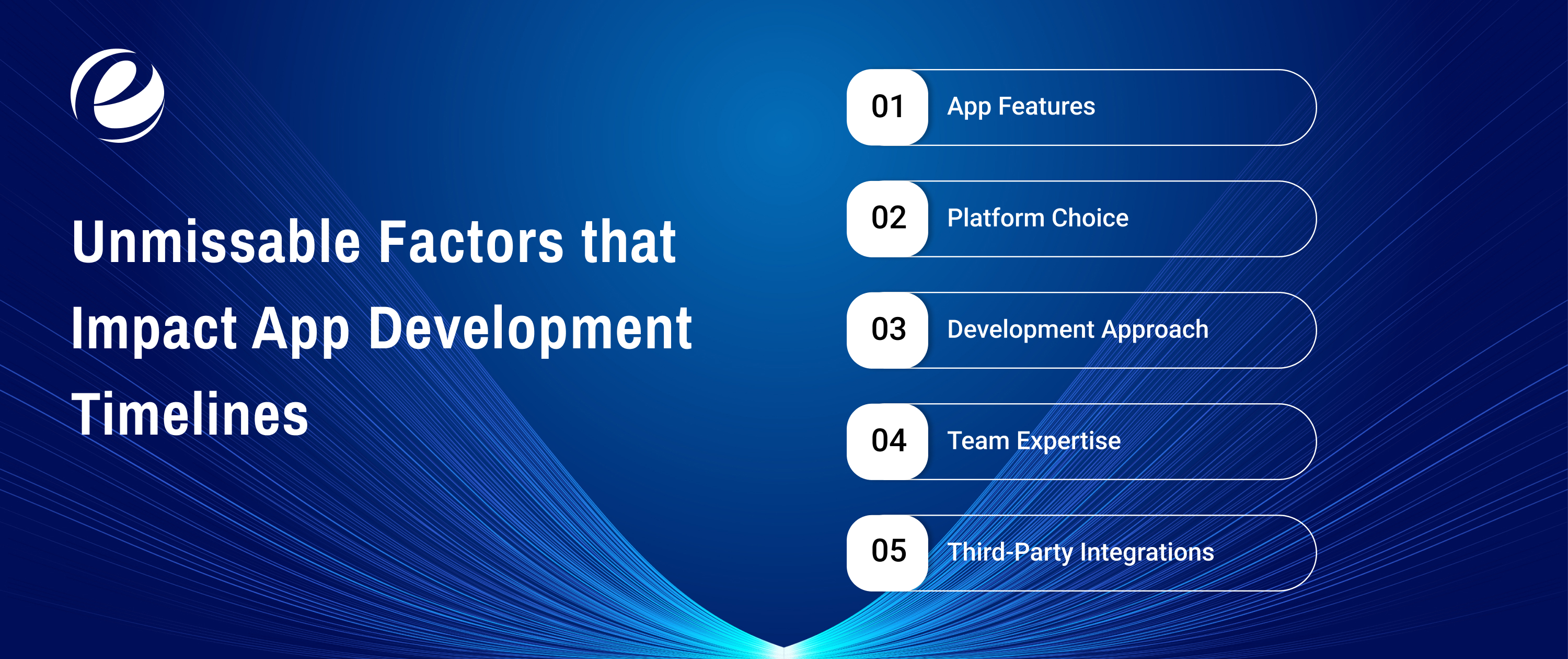 As we discussed earlier, it is execution that decides the timeframe. How you plan and prioritize things and then shape them into reality is how much time it takes to build an app.
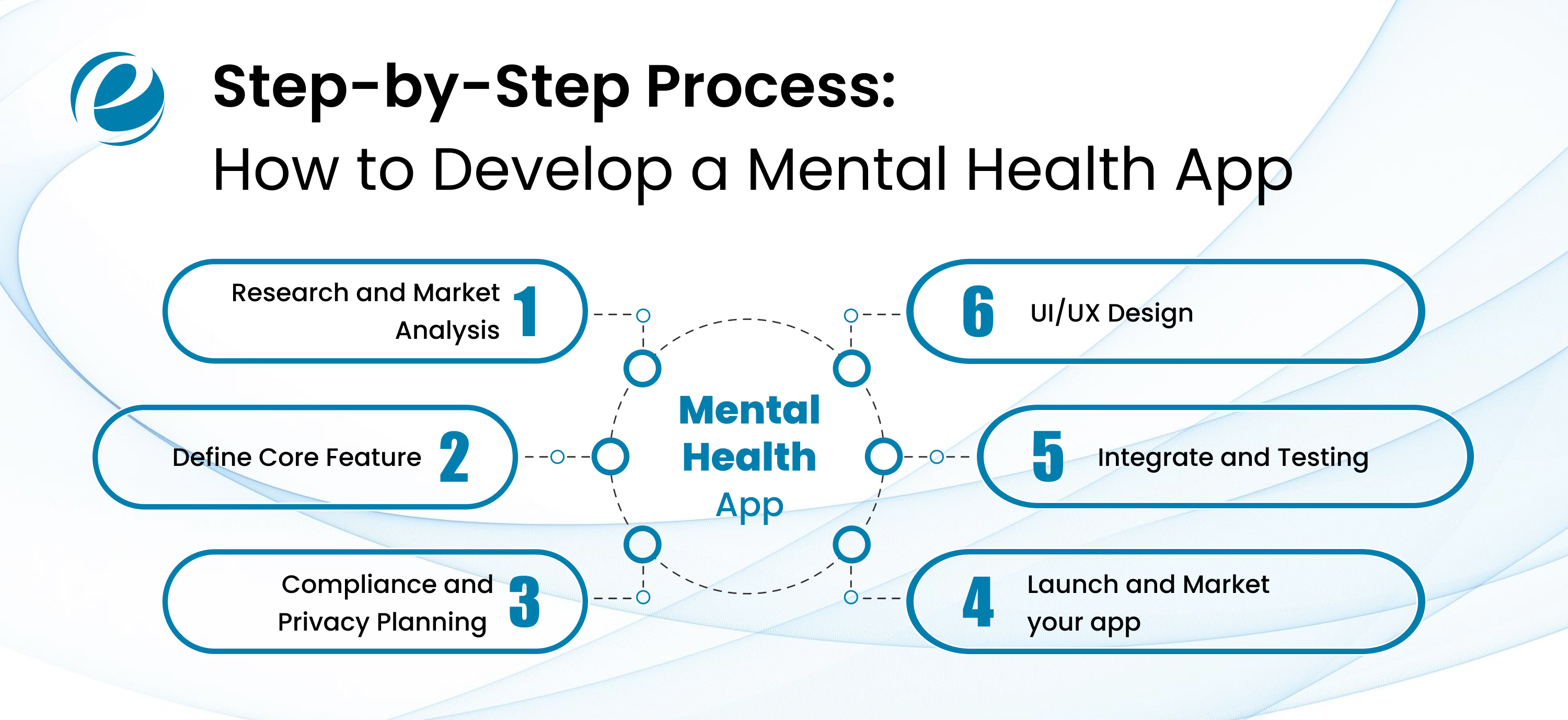 The mental health app development implies careful planning, design, and execution. Below you will learn the process to develop a secure application for your users:
| App Type | Approximate Cost | Development Timeline | Key Features |
| Basic Mental Health App | $45,000-$120,000 | 2-3 Months | Mood tracking, guided meditation, reminders |
| Mid-level Mental Health App | $150,000-$300,000 | 5-6 Months | AI mood insights, in-app chat support, personalized dashboard, and content library |
| Advanced Mental Health App | $400,000+ | 10-12 Months | Live video therapy, AI emotion analysis, wearable integration, advanced analytics |
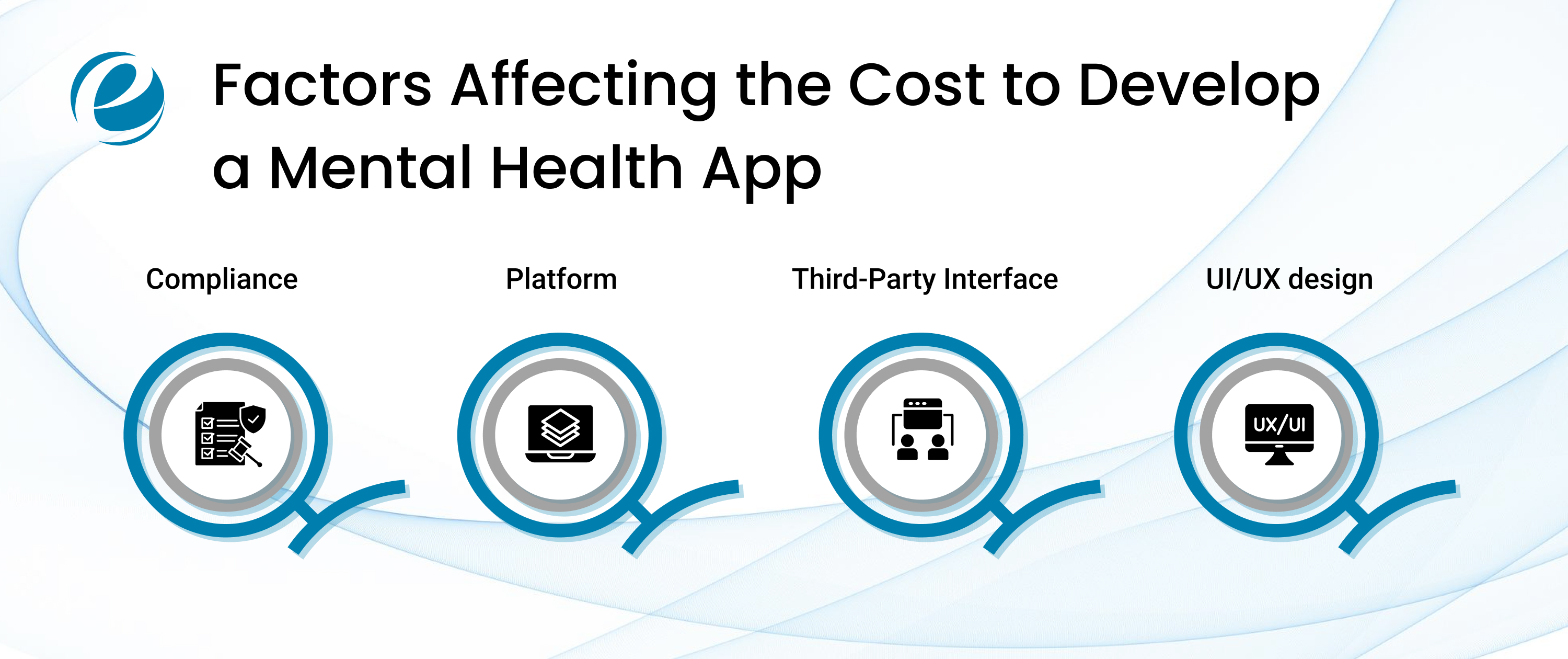 The cost of the apps depends on the features, platform, and compliance requirements of the apps. Below, you will see some of the main factors that can affect the cost of mental health app development:
 Freelancers in mobile app development are usually independent professionals who create and design mobile applications for clients on a project-by-project basis. They work in a flexible manner and provide services such as UI design and coding, conducting quality assurance testing.
To save costs and obtain specialized skills, businesses hire freelancers to develop a mobile app that has a specific purpose. For example, if you're targeting Android users, you can hire Android app developers.
Freelancers in mobile app development are usually independent professionals who create and design mobile applications for clients on a project-by-project basis. They work in a flexible manner and provide services such as UI design and coding, conducting quality assurance testing.
To save costs and obtain specialized skills, businesses hire freelancers to develop a mobile app that has a specific purpose. For example, if you're targeting Android users, you can hire Android app developers.
 Mobile app development agencies are professional teams that are capable of managing full project development, such as design, coding, testing, and deployment. They offer organizational processes and experienced developers.
Businesses use agencies for complex, reliable, and scalable app development solutions. In the agency vs freelancer decision-making process, agencies are typically preferred for projects that require collaboration across multiple skill sets and long-term support.
Some examples of businesses that utilize agencies for their app development could be start-ups in sectors such as healthcare and finance that need specialized apps.
Mobile app development agencies are professional teams that are capable of managing full project development, such as design, coding, testing, and deployment. They offer organizational processes and experienced developers.
Businesses use agencies for complex, reliable, and scalable app development solutions. In the agency vs freelancer decision-making process, agencies are typically preferred for projects that require collaboration across multiple skill sets and long-term support.
Some examples of businesses that utilize agencies for their app development could be start-ups in sectors such as healthcare and finance that need specialized apps.
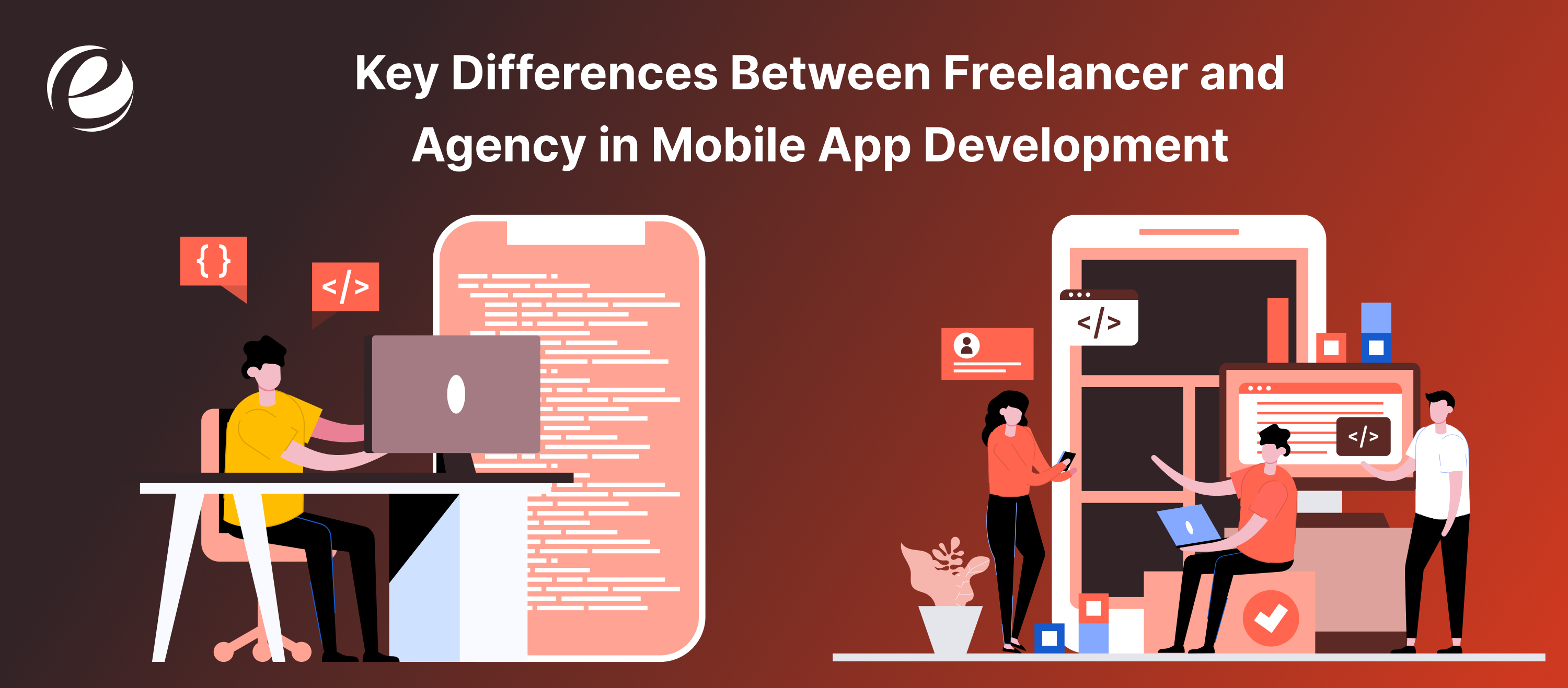 Below is a general overview of the distinctions between agency vs freelancer.
| Comparison Factor | Freelancers | Agency |
| Cost Range | Lower ( $20-90 / hr; $5k-15k project) | Higher ($100-150 + / hr; $15K - 200K + project) |
| Project Size | Simple Apps, MVPs, Specific Tasks | Complex, Full Stack, Enterprise Apps |
| Team Size | 1-3 Persons | 5-50 + Persons |
| Communication | Directly with Developer | Dedicated Project Managers |
| Speed | Quick for Smaller Jobs Slow to Scale | Quick but Consistent for Larger Projects |
| Risk/Quality | Great Risk Varies by Each Individual | Less Risk Standard Processes and Quality Assurance |
| Flexibility | High; adapts quickly | More structured, formal processes |
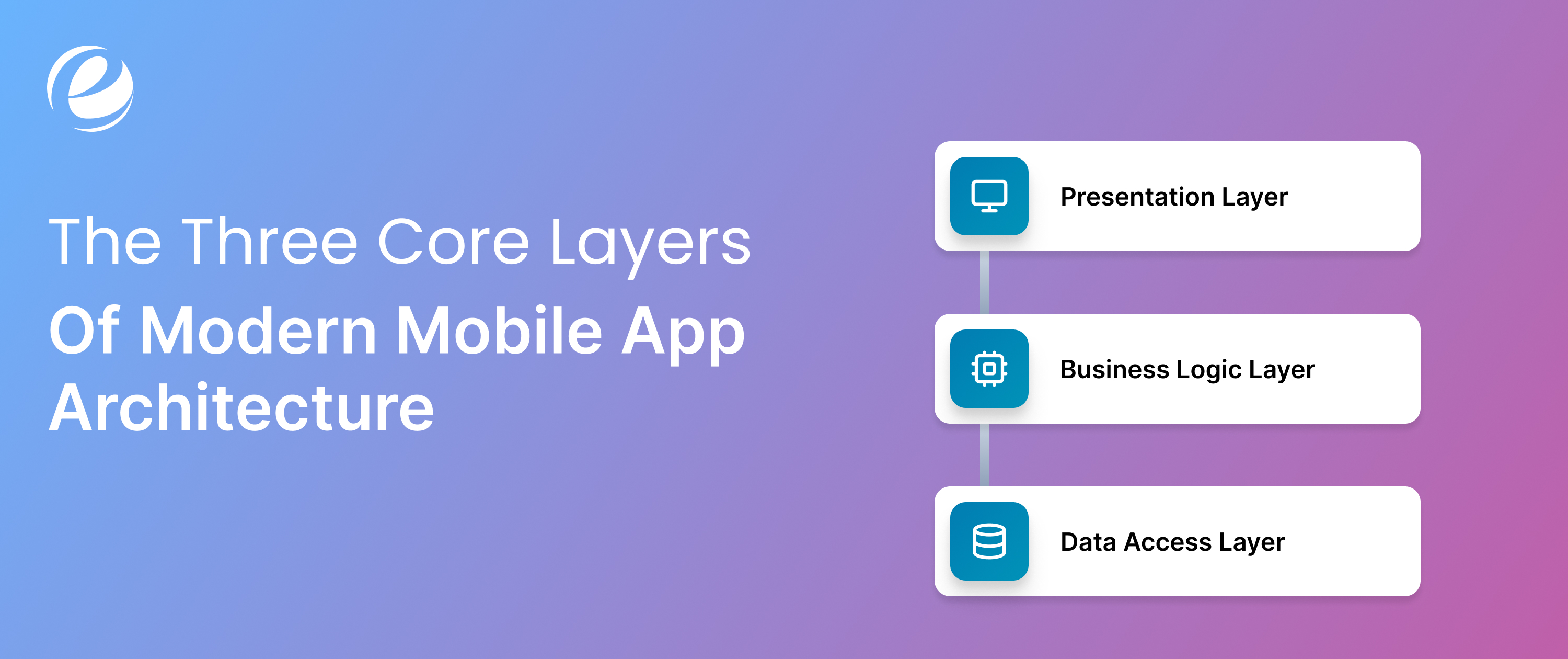 The architecture of mobile app is generally divided into three layers. Each layer has its own role, which enables you to keep the app organized and easy to maintain. Let's investigate them in this section:
| Feature | Monolithic Architecture | Microservices Architecture | Serverless Architecture |
| Definition | Built as one complete app that runs as a single system | Split into smaller, and independent services that work together | Application built with cloud-managed function services |
| Codebase Structure | Single codebase | Multiple smaller codebases | Event-driven code units and function-based |
| Deployment | Deploy the complete app at once | Deploy services independently. | Deploy individual functions |
| Scalability | Scale the entire application | Scale individual services | Auto-scales per request |
| Development Speed | Fast | Moderate | Fast for small features |
| Complexity | Highly complex | Distributed system complexity | Managed infrastructure but event complexity |
| Technology Flexibility | Single tech stack | Each service can use distinct tech stack | Limited by cloud provider ecosystem |
| Fault Isolation | Low as one failure can affect the entire app | High as failures isolated per service | Very high as failure isolated per function |
| Cost Model | Fixed server cost | Server plus orchestration cost | Pay-per-execution |
| Best For | Ideal for small to medium apps, MVPs | For large, complex, and evolving systems | Best for event-driven apps and unpredictable workloads |
| Latency | Low (in-memory) | Higher (network-based) | Variable (cold starts) |
| Vendor Lock-in Risk | Low | Low-Medium | High (Depends on cloud provider) |
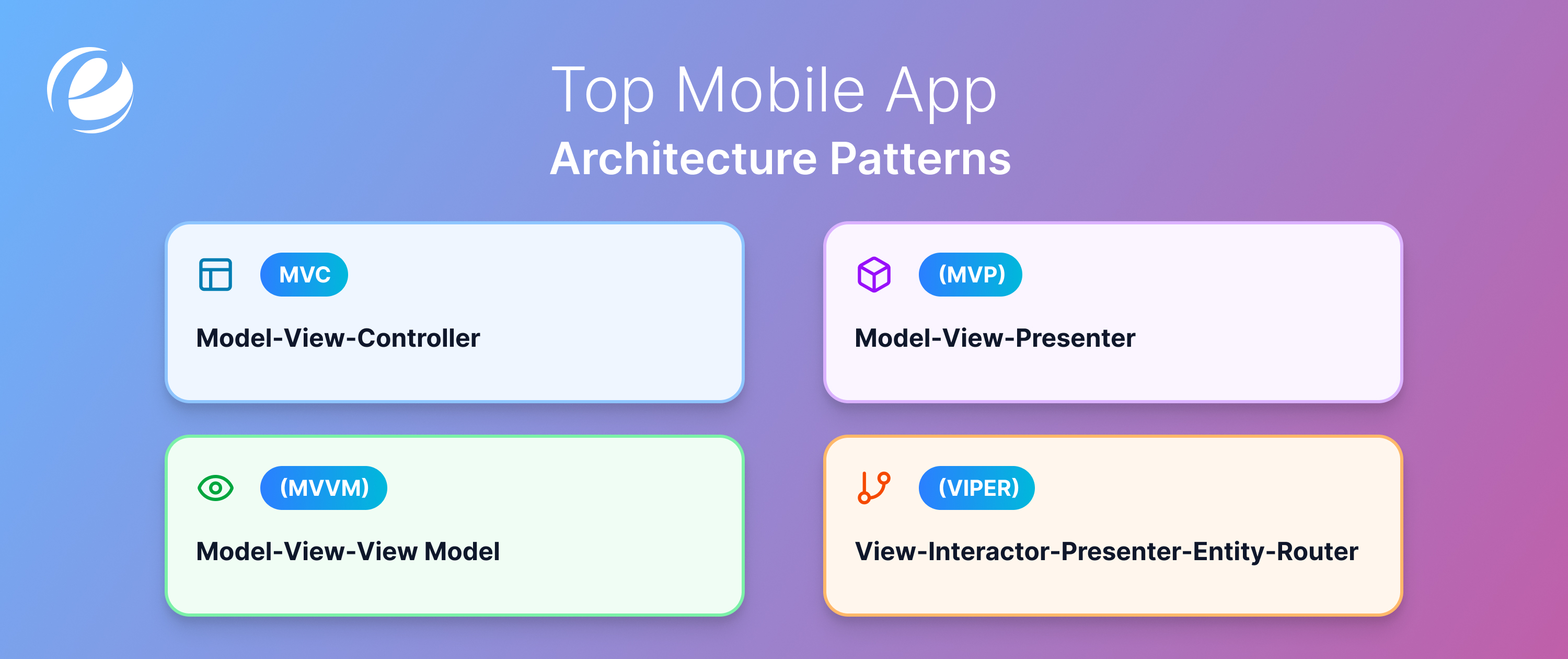 Mobile app architecture stands as a blueprint that describes the structure, behavior, and interaction of diverse components within an application. It consists of four main patterns. Let's investigate them below.
 This section explores key trends that shape the future of architecture for mobile app development:
 The social media app like MeWe, was created with many features that provide better user experiences through its personalized content delivery system. Your platform needs these fundamental features to achieve its full potential.
| Layer | Technologies Used |
| Frontend App | Swift (iOS), Kotlin (Android), Flutter, React Native |
| Web Admin Panel | React, Angular, Vue.js |
| Backend Development | Node.js, Python, Ruby on Rails, Java (Spring Boot) |
| Database | PostgreSQL, MySQL, MongoDB |
| Real-time Communication | WebSockets, Firebase Realtime DB |
| Maps & Navigation | Google Maps, Mapbox |
| Payment Integration | Stripe, PayPal, Razorpay |
| Cloud Infrastructure | AWS, Google Cloud, Microsoft Azure |
| Push Notifications | Firebase Cloud Messaging (FCM), OneSignal |
| Analytics & Monitoring | Google Analytics, Mixpanel |
| Security | SSL, Encryption, OAuth 2.0, Two-Factor Authentication |
 The cost to develop an app like MeWe with artificial intelligence capabilities starts at $80000 and reaches $350000 in 2026 because the project's difficulty level, team composition, and selected system features determine the final price. Mainly, the cost structure depends on the location, as India provides a 40-60% discount as compared to US pricing.
The best app development company provides budget optimization together with innovative technology solutions as per your business needs.
The cost to develop an app like MeWe with artificial intelligence capabilities starts at $80000 and reaches $350000 in 2026 because the project's difficulty level, team composition, and selected system features determine the final price. Mainly, the cost structure depends on the location, as India provides a 40-60% discount as compared to US pricing.
The best app development company provides budget optimization together with innovative technology solutions as per your business needs.
| Role/Component | Hourly Rate (US/India) | Estimated Cost (USD) |
| UI/UX Design | $50-150 / $25-50 | $20K-$60K |
| Frontend Development | $60-180 / $30-60 | $50K-$120K |
| Backend Development | $70-200 / $35-70 | $60K-$150K |
| AI/ML Integration | $80-250 / $40-80 | $40K-$100K |
| Database & Security | $65-190 / $30-65 | $25K-$70K |
| QA & Testing | $40-120 / $20-50 | $15K-$40K |
| DevOps & Deployment | $70-220 / $35-70 | $15K-$50K |
| Project Management | $80-250 / $40-80 | $20K-$60K |
| Total | - | $245K-$650K |
| Phase | Basic (MVP) | Medium | Complex/Advanced |
| Planning & Research | 2-4 weeks | 4-6 weeks | 6-8 weeks |
| UI/UX Design | 3-5 weeks | 5-8 weeks | 8-12 weeks |
| Frontend Development | 6-8 weeks | 8-12 weeks | 12-16 weeks |
| Backend Development | 6-10 weeks | 10-14 weeks | 14-20 weeks |
| AI/ML Integration | 2-4 weeks | 4-8 weeks | 8-12 weeks |
| Testing & QA | 3-5 weeks | 5-7 weeks | 7-10 weeks |
| Deployment & Launch | 2-3 weeks | 3-4 weeks | 4-6 weeks |
| Total Timeline | 4-5 months | 6-8 months | 9-12 months |
| Core Features | Advanced Features |
| User Registration | In-App Customer Support |
| Push Notifications | Instant Purchase Recommendation |
| Installment Payment Plans | Advanced Fraud Detection |
| Payment Gateways | AI-based Credit Risk Assessment |
| Transaction History | Multi-Currency Support |
| Late Fee Calculation | Personalized Payments Insights |
| Credit Check Mechanism | Data Analytics Dashboard |
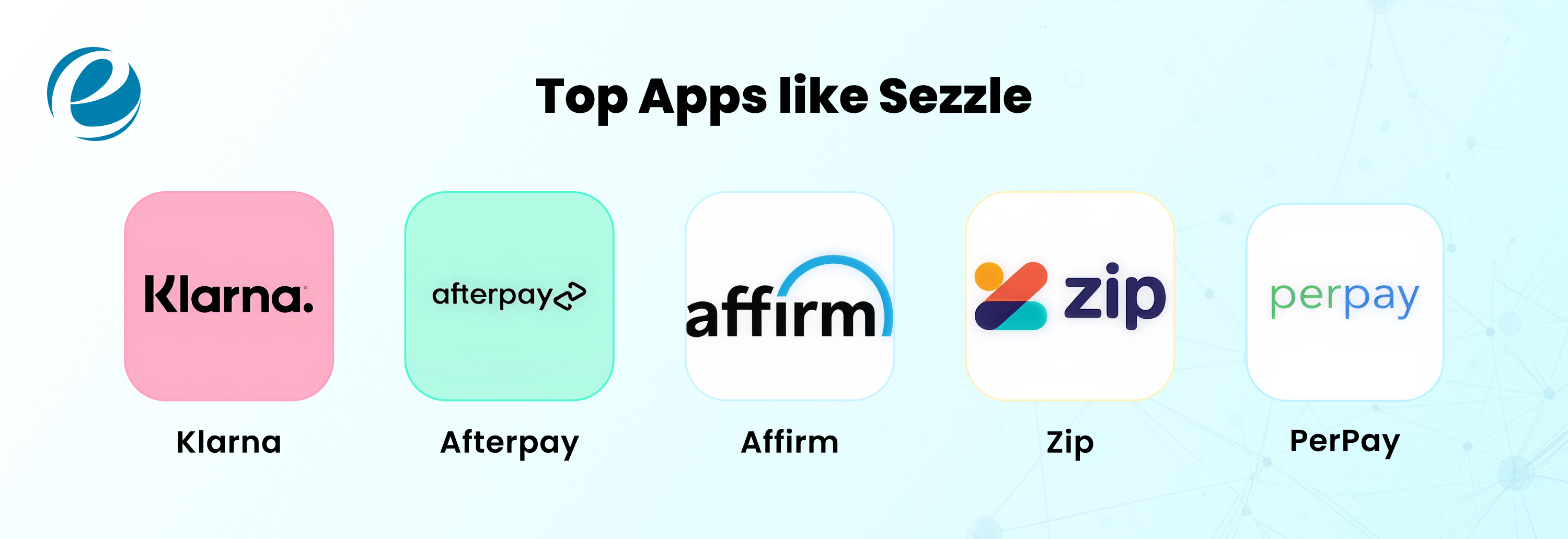 BNPL apps are becoming very popular because they let you shop now and pay later in small and easy installments. Sezzle is one of the most well-known apps but there are many other similar apps that offer flexible payment options for online shoppers. Here are some of them:
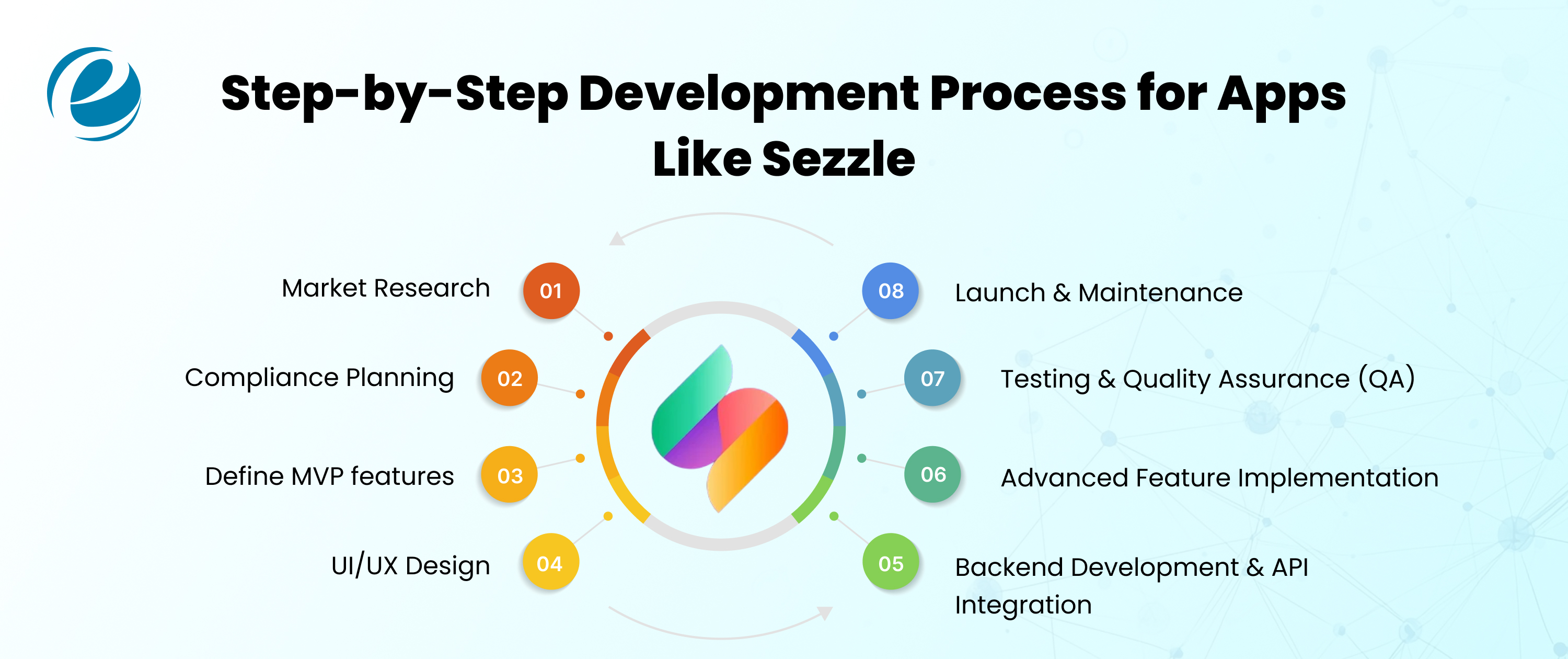

 What is a CRM (Customer Relationship Management)?[/caption]
A CRM (Customer Relationship Management) tool is software that helps businesses manage and improve their relationships with customers. It not only enables companies to get hold of information about customers but also allows them to organize the connections, and thus there are many benefits of salesforce CRM like in the decision-making, sales, and customer service attempts.
What is a CRM (Customer Relationship Management)?[/caption]
A CRM (Customer Relationship Management) tool is software that helps businesses manage and improve their relationships with customers. It not only enables companies to get hold of information about customers but also allows them to organize the connections, and thus there are many benefits of salesforce CRM like in the decision-making, sales, and customer service attempts.
 What is a CDP (Customer Data Platform)?[/caption]
A Customer Data Platform (CDP) is software that generally assembles customer information from diverse sources with a view to conceiving a single, unified customer profile. It also helps businesses a lot in understanding the behavior of their customers and offering personalized marketing.
What is a CDP (Customer Data Platform)?[/caption]
A Customer Data Platform (CDP) is software that generally assembles customer information from diverse sources with a view to conceiving a single, unified customer profile. It also helps businesses a lot in understanding the behavior of their customers and offering personalized marketing.

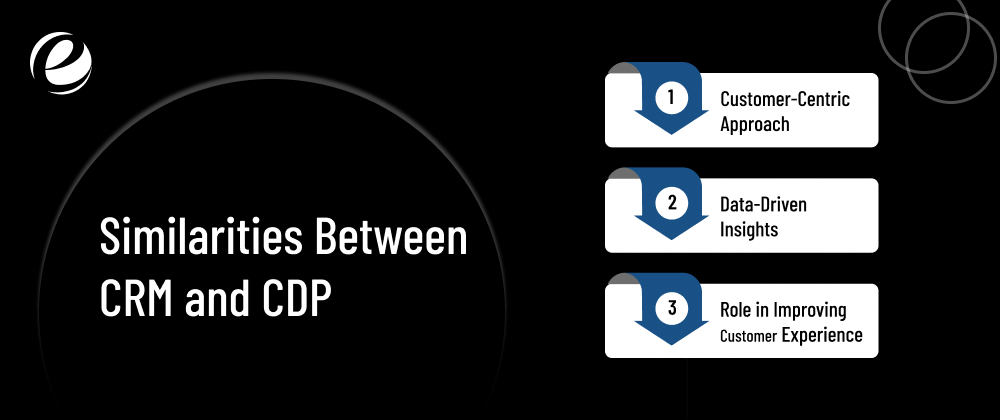 Similarities Between CRM and CDP[/caption]
While CRM and CDP are used for different purposes, some of their purposes are the same. The main purpose of both systems is to leverage customer data to achieve better business results and provide the best customer experience. Here are the most common features:
Similarities Between CRM and CDP[/caption]
While CRM and CDP are used for different purposes, some of their purposes are the same. The main purpose of both systems is to leverage customer data to achieve better business results and provide the best customer experience. Here are the most common features:
| Feature | CRM (Customer Relationship Management) | CDP (Customer Data Platform) |
| Main Purpose | Manage customer relationships and sales interactions | Collect and unify customer data for marketing and personalization |
| Data Type | Known customer data (e.g., contact info, emails, purchase history) | Both known and anonymous data (e.g., web behavior, app activity, ad clicks) |
| Data Collection | Manual or through direct interactions (e.g., forms, emails) | Automatic from multiple sources (web, mobile, CRM, social, etc.) |
| Data Storage | Stores data related to sales, support, and service | Stores complete customer profiles across all touchpoints |
| Real-Time Updates | Limited real-time capabilities | Updates customer profiles in real time |
| Segmentation | Basic, usually by status or stage in sales process | Advanced, behavior-based and real-time segmentation |
| Personalization | Limited to sales or service interactions | Enables personalized marketing across channels |
| Analytics & Reporting | Sales-focused reports (e.g., pipeline, revenue) | Marketing and customer behavior analytics |
| Primary Users | Sales and customer service teams | Marketing and analytics teams |
| Integration Focus | Sales tools, support platforms, email | Marketing tools, ad platforms, analytics systems |
| Customer View | Partial view (based on direct interactions) | Full 360-degree view (combines all data sources) |
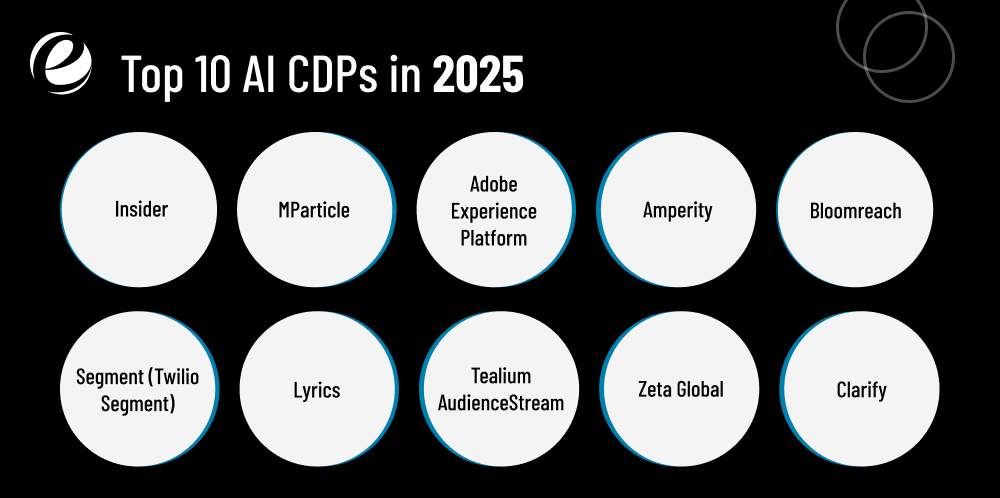 Top 10 AI CDPs in 2025[/caption]
By the year 2025, the input of artificial intelligence (AI) into Customer Data Platforms (CDPs) has transformed the way companies gather, analyze, and operationalize customer data. AI-driven CDPs redefine customer experience through hyper-personalization, predictive analytics, and real-time data processing that result in companies carrying out more detailed and impactful marketing decisions. Here are the best 10 AI-based CDPs that will be advanced in 2025 and will leave the most visible trace:
Top 10 AI CDPs in 2025[/caption]
By the year 2025, the input of artificial intelligence (AI) into Customer Data Platforms (CDPs) has transformed the way companies gather, analyze, and operationalize customer data. AI-driven CDPs redefine customer experience through hyper-personalization, predictive analytics, and real-time data processing that result in companies carrying out more detailed and impactful marketing decisions. Here are the best 10 AI-based CDPs that will be advanced in 2025 and will leave the most visible trace:
 Trends in CRM and CDP (2025 and Beyond)[/caption]
CRM and CDP platforms are going through a period of significant development, becoming much more intelligent, quicker, and, most importantly, customer-oriented. In the next five years or so, we will witness a radical transformation as AI, stricter privacy regulations, and the rapidly increasing demand for real-time, data-driven marketing will take over. So, the question is, what are the most preferred trends that will govern CRM and CDP by then?
Trends in CRM and CDP (2025 and Beyond)[/caption]
CRM and CDP platforms are going through a period of significant development, becoming much more intelligent, quicker, and, most importantly, customer-oriented. In the next five years or so, we will witness a radical transformation as AI, stricter privacy regulations, and the rapidly increasing demand for real-time, data-driven marketing will take over. So, the question is, what are the most preferred trends that will govern CRM and CDP by then?

 Salesforce Health Cloud v/s Service Cloud[/caption]
Salesforce Health Cloud and Service Cloud meet varying business demands. Health Cloud features care coordination, patient engagement, and health workflows, whereas Service Cloud features customer service, case management, and industry-specific services.
Knowing their difference in functionality, cost, and features can allow you to make the right choice for your company. The following is the comparison.
Salesforce Health Cloud v/s Service Cloud[/caption]
Salesforce Health Cloud and Service Cloud meet varying business demands. Health Cloud features care coordination, patient engagement, and health workflows, whereas Service Cloud features customer service, case management, and industry-specific services.
Knowing their difference in functionality, cost, and features can allow you to make the right choice for your company. The following is the comparison.
| Aspect | Salesforce Health Cloud | Salesforce Service Cloud |
| Purpose | Specially designed for the health and life science sectors to deal with patient relationships, health records, and care coordination. | A customer service system designed for multiple different industries to deal with customer care, case management, and services operations. |
| Target Audience | Physicians, medical payers, pharmaceutical firms, medical device companies. | Retail companies, financial organizations, telecommunications companies, IT sectors, etc. |
| Key Features |
|
|
| Compliance | Designed with healthcare regulations such as HIPAA, to securely process patient data. | Basic security provided but not specifically designed for healthcare compliance. |
| Customization | Healthcare domain-specific data models and workflows to process medical procedures. | Highly customizable to process different service procedures in multiple industries. |
| Integration | Smooth integration with healthcare systems and EHRs to provide a single platform for patient information. | Integrates with a wide range of business systems, including CRM and ERP solutions. |
 Use Cases of Salesforce Health Cloud[/caption]
Salesforce Health Cloud is applied in the majority of industries, and businesses utilize it to enhance patient care, automate, and facilitate collaboration. Some applications are cross-industry applicable, while others are industry-specific.
Some of the most important areas where businesses have been able to implement Health Cloud successfully are mentioned below.
Use Cases of Salesforce Health Cloud[/caption]
Salesforce Health Cloud is applied in the majority of industries, and businesses utilize it to enhance patient care, automate, and facilitate collaboration. Some applications are cross-industry applicable, while others are industry-specific.
Some of the most important areas where businesses have been able to implement Health Cloud successfully are mentioned below.
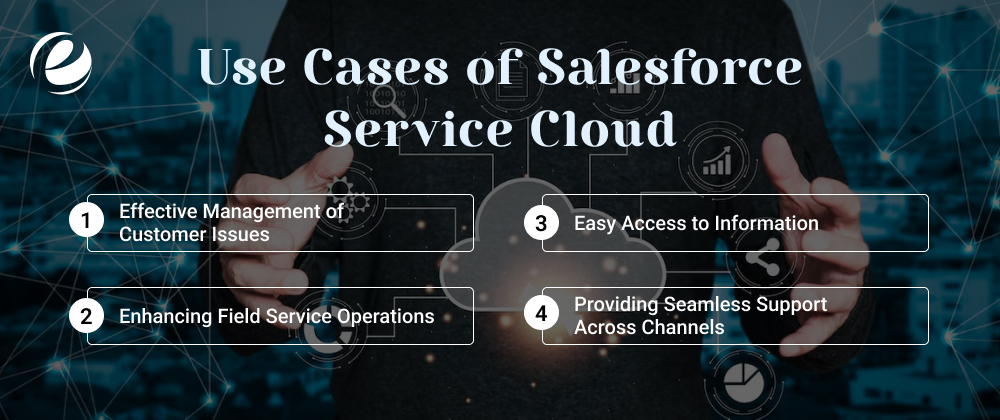 Use Cases of Salesforce Service Cloud[/caption]
Salesforce Service Cloud implementation assists companies in managing customer service across various channels such as phone, email, chat, and social media. Some real-life examples of how companies utilize it to improve customer support functions are given below.
Use Cases of Salesforce Service Cloud[/caption]
Salesforce Service Cloud implementation assists companies in managing customer service across various channels such as phone, email, chat, and social media. Some real-life examples of how companies utilize it to improve customer support functions are given below.
 Pricing and Licensing Consideration[/caption]
Salesforce offers standalone products for specific business needs, like Health Cloud and Service Cloud. They both offer a separate pricing model and licensing considerations. Below is a brief summary of their cost structures:
Pricing and Licensing Consideration[/caption]
Salesforce offers standalone products for specific business needs, like Health Cloud and Service Cloud. They both offer a separate pricing model and licensing considerations. Below is a brief summary of their cost structures:

 Why Select EmizenTech for Salesforce Development?[/caption]
The choice of an appropriate Salesforce partner is important to success and hassle-free implementation. Sufficient experience guarantees maximum exploitation of the capabilities of the platform, resulting in successful business outcomes.
Our seasoned experts with considerable Salesforce implementation experience have rolled out solutions in various industries to meet specific business needs. We are platform specialists, ensuring trouble-free integration and processes.
What differentiates us is our customer-centric philosophy—taking the time to learn about your mission and needs, offering strategies aligned with your vision, and every contract we sign is predicated upon open communication, integrity, and trust.
Our team includes certified Salesforce masters who keep up with the industry trends. Ongoing research enables us to tackle your business with superior solutions at their best.
We get up close with your processes and craft bespoke solutions to enhance efficiency and growth.
Call us today and let us propel your business on Salesforce!
Why Select EmizenTech for Salesforce Development?[/caption]
The choice of an appropriate Salesforce partner is important to success and hassle-free implementation. Sufficient experience guarantees maximum exploitation of the capabilities of the platform, resulting in successful business outcomes.
Our seasoned experts with considerable Salesforce implementation experience have rolled out solutions in various industries to meet specific business needs. We are platform specialists, ensuring trouble-free integration and processes.
What differentiates us is our customer-centric philosophy—taking the time to learn about your mission and needs, offering strategies aligned with your vision, and every contract we sign is predicated upon open communication, integrity, and trust.
Our team includes certified Salesforce masters who keep up with the industry trends. Ongoing research enables us to tackle your business with superior solutions at their best.
We get up close with your processes and craft bespoke solutions to enhance efficiency and growth.
Call us today and let us propel your business on Salesforce!
 What is Salesforce Financial Services Cloud?[/caption]
Salesforce Financial Services Cloud (FSC) is a cloud specifically designed for banks, wealth management firms, and insurance firms. It consolidates all customer data from different financial systems in one place and provides an end-to-end view of all customers. The solution enables organizations to leverage automation and AI to deliver personalized customer experiences, automate workflows, and drive financial planning.
With FSC, financial institutions and banks can improve customer relationships, lower onboarding, and maximize service efficiency with compliance. It enables data integration to generate actionable insights, fuel growth and long-term customer trust.
What is Salesforce Financial Services Cloud?[/caption]
Salesforce Financial Services Cloud (FSC) is a cloud specifically designed for banks, wealth management firms, and insurance firms. It consolidates all customer data from different financial systems in one place and provides an end-to-end view of all customers. The solution enables organizations to leverage automation and AI to deliver personalized customer experiences, automate workflows, and drive financial planning.
With FSC, financial institutions and banks can improve customer relationships, lower onboarding, and maximize service efficiency with compliance. It enables data integration to generate actionable insights, fuel growth and long-term customer trust.
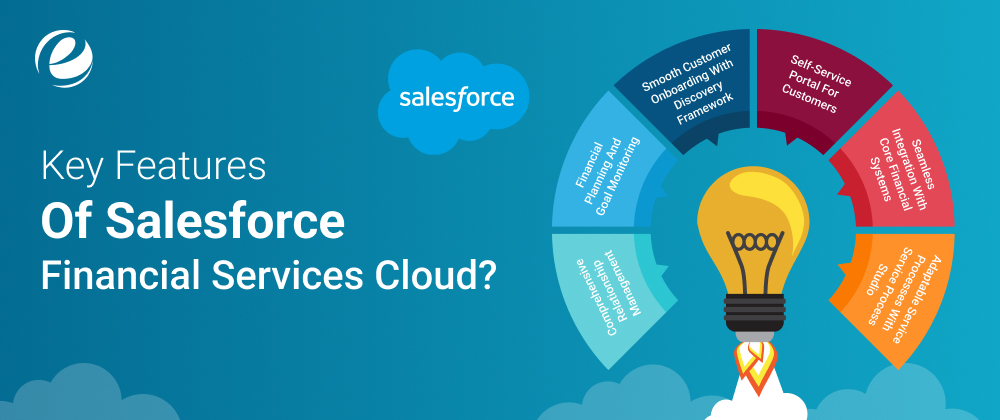 Key Features of Salesforce Financial Services Cloud[/caption]
Salesforce Financial Services Cloud (FSC) equips financial institutions with compelling relationship-building, business intelligence simplicity, and regulatory compliance. Driven by the power of automation, analytics, and customer insight, financial cloud salesforce empowers financial advisors, bankers, and service teams to deliver a unified, personalized customer experience. The following features are some of the key capabilities that make FSC an invaluable asset for financial companies.
Key Features of Salesforce Financial Services Cloud[/caption]
Salesforce Financial Services Cloud (FSC) equips financial institutions with compelling relationship-building, business intelligence simplicity, and regulatory compliance. Driven by the power of automation, analytics, and customer insight, financial cloud salesforce empowers financial advisors, bankers, and service teams to deliver a unified, personalized customer experience. The following features are some of the key capabilities that make FSC an invaluable asset for financial companies.
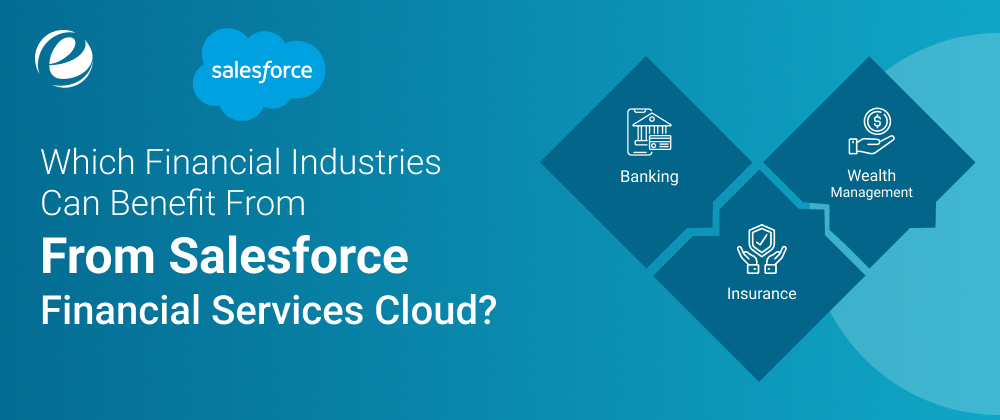 Which Financial Industries Can Benefit from Salesforce Financial Services Cloud?[/caption]
Salesforce Financial Services Cloud (FSC) is aimed at empowering different financial industries by automating customer relations, workflow management, and regulatory compliance. The most important industries that can derive maximum benefits from FSC are listed below.
Which Financial Industries Can Benefit from Salesforce Financial Services Cloud?[/caption]
Salesforce Financial Services Cloud (FSC) is aimed at empowering different financial industries by automating customer relations, workflow management, and regulatory compliance. The most important industries that can derive maximum benefits from FSC are listed below.
 Salesforce Financial Services Cloud Implementation Steps[/caption]
For the installation of salesforce for financial services, planning and preparation are done to have FSC installed in a smooth way and at peak performance. Following is a detailed step-by-step guide on the proper installation of FSC.
Salesforce Financial Services Cloud Implementation Steps[/caption]
For the installation of salesforce for financial services, planning and preparation are done to have FSC installed in a smooth way and at peak performance. Following is a detailed step-by-step guide on the proper installation of FSC.


 Why EmizenTech for the Salesforce Financial Service Cloud?[/caption]
It takes expertise in the platform and the financial services sector to implement a financial service cloud on Salesforce. EmizenTech is a trusted implementation partner because:
Why EmizenTech for the Salesforce Financial Service Cloud?[/caption]
It takes expertise in the platform and the financial services sector to implement a financial service cloud on Salesforce. EmizenTech is a trusted implementation partner because:

 What Is Salesforce Manufacturing Cloud?[/caption]
Salesforce Manufacturing Cloud is a platform created specifically for manufacturing companies. It is a part of the Salesforce system and has tools that help make operations easier, improve teamwork, and give a better view of the whole manufacturing process.
Flexibility is one of the greatest aspects of Salesforce manufacturing cloud implementation. You can set it up to fit your business needs. You can choose to use just the Sales tools, just the Service tools, or both. It also works well with the regular Sales Cloud or Service Cloud for even more collaboration.
With Manufacturing Cloud’s forecasting tools, businesses can predict demand, improve inventory management, and solve supply chain problems before they happen. This makes customers happier and helps the business grow and succeed.
What Is Salesforce Manufacturing Cloud?[/caption]
Salesforce Manufacturing Cloud is a platform created specifically for manufacturing companies. It is a part of the Salesforce system and has tools that help make operations easier, improve teamwork, and give a better view of the whole manufacturing process.
Flexibility is one of the greatest aspects of Salesforce manufacturing cloud implementation. You can set it up to fit your business needs. You can choose to use just the Sales tools, just the Service tools, or both. It also works well with the regular Sales Cloud or Service Cloud for even more collaboration.
With Manufacturing Cloud’s forecasting tools, businesses can predict demand, improve inventory management, and solve supply chain problems before they happen. This makes customers happier and helps the business grow and succeed.
 Statistics Of Salesforce Manufacturing Cloud Implementation[/caption]
Manufacturers are now focusing on tools that help workers work from home, improve connections in the supply chain, and make operations more transparent. This shift is all about building a stronger, more flexible business for the future.
Below, we’ll share some statistics that highlight how these changes are making an impact.
Statistics Of Salesforce Manufacturing Cloud Implementation[/caption]
Manufacturers are now focusing on tools that help workers work from home, improve connections in the supply chain, and make operations more transparent. This shift is all about building a stronger, more flexible business for the future.
Below, we’ll share some statistics that highlight how these changes are making an impact.
 Key Features Of Salesforce Manufacturing Cloud[/caption]
Salesforce Manufacturing Cloud implementation services are getting popular in the manufacturing world because it helps sales and operations teams work together more easily. It’s designed to solve common problems and meet the special needs of manufacturers.
Let’s explore the main features and how they help achieve these goals.
Key Features Of Salesforce Manufacturing Cloud[/caption]
Salesforce Manufacturing Cloud implementation services are getting popular in the manufacturing world because it helps sales and operations teams work together more easily. It’s designed to solve common problems and meet the special needs of manufacturers.
Let’s explore the main features and how they help achieve these goals.
 Benefits Of Salesforce Manufacturing Cloud[/caption]
To stay ahead in the manufacturing industry, you need more than just good production. You need all your business processes connected, like sales, production, inventory, and customer service. Salesforce Manufacturing Cloud helps by increasing efficiency, forecasting capabilities and ensuring customer satisfaction.
Here are the top reasons to invest in Salesforce manufacturing cloud implementation:
Benefits Of Salesforce Manufacturing Cloud[/caption]
To stay ahead in the manufacturing industry, you need more than just good production. You need all your business processes connected, like sales, production, inventory, and customer service. Salesforce Manufacturing Cloud helps by increasing efficiency, forecasting capabilities and ensuring customer satisfaction.
Here are the top reasons to invest in Salesforce manufacturing cloud implementation:
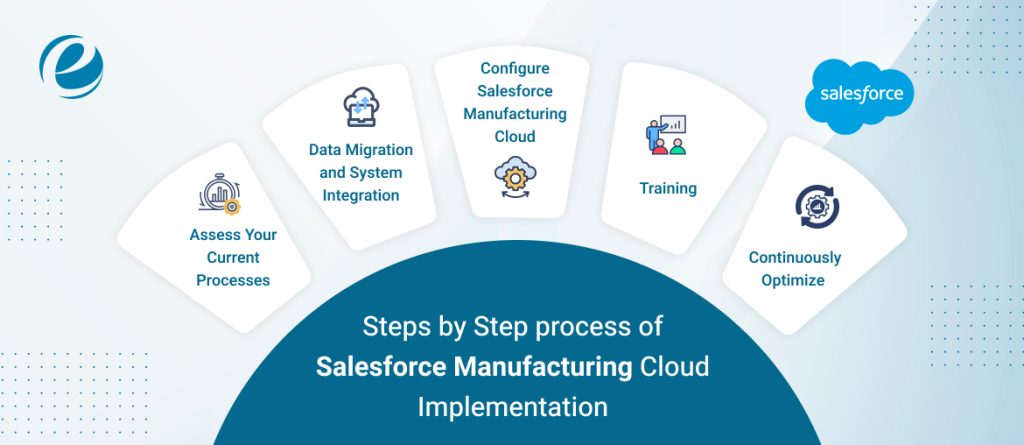 Step By Step Process Of Salesforce Manufacturing Cloud Implementation[/caption]
Starting with Salesforce Manufacturing Cloud is an important step that can change the way your manufacturing works. When done right, it brings your production, sales, and operations teams together, making everything run more smoothly and quickly.
Here’s a closer look at each step of Salesforce Manufacturing Cloud implementation to guide you and make the transition easy.
Step By Step Process Of Salesforce Manufacturing Cloud Implementation[/caption]
Starting with Salesforce Manufacturing Cloud is an important step that can change the way your manufacturing works. When done right, it brings your production, sales, and operations teams together, making everything run more smoothly and quickly.
Here’s a closer look at each step of Salesforce Manufacturing Cloud implementation to guide you and make the transition easy.
 Why Choose EmizenTech For Salesforce Manufacturing Cloud Implementation?[/caption]
Salesforce manufacturing cloud helps manufacturers work better and grow faster. But just having good technology is not enough. Many businesses fail because they don’t set it up the right way. That's why hiring reliable company who know how to make Salesforce Manufacturing Cloud work best is important.
EmizenTech is a trusted Salesforce development company which excels in implementing Salesforce for manufacturing industry seamlessly and successfully. Our certified experts customize the manufacturing cloud to fit your business needs and implement smoothly with your current setup, so you get the most benefits. With our Salesforce expertise, companies create better experiences for their clients and manage their work more efficiently. Our experts handle everything to make sure your setup is successful.
Contact us today to get started on a smooth and successful salesforce manufacturing cloud implementation.
Why Choose EmizenTech For Salesforce Manufacturing Cloud Implementation?[/caption]
Salesforce manufacturing cloud helps manufacturers work better and grow faster. But just having good technology is not enough. Many businesses fail because they don’t set it up the right way. That's why hiring reliable company who know how to make Salesforce Manufacturing Cloud work best is important.
EmizenTech is a trusted Salesforce development company which excels in implementing Salesforce for manufacturing industry seamlessly and successfully. Our certified experts customize the manufacturing cloud to fit your business needs and implement smoothly with your current setup, so you get the most benefits. With our Salesforce expertise, companies create better experiences for their clients and manage their work more efficiently. Our experts handle everything to make sure your setup is successful.
Contact us today to get started on a smooth and successful salesforce manufacturing cloud implementation.

 What is a Salesforce Automotive Cloud[/caption]
Salesforce Automotive Cloud is a platform made for the automotive industry to improve the customer experience and streamline their operations. It helps automotive dealerships and manufacturers manage every step of the customer journey, from when they first show interest to after they’ve bought the vehicle. The platform combines Salesforce’s powerful tools with features designed for the automotive world.
The Automotive Cloud, built on Salesforce’s Sales and Service Cloud, helps track and manage both customers and vehicles throughout their journey. The platform makes every part of the process smooth, from buying a vehicle to getting support after the sale. It also has tools that help companies personalize their service and improve their work using live data. Made for the automobile industry, Automotive Cloud Salesforce follows the best industry practices for how businesses should run. This helps companies give great service and stay ahead of what customers want.
What is a Salesforce Automotive Cloud[/caption]
Salesforce Automotive Cloud is a platform made for the automotive industry to improve the customer experience and streamline their operations. It helps automotive dealerships and manufacturers manage every step of the customer journey, from when they first show interest to after they’ve bought the vehicle. The platform combines Salesforce’s powerful tools with features designed for the automotive world.
The Automotive Cloud, built on Salesforce’s Sales and Service Cloud, helps track and manage both customers and vehicles throughout their journey. The platform makes every part of the process smooth, from buying a vehicle to getting support after the sale. It also has tools that help companies personalize their service and improve their work using live data. Made for the automobile industry, Automotive Cloud Salesforce follows the best industry practices for how businesses should run. This helps companies give great service and stay ahead of what customers want.
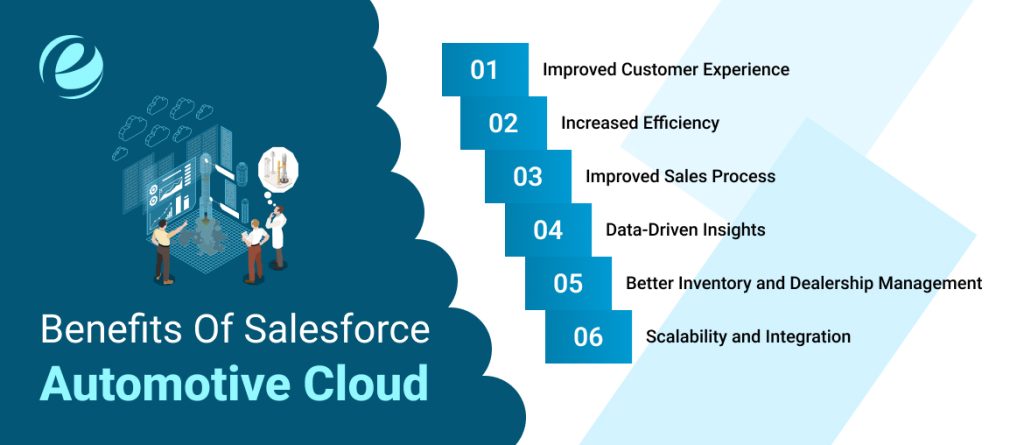 Benefits Of Salesforce Automotive Cloud[/caption]
Salesforce for automotive is built to improve operations, enhance customer engagement, and boost revenue. Here’s a look at its key benefits:
Benefits Of Salesforce Automotive Cloud[/caption]
Salesforce for automotive is built to improve operations, enhance customer engagement, and boost revenue. Here’s a look at its key benefits:
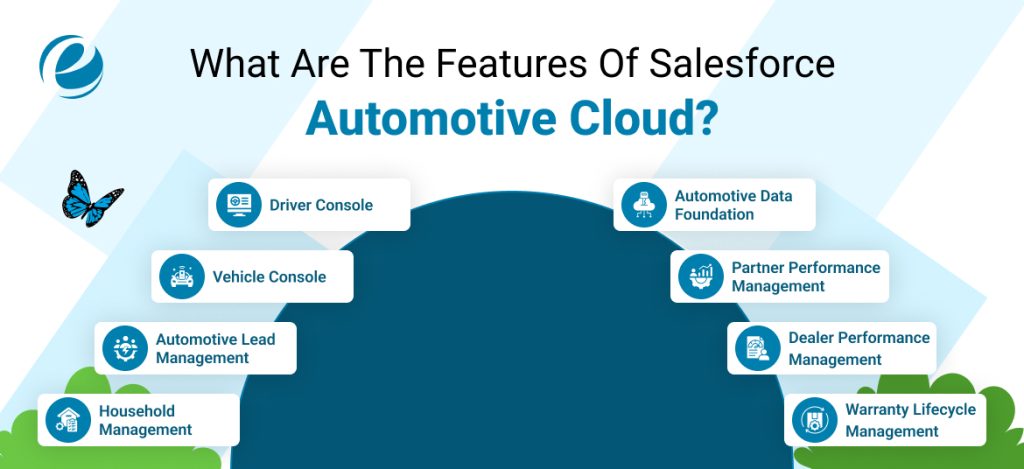 What Are The Features Of Salesforce Automotive Cloud?[/caption]
Automotive Clouds Salesforce provides an amazing and easy solution to properly process and utilize consumer data. Here’s a quick look at some of its most important features:
What Are The Features Of Salesforce Automotive Cloud?[/caption]
Automotive Clouds Salesforce provides an amazing and easy solution to properly process and utilize consumer data. Here’s a quick look at some of its most important features:
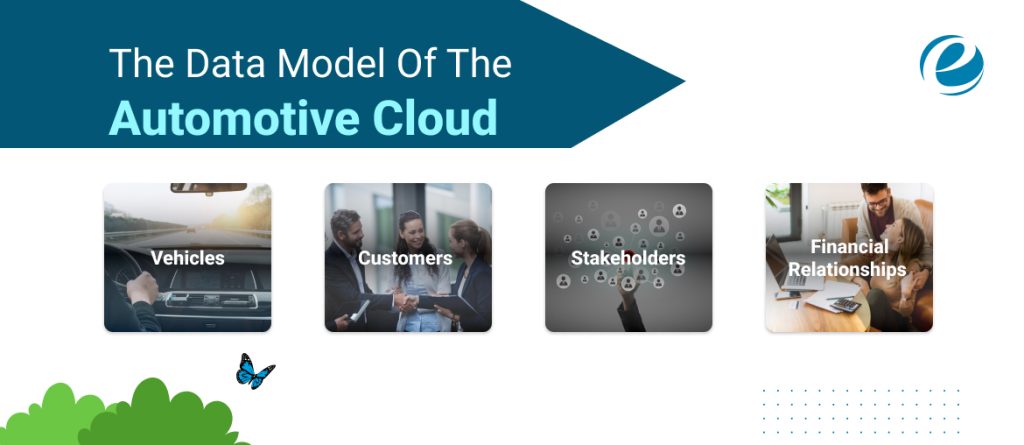 The Data Model Of The Automotive Cloud[/caption]
The Automotive Cloud helps businesses provide a personalized experience for their customers, whether they're interacting online or in person, using a unified data model. Salesforce automotive cloud data model organizes all the information a dealership needs to run smoothly, from sales to customer service and everything in between. The Automotive Cloud collects the below mentioned data:
The Data Model Of The Automotive Cloud[/caption]
The Automotive Cloud helps businesses provide a personalized experience for their customers, whether they're interacting online or in person, using a unified data model. Salesforce automotive cloud data model organizes all the information a dealership needs to run smoothly, from sales to customer service and everything in between. The Automotive Cloud collects the below mentioned data:
 Pricing Plans Of Salesforce Automotive Cloud[/caption]
Salesforce Automotive Cloud offers different pricing options to suit businesses of all sizes. This helps companies pick a automotive cloud pricing plan that fits their needs and budget, making it easier to build long-lasting customer relationships. Prices may change depending on what a business needs, but below are the most common options.
Pricing Plans Of Salesforce Automotive Cloud[/caption]
Salesforce Automotive Cloud offers different pricing options to suit businesses of all sizes. This helps companies pick a automotive cloud pricing plan that fits their needs and budget, making it easier to build long-lasting customer relationships. Prices may change depending on what a business needs, but below are the most common options.
| Edition | Description | Cost | Features |
| Enterprise | Best for medium and large companies, with advanced customization and integration options. | $325 USD/User/Month |
|
| Unlimited | Best suited for large enterprises, unlimited access to all features, detailed analytics, and customer support. | $500 USD/User/Month |
|
| Einstein 1 for Service | Ideal for businesses using AI in their service operations. | $700 USD/User/Month |
|
| Einstein 1 for Sales | Great for businesses with large sales teams and lots of customer data. | $700 USD/User/Month |
|
 Why Choose EmizenTech For Your Salesforce Automotive Cloud?[/caption]
Salesforce Automotive Cloud can help improve your sales and customer satisfaction, but setting up CRM solutions can be really difficult. Don’t worry, we’re here to help! At EmizenTech, we have a team of certified Salesforce developers with years of experience in the industry. They will guide you through setting up Salesforce Automotive Cloud to make sure everything works perfectly and you get the best results.
We’ve worked with many automotive companies, improving their operations and making sure they get the best results from their Salesforce investment. Our certified Salesforce developers will ensure the system is properly configured without a hitch. By implementing high-quality solutions we have assisted automotive businesses provide better customer experience that translates into more sales and demands driving vehicle value.
If you want to make the most of Salesforce Automotive Cloud, get in touch with us today. Our experts are ready to help you get started and make everything run smoothly.
Why Choose EmizenTech For Your Salesforce Automotive Cloud?[/caption]
Salesforce Automotive Cloud can help improve your sales and customer satisfaction, but setting up CRM solutions can be really difficult. Don’t worry, we’re here to help! At EmizenTech, we have a team of certified Salesforce developers with years of experience in the industry. They will guide you through setting up Salesforce Automotive Cloud to make sure everything works perfectly and you get the best results.
We’ve worked with many automotive companies, improving their operations and making sure they get the best results from their Salesforce investment. Our certified Salesforce developers will ensure the system is properly configured without a hitch. By implementing high-quality solutions we have assisted automotive businesses provide better customer experience that translates into more sales and demands driving vehicle value.
If you want to make the most of Salesforce Automotive Cloud, get in touch with us today. Our experts are ready to help you get started and make everything run smoothly.
 What Is Salesforce in Healthcare[/caption]
Salesforce offers cloud tools for healthcare to help manage patient data and make processes smoother. Its Health Cloud CRM is built for healthcare needs. It helps hospitals, clinics, and medical companies organize patient data, improve patient care, and run things better.
With Health Cloud, you can connect people, data, and tasks to support patients during their care journey. It gives your team easy access to important information and insights, helping with sales, operations, and patient services.
One big advantage is that Salesforce works well with your existing systems, like ERP, EHR, or EMR. You don’t need to replace these systems; Salesforce can connect to them. That allows you to continue using your current tools and incorporate Health Cloud easily. In that way, Salesforce Health Cloud implementation simplifies the healthcare work and helps to improve the patient care.
What Is Salesforce in Healthcare[/caption]
Salesforce offers cloud tools for healthcare to help manage patient data and make processes smoother. Its Health Cloud CRM is built for healthcare needs. It helps hospitals, clinics, and medical companies organize patient data, improve patient care, and run things better.
With Health Cloud, you can connect people, data, and tasks to support patients during their care journey. It gives your team easy access to important information and insights, helping with sales, operations, and patient services.
One big advantage is that Salesforce works well with your existing systems, like ERP, EHR, or EMR. You don’t need to replace these systems; Salesforce can connect to them. That allows you to continue using your current tools and incorporate Health Cloud easily. In that way, Salesforce Health Cloud implementation simplifies the healthcare work and helps to improve the patient care.
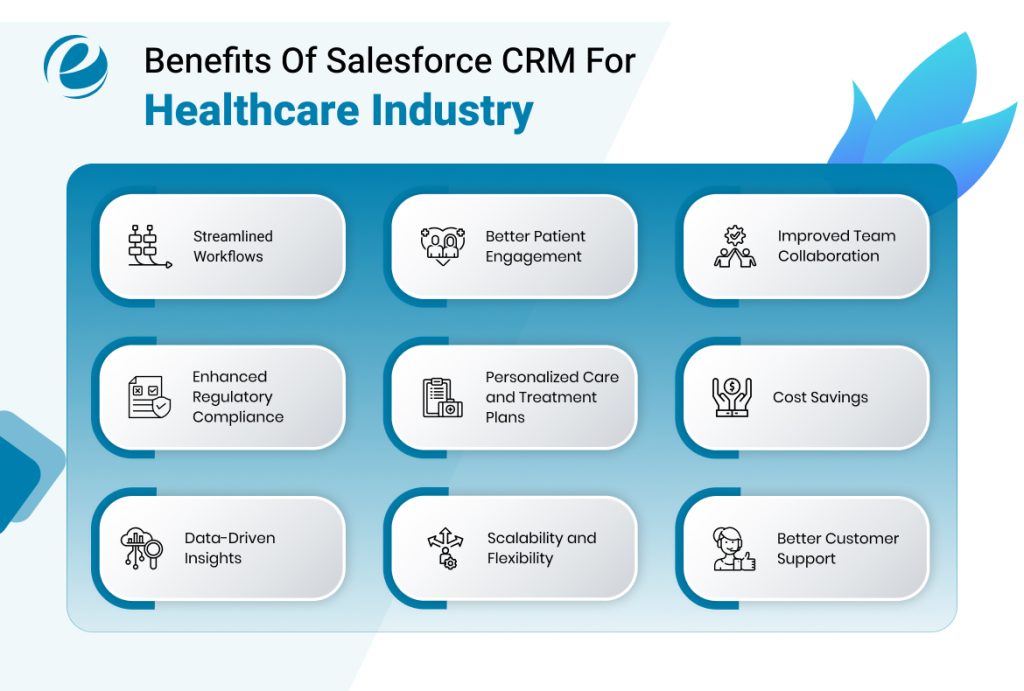 Benefits Of Salesforce CRM For Healthcare Industry[/caption]
Salesforce helps healthcare providers meet customer needs and improve patient care by connecting existing systems, integrating apps, and offering a flexible, secure platform with helpful insights. Here are some key benefits of Salesforce in healthcare:
Benefits Of Salesforce CRM For Healthcare Industry[/caption]
Salesforce helps healthcare providers meet customer needs and improve patient care by connecting existing systems, integrating apps, and offering a flexible, secure platform with helpful insights. Here are some key benefits of Salesforce in healthcare:
 Use Cases Of Salesforce In Healthcare[/caption]
Salesforce Health Cloud is widely used in healthcare and life sciences. Its flexibility helps organizations find new ways to improve operations, provide better patient care, and enhance experiences. Below are common use cases of Salesforce in healthcare.
Use Cases Of Salesforce In Healthcare[/caption]
Salesforce Health Cloud is widely used in healthcare and life sciences. Its flexibility helps organizations find new ways to improve operations, provide better patient care, and enhance experiences. Below are common use cases of Salesforce in healthcare.
 Salesforce Health Cloud Pricing Plans[/caption]
Salesforce for healthcare offers a complete set of tools. It has distinct pricing plans for each edition because each one offers varying solutions. Being aware of the three options will help you decide on the best edition according to the required features for your healthcare organization and available resources that you have. This way, you can make a more informed decision.
Let's have a look at the different health cloud Salesforce pricing:
Salesforce Health Cloud Pricing Plans[/caption]
Salesforce for healthcare offers a complete set of tools. It has distinct pricing plans for each edition because each one offers varying solutions. Being aware of the three options will help you decide on the best edition according to the required features for your healthcare organization and available resources that you have. This way, you can make a more informed decision.
Let's have a look at the different health cloud Salesforce pricing:
| Plan | Description | Cost | Features |
| Enterprise | The Enterprise edition is the basic package of Salesforce Health Cloud. It provides tools and features that are beneficial to healthcare and life science organizations, so that they can manage their activities more productively. | $325 per month/user |
|
| Unlimited | The Unlimited edition offers more CRM features than the Enterprise edition. It allows healthcare organizations to effectively gather and manage data while improving their operations. | $500 per month/user |
|
| Einstein 1 for Service | This top-tier Health Cloud edition includes all Unlimited features, plus access to Einstein AI, Data Cloud, and Slack, offering even more capabilities for healthcare organizations. | $700 per month/user |
|
 Why Choose EmizenTech As Your Salesforce Development Company?[/caption]
Salesforce helps healthcare providers focus on patient satisfaction by improving access, engagement, and overall care. It streamlines operations, making it easier to deliver a better digital health experience. EmizenTech is an experienced Salesforce development company that helps organizations understand, implement, and use Salesforce Health Cloud successfully.
Setting up Salesforce CRM for healthcare needs to be tailored to your goals. EmizenTech supports clients throughout the process, from planning to implementation and ongoing support. We help healthcare organizations make the most of their Salesforce investment by guiding them every step of the way.
Over the years, we've assisted many healthcare companies in seeing the benefits of Salesforce Health Cloud, leading to better patient outcomes and care. If you’re ready to use Salesforce CRM in healthcare, reach out to us today. We’ll help you get started and make sure you reach your goals.
Why Choose EmizenTech As Your Salesforce Development Company?[/caption]
Salesforce helps healthcare providers focus on patient satisfaction by improving access, engagement, and overall care. It streamlines operations, making it easier to deliver a better digital health experience. EmizenTech is an experienced Salesforce development company that helps organizations understand, implement, and use Salesforce Health Cloud successfully.
Setting up Salesforce CRM for healthcare needs to be tailored to your goals. EmizenTech supports clients throughout the process, from planning to implementation and ongoing support. We help healthcare organizations make the most of their Salesforce investment by guiding them every step of the way.
Over the years, we've assisted many healthcare companies in seeing the benefits of Salesforce Health Cloud, leading to better patient outcomes and care. If you’re ready to use Salesforce CRM in healthcare, reach out to us today. We’ll help you get started and make sure you reach your goals.

 A Shopify eCommerce Consultant is a specialized expert who has a lot of experience and helps companies to create and develop online stores on the Shopify platform that are not only successful but also scalable. A consultant does not merely take up development tasks but a strategic view of the business, aligning technology, design, and business goals to create an online store that operates excellently and changes visitors into customers.
The consultants guide brands at every stage of their e-commerce journey, from launching a new store to improving an existing one, and often work closely with the teams that are involved in Shopify store development to make sure the store is built for long-term success. There are mainly three types of consultants: freelancers, agencies, and Shopify partners. Brands can choose between them depending on the project, budget, and growth plans. The article further explains a fair comparison between them.
These consultants have good hands-on experience with Shopify and also have a very strong understanding of user behavior, sales funnels, and operational efficiency. They partner with business owners every day to facilitate site performance, improve customer experience, and unleash growth-oriented solutions that are practical. Their main concern is not how the store looks but how well it supports business objectives.
A Shopify eCommerce Consultant usually assists with:
A Shopify eCommerce Consultant is a specialized expert who has a lot of experience and helps companies to create and develop online stores on the Shopify platform that are not only successful but also scalable. A consultant does not merely take up development tasks but a strategic view of the business, aligning technology, design, and business goals to create an online store that operates excellently and changes visitors into customers.
The consultants guide brands at every stage of their e-commerce journey, from launching a new store to improving an existing one, and often work closely with the teams that are involved in Shopify store development to make sure the store is built for long-term success. There are mainly three types of consultants: freelancers, agencies, and Shopify partners. Brands can choose between them depending on the project, budget, and growth plans. The article further explains a fair comparison between them.
These consultants have good hands-on experience with Shopify and also have a very strong understanding of user behavior, sales funnels, and operational efficiency. They partner with business owners every day to facilitate site performance, improve customer experience, and unleash growth-oriented solutions that are practical. Their main concern is not how the store looks but how well it supports business objectives.
A Shopify eCommerce Consultant usually assists with:
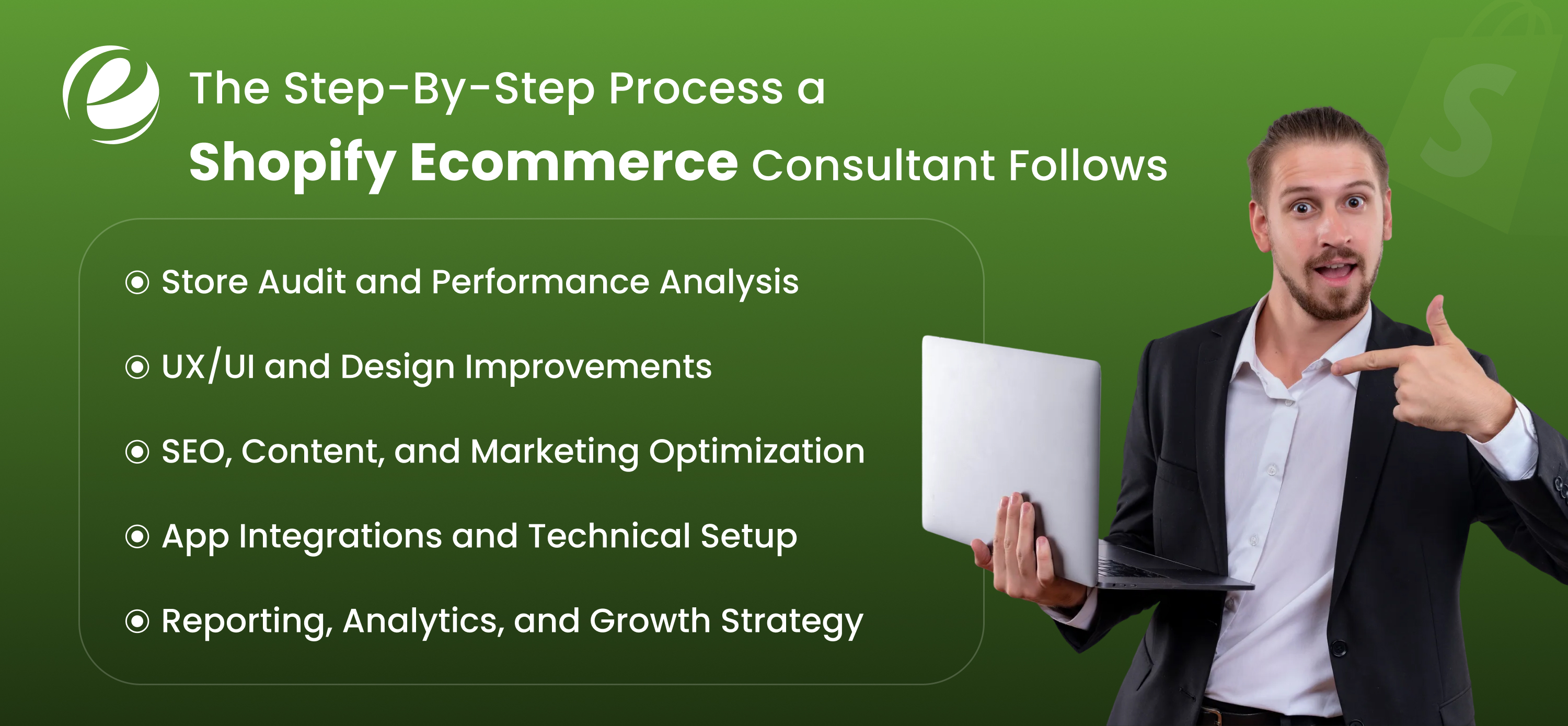 A Shopify eCommerce Consultant systematically leads the client through the entire process and ensures that each step results in measurable business value. The consultant uses insights, data, and long-term goals to allow the project to grow and this is what clearly distinguishes the professional from the trial-and-error approaches that are commonly discussed in the Shopify consultant vs agency dispute.
| Pricing Model | Best For | Typical Range (USA) |
| Hourly | Small or undefined tasks | $25–$250/hour |
| Project-Based | Store setup or app integration | $500–$10,000+ |
| Retainer | Marketing & Ongoing growth and optimization | $500-$5,000+/month |
 Freelancers, agencies, and Shopify Partners offer distinct paths for Shopify development, each balancing cost, expertise, and scalability differently. Choosing depends on the project, budget, and growth plans.
| Factor | Freelancers | Agencies | Shopify Partners |
| Cost | Lower, project-based | Highest, full-service | Balanced, certified value |
| Expertise Scope | Narrow, specialist skills | Broad team capabilities | Platform-tuned, scalable |
| Flexibilty | High for short tasks | Medium, process-driven | High with partner resources |
| Best Scenario | Quick fixes, startups | Complex launches | Growth-focused optimization |
 The decision of selecting the appropriate Shopify consultant is very important, as it affects your store's performance, scalability, and success in the long run. A comprehensive pre-hiring checklist, along with a well-outlined Shopify Consultant Toolkit, enables companies to make informed decisions and at the same time, ensures proper execution post-onboarding. The combination of these factors minimizes risks, enhances transparency, and ultimately lays the groundwork for growth that can be measured.
| Tool/App/Template | Type | Key Features | Pricing | Best For Shopify Store Optimization |
| TinyIMG | App | Image compression (94% PNG), lazy loading, AI alt text, CSS/JS minification | Free plan; $4.99+/mo | Shopify store optimization + SEO |
| Tapita | App | One-click speedup, script control, Core Web Vitals boost, keyword tools | Free; $9+/mo | Beginners learning to optimize Shopify store speed |
| SEOAnt | App | AI SEO audits, image optimization, instant indexing, schema markup | Free; $19+/mo | Technical Shopify SEO at scale |
| Booster Theme | Template | 98/100 Lighthouse score, mobile-first, built-in speed features | $179-$399 one-time | Shopify store development with native speed |
| Avada SEO Suite | App | AI content optimizer, broken link checker, rich snippets | $19+/mo | On-page Shopify SEO optimization needs |
| Plug In SEO | App | Automated audits, alt tag fixes, duplicate content scanner | Free; $20+/mo | Quick fixes for "How can I optimize my shopify store for search engines?" |
| Crush.pics | App | Bulk image compression, 3 modes, alt text automation | Free; $3.99+/mo | Image-heavy stores needing Shopify speed optimization |
| GTmetrix | External Tool | Waterfall analysis, Core Web Vitals tracking, video replays | Free; $10+/mo | Performance monitoring during Shopify store optimization |

 The Shopify POS app is a point-of-sale solution designed for merchants to sell their products in-person and online, seamlessly. It ensures that all your offline connections are connected with your Shopify online store, whether you are selling on the go, managing a pop-up market, or running a brick-and-mortar store.
The app is available on both iOS and Android devices. Moreover, it is even preferred by small businesses and budding startups, all thanks to its powerful backend, intuitive design, and real-time capabilities.
That’s not all. This app is a go-to unification commerce platform for many, given that it can handle a range of tasks without compromising the efficiency. From your orders and inventory to analytics and customer data, everything stays in a clear and consolidated vicinity of your operations.
Now let’s understand how this POS platform operates. It is backed by an intelligent infrastructure that brings ecommerce and retail together. So, as and when a customer purchases something in-store using Shopify POS, the details (product quantities, customer data, sale, etc.) automatically get updated. Since it’s all automated, the app contributes to reduced errors, enhanced customer experience, faster checkouts, and more benefits for businesses.
And the best thing? The app can be tailored as per your specific business needs, facilitating flexibility. That said, if you are considering Shopify POS app development, you are set to open a world of opportunities.
The Shopify POS app is a point-of-sale solution designed for merchants to sell their products in-person and online, seamlessly. It ensures that all your offline connections are connected with your Shopify online store, whether you are selling on the go, managing a pop-up market, or running a brick-and-mortar store.
The app is available on both iOS and Android devices. Moreover, it is even preferred by small businesses and budding startups, all thanks to its powerful backend, intuitive design, and real-time capabilities.
That’s not all. This app is a go-to unification commerce platform for many, given that it can handle a range of tasks without compromising the efficiency. From your orders and inventory to analytics and customer data, everything stays in a clear and consolidated vicinity of your operations.
Now let’s understand how this POS platform operates. It is backed by an intelligent infrastructure that brings ecommerce and retail together. So, as and when a customer purchases something in-store using Shopify POS, the details (product quantities, customer data, sale, etc.) automatically get updated. Since it’s all automated, the app contributes to reduced errors, enhanced customer experience, faster checkouts, and more benefits for businesses.
And the best thing? The app can be tailored as per your specific business needs, facilitating flexibility. That said, if you are considering Shopify POS app development, you are set to open a world of opportunities.


| Feature | Shopify POS Apps | Other POS Systems |
| Inventory Management | Centralized support with multi-location functionality | Siloed per location |
| Online and Offline Syncing | Real-time sync with Shopify | Manual updates/APIs |
| Omnichannel Platform | Fully integrated returns, BOPIS, and more | Not built-in |
| Customization | App extensions, Smart grid, custom app development | Limited integrations |
| Payment Integrations | Built-in systems | Needs third-party payment integrations |
| Mobile Accessibility | Compatible with mobile and tablets | Limited mobility |
| Offline Mode | Complete offline access | Not common among traditional solutions |
| Gift Card | Native (in-store + online) integration | Requires add-ons |
| Staff Management | Flexible and role-based task allocation | Basic functions |
| Customer Profile | Accessible cross-channel, created automatically | Usually limited to in-store |
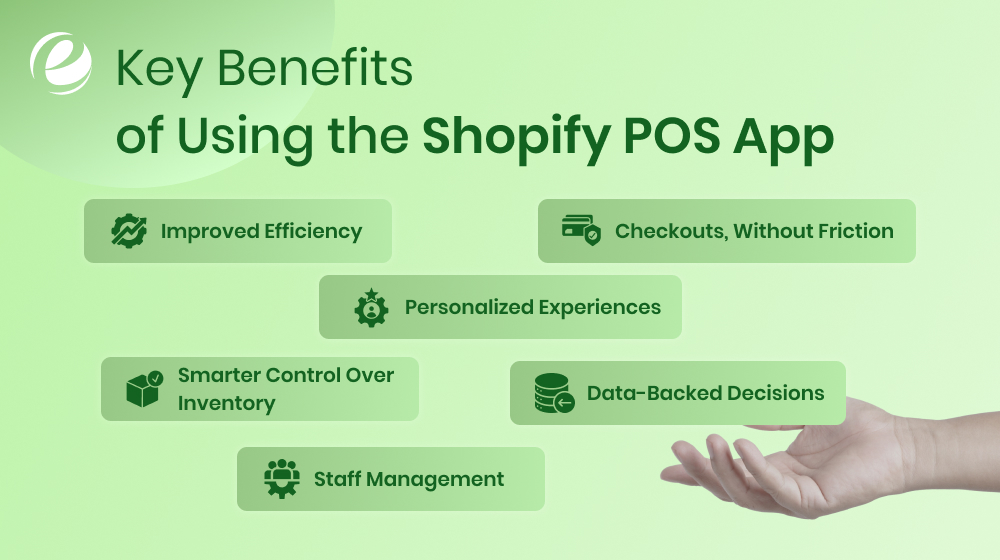 The right tool can help you redefine how you sell, serve, and scale. Shopify POS is all about that. Once deployed and leveraged smartly, it can drive real-world impact and super outcomes for modern retail businesses.
Here are the key benefits of the Shopify POS app that are worth underlining:
The right tool can help you redefine how you sell, serve, and scale. Shopify POS is all about that. Once deployed and leveraged smartly, it can drive real-world impact and super outcomes for modern retail businesses.
Here are the key benefits of the Shopify POS app that are worth underlining:
 You can only grow your retail operations to a level with off-the-shelf apps. When you have the right Shopify POS system on the floor, the scope for growth and efficiency expands. At Emizentech, we help businesses worldwide make this happen with end-to-end Shopify POS app development services.
With years of experience and a team of experts with industry knowledge, we have been creating custom solutions for varying business goals and challenges for a long time. Whether you are facing roadblocks with integrations or want to amp up the POS experience from scratch, we will assist you with everything.
Our comprehensive Shopify POS development services include:
You can only grow your retail operations to a level with off-the-shelf apps. When you have the right Shopify POS system on the floor, the scope for growth and efficiency expands. At Emizentech, we help businesses worldwide make this happen with end-to-end Shopify POS app development services.
With years of experience and a team of experts with industry knowledge, we have been creating custom solutions for varying business goals and challenges for a long time. Whether you are facing roadblocks with integrations or want to amp up the POS experience from scratch, we will assist you with everything.
Our comprehensive Shopify POS development services include:
The Shopify POS system can help elevate customer experience and retail workflows like never before, especially when paired with the right integrations. All you need is the right technology partner and smart tech implementation something that experienced Shopify consulting services can help businesses achieve and the app will become the engine for your overall retail tasks. Whether it is staff management, inventory handling, or personalization, many businesses worldwide are already leveraging the many benefits of Shopify POS apps. Let’s make sure you do, too.

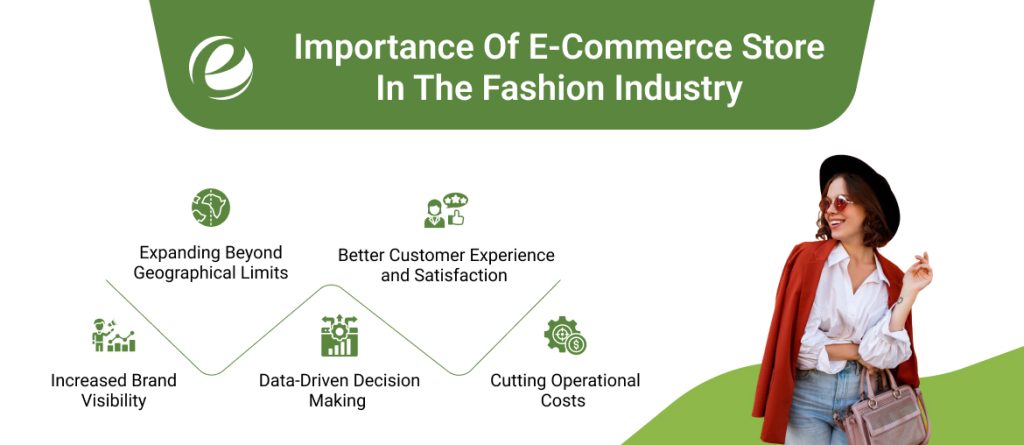 The digital era has transformed the fashion industry. Running an online store exposes fashion brands to their customers everywhere in the world, along with improving their shopping experiences and leads to an increase in sales. In an increasingly crowded marketplace, e-commerce tools are the key to success for fashion brands.
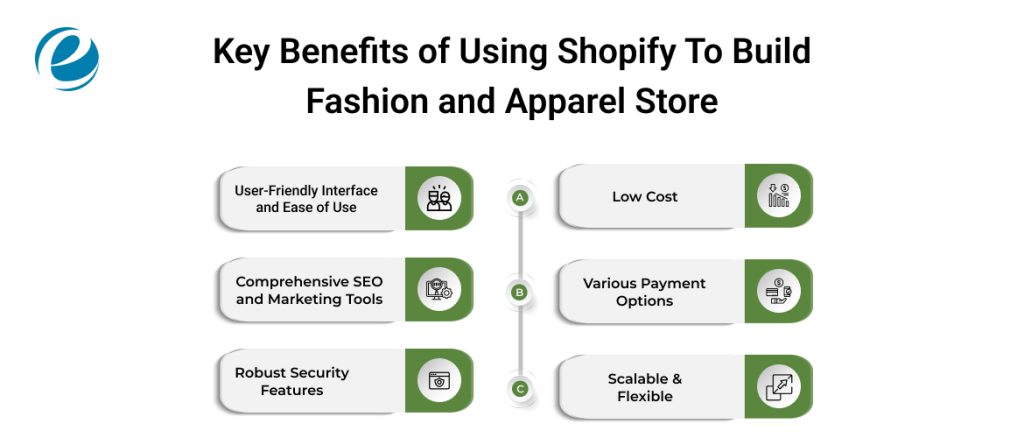 Shopify has become one of the top choices for building a clothing store online. More fashion businesses are turning to it because it offers a mix of tools and features designed to make running an apparel business easier. Whether you're just starting out or looking to grow, Shopify helps boost your online presence with its easy-to-use platform.
The best part? It's flexible enough for businesses of any size. Shopify also offers everything you need to manage inventory, accept payments, and design a store that’s all your own. And if you need a little extra help, working with a Shopify expert can take your store to the next level. They'll ensure you're getting the most out of the platform, from optimizing your store layout to making sure everything runs smoothly.
Shopify has become one of the top choices for building a clothing store online. More fashion businesses are turning to it because it offers a mix of tools and features designed to make running an apparel business easier. Whether you're just starting out or looking to grow, Shopify helps boost your online presence with its easy-to-use platform.
The best part? It's flexible enough for businesses of any size. Shopify also offers everything you need to manage inventory, accept payments, and design a store that’s all your own. And if you need a little extra help, working with a Shopify expert can take your store to the next level. They'll ensure you're getting the most out of the platform, from optimizing your store layout to making sure everything runs smoothly.
 EmizenTech is a leading Shopify store development company that specializes in creating high-quality Shopify fashion stores designed to boost your online sales. We have years of experience and an expert team dedicated to building optimized and visually appealing Shopify fashion stores that represent your brand.
We will help you with the end-to-end setup process, right from picking the most suitable themes to integrating the necessary apps for improved functionality. We use best practices to help your online store not just look excellent but also provide a smooth flow of shopping experience for your customers. When you partner with EmizenTech, you associate with a trusted Shopify development company that will help your fashion and apparel store succeed.
EmizenTech is a leading Shopify store development company that specializes in creating high-quality Shopify fashion stores designed to boost your online sales. We have years of experience and an expert team dedicated to building optimized and visually appealing Shopify fashion stores that represent your brand.
We will help you with the end-to-end setup process, right from picking the most suitable themes to integrating the necessary apps for improved functionality. We use best practices to help your online store not just look excellent but also provide a smooth flow of shopping experience for your customers. When you partner with EmizenTech, you associate with a trusted Shopify development company that will help your fashion and apparel store succeed.
 What is Shopify SAP integration?[/caption]
Shopify SAP integration helps you sync all your product and category information into your Shopify store. It is like a bridge making it easy to transfer data and you can very easily add products or categories to your Shopify store with just one click. This integration allows real-time data sharing between the two systems, making business operations smoother and faster.
For example, when a product is sold on Shopify, the inventory in SAP updates right away. Order details go to SAP automatically to help with accounting and stock management. Customer data is also updated for better customer service. Shopify manages the store, while SAP handles business tasks, so inventory, sales, and finances stay in sync with little manual work. As a result, this saves time and makes work easier.
What is Shopify SAP integration?[/caption]
Shopify SAP integration helps you sync all your product and category information into your Shopify store. It is like a bridge making it easy to transfer data and you can very easily add products or categories to your Shopify store with just one click. This integration allows real-time data sharing between the two systems, making business operations smoother and faster.
For example, when a product is sold on Shopify, the inventory in SAP updates right away. Order details go to SAP automatically to help with accounting and stock management. Customer data is also updated for better customer service. Shopify manages the store, while SAP handles business tasks, so inventory, sales, and finances stay in sync with little manual work. As a result, this saves time and makes work easier.
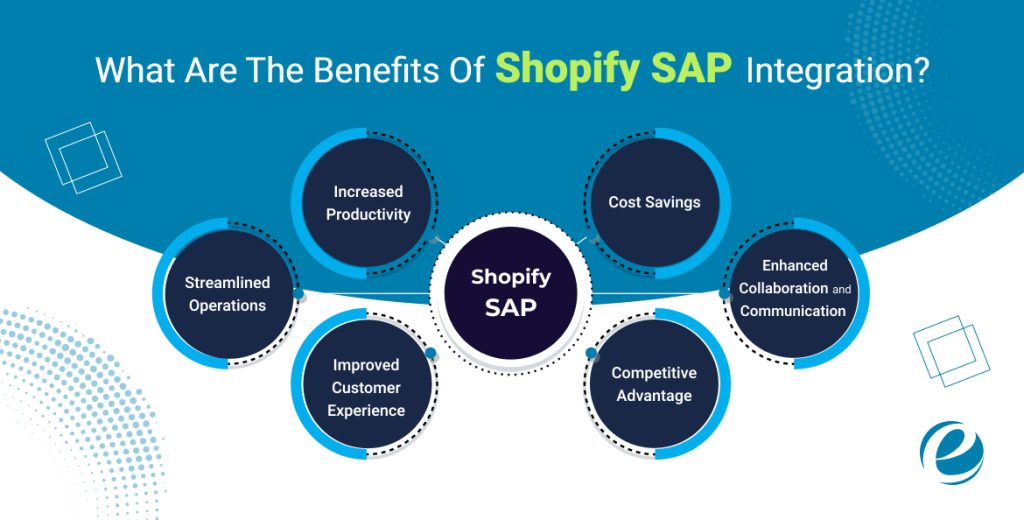 SAP Shopify integration gives businesses great benefits to help them grow and reach to new heights of success. It keeps data safe, improves teamwork, and adds useful features to fit your business needs.
Here are the main benefits of integrating Shopify with SAP. Let’s check them out!
SAP Shopify integration gives businesses great benefits to help them grow and reach to new heights of success. It keeps data safe, improves teamwork, and adds useful features to fit your business needs.
Here are the main benefits of integrating Shopify with SAP. Let’s check them out!
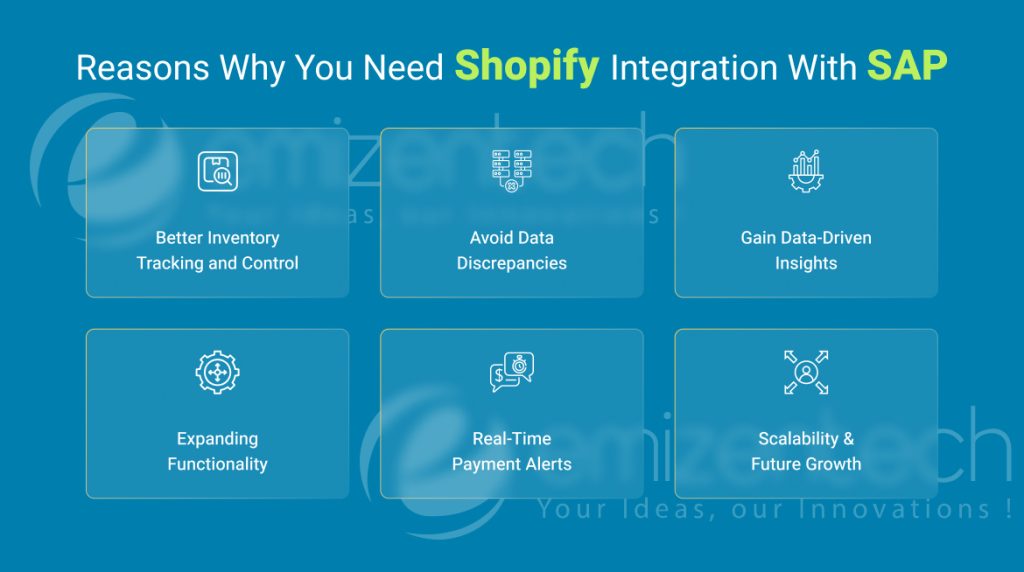 Are you having trouble keeping track of inventory, fixing data errors, or handling orders too slowly? Shopify SAP integration can help. It speeds up the workflow by organizing everything and minimizing errors.
Here are some key reasons why this integration is a smart choice for growing companies. Let’s check them out.
Are you having trouble keeping track of inventory, fixing data errors, or handling orders too slowly? Shopify SAP integration can help. It speeds up the workflow by organizing everything and minimizing errors.
Here are some key reasons why this integration is a smart choice for growing companies. Let’s check them out.

Choosing the right agency for Shopify SAP integration is crucial for your online business, as they form the foundation of a successful integration. Experienced Shopify consulting services can help you evaluate your goals, select the best solutions, and ensure the process aligns with your long-term growth strategy.
A reliable agency understands how to integrate Shopify with SAP properly and can customize the system to meet your specific needs. They also guide you through the entire process, ensuring everything works smoothly, improving store management, and delivering a better shopping experience for your customers.
 Why Choose EmizenTech For Your Shopify SAP Integration?[/caption]
EmizenTech is a trusted Shopify development company with expertise in Shopify SAP integration. We’ve been integrating Shopify with SAP for years, making sure everything works together smoothly. Our team ensures your data flows easily, so you get a full view of your business or Shopify store.
We make Shopify solutions that work best for your business. Our team uses the latest technology to set up safe and secure integrations, like APIs, apps, and payment systems. This keeps your data safe and helps your store run without any problems.
Our Shopify integration services help you save time, use resources wisely, and work more efficiently. We provide the best solutions to help your business grow. Our team also gives strong support, making sure everything runs smoothly and your integration always works flawlessly.
Connect with us today to discuss your project requirements!
Why Choose EmizenTech For Your Shopify SAP Integration?[/caption]
EmizenTech is a trusted Shopify development company with expertise in Shopify SAP integration. We’ve been integrating Shopify with SAP for years, making sure everything works together smoothly. Our team ensures your data flows easily, so you get a full view of your business or Shopify store.
We make Shopify solutions that work best for your business. Our team uses the latest technology to set up safe and secure integrations, like APIs, apps, and payment systems. This keeps your data safe and helps your store run without any problems.
Our Shopify integration services help you save time, use resources wisely, and work more efficiently. We provide the best solutions to help your business grow. Our team also gives strong support, making sure everything runs smoothly and your integration always works flawlessly.
Connect with us today to discuss your project requirements!

What is Headless Shopify? As you are here, you might know about this. But, for some who don't know, let's delve deeper.
Starting with what took you here is limited customization with your current store, complexity in integrations, ecommerce scalability challenges, and more limitations.
| By the end of 2027, headless commerce is projected to grow at a CAGR of around 20.5% and reach $32.1 billion. This significant surge, from $2.2 billion in 2023, spotlights the elevating demand for headless commerce among e-commerce businesses. It's a promising sign for those considering a shift to headless Shopify. |
Adopting headless Shopify, you can address these issues and build a high-performing online store. How?
In this blog post, we will discuss headless Shopify, how it can benefit your business, steps to develop headless shopify ecommerce store, cost, and more.
Let's sail in!
Headless Shopify is a modern eCommerce approach that's opted to build an online store that has attained significant growth in recent years.
The headless Shopify architecture decouples the front-end (visible to customers) from the back end (commerce functionality), meeting increased customization, flexibility, and performance needs.
With headless Shopify, you can harness the power of Shopify's robust eCommerce backend while enjoying complete freedom to manage the front-end design and user experience. This empowerment allows you to leverage composable tech stacks that not only meet your specific requirements but also enable you to adapt to ever-evolving trends and technologies.
Headless Shopify allows you to craft different front-end experiences for each customer's touch point. It enables your mobile, voice, point of sale (POS), and web front-ends to communicate with a single backend system through the API layer. This adaptability means that even as your brand grows, you can follow the omnichannel strategy and expand internationally at a faster pace.
Talking about the back-end, you utilize loosely coupled services to meet the complicated operational needs of your brand. As the tech stack you use is composable, you can quickly implement CRM, CMS, or DXP of your choice following plug-and-play integrations.
Above all, you will never meet any vendor lock-in, which facilitates you to opt out of these services with your dynamic business needs.
The headless Shopify working is described as below:
Hydrogen and Oxygen are the two Shopify tools crafted to develop headless Shopify stores. They ease the development process and lead to a highly customizable and better-performing online store.
With Hydrogen and Oxygen, developers don't have to worry about the fundamental infrastructure, and they can aim to provide the expected user experience.
Tips: Without Shopify Hydrogen and Oxygen, you can bump into surged development complexity, possible performance issues, security risks, and limited community and support.

Headless Shopify is transforming eCommerce by allowing businesses to separate the front end from the back end, creating tailored shopping experiences. Here’s how companies across industries are leveraging it:
Patta and Tommy Hilfiger collaboratively launched a lasting and effortless ecommerce experience. They hired two agencies to get assistance for ever-evolving content production, like HD video animation, hi-fi images, etc.
But, it's a well-known fact that such type of content leads to slow page load times that affect user experience.
Solution: With headless Shopify architecture, the team created the store functionality that helped them focus their significant time on building and providing a complete and memorable front-end experience.
Drake is the top musician worldwide and a serial entrepreneur (according to him) who brought all his brands under one digital umbrella.
Its creative team's objective was to perform room-by-room recreation of his house. For this, they chose Shopify's headless solutions.
Solution: Headless shopify ecommerce solutions helped the team by auto-matching inventory qualities to its partner brand's back office data on the website.
It's a premium outwear manufacturer and wanted its ecommerce store to mimic its immersive in-store experience of getting a real-time feel of its high-end jackets by touching one.
Additionally, Nour Hammour was looking for a fast and functional website.
Solution: They turned to Shopify headless commerce solutions to make their custom Shopify stores customizable and high-performing.
You should consider the following before implementing headless Shopify:
While you manage the Salesforce frontend infrastructure, you may find it more complicated. Here, regular updates and maintenance, both frontend and backend, can help.
You need an expert development team with the required expertise on frontend technologies, backend development, and Shopify API integrations. Understanding Shopify API is essential for effective data fetching and modifications, and leveraging shopify consulting services can help achieve this efficiently.
It's crucial to safeguard the Shopify API key and other sensitive details. You should ensure compliance with application data privacy regulations.
A custom Shopify frontend development from scratch can be more costly than using a traditional theme. You need to opt for ongoing investment in development and support.
You should implement techniques and go for image optimization. For that, minimizing API requests can boost performance and reduce costs.
Let's get deeper to know how hydrogen and oxygen help to build headless Shopify ecommerce store.
Headless Shopify benefits storefront development, but with hydrogen and oxygen, the impact is enormous.
Businesses can create custom frontends to deliver personalized shopping experiences to target audiences. Also, you can smoothly integrate with other tools and services to increase your store's functionality. You can quickly adapt to changing trends and technologies.
With Hydrogen and Oxygen in building a headless ecommerce shopify store, you can provide ultimate security. Also, you can safeguard sensitive customer details following application industry-standard security protocols.
Hydrogen is best at server-side rendering, which improves SEO and page load times. It enhances user experiences and increases search engine rankings. Caching mechanisms and in-built Shopify store optimization ensure rapid load times. Hydrogen and oxygen handle surging traffic and scale flawlessly.
With Hydrogen, developers can ease their development experience using a well-crafted framework and pre-built componenets. Using in-built tools and features, developers can speed up development. Developers get assistance from Shopify's extensive developer community and support resources.
Here is a guide that you can follow to develop a headless Shopify store with Hydrogen and Oxygen.
Create a new Shopify store, or you can use the existing one. Besides, ensure you have a Shopify Plus plan that will allow you to access the Hydrogen and Oxygen features.
You should follow the Hydrogen official documentation to install the Hydrogen CLI. With this command line tool, you can seamlessly create and handle your Hydrogen projects.
Create a new project using the Hydrogen CLI. This way, you can create a new directory considering the basic structure of a Hydrogen app.
First, install the Hydrogen sales channel app in your Shopify store. Then, configure it to connect your store to your Hydrogen project.
Now, build your custom Shopify store leveraging Hydrogen's components and API. You can create pages, list product details, and checkout pages. Use CSS and Javascript to customize its look and feel per your requirements. Here, Hydrogen built-in features can be handy.
Time to test your Shopify storefront to ensure its proper performance as expected. Utilize the in-built development server of Hydrogen to test the locally made changes. Debug its issues (if any) using browser developer tools and Hydrogen's debugging features.
Deploy your headless ecommerce shopify storefront to Oxygen using the Hydrogen CLI. Oxygen holds the caliber to handle the deployment process that embraces building, hosting, and optimizing storefronts.
Leveraging Oxygen's analytics and its monitoring tools, you can track the performance of your Shopify store. You can constantly optimize the performance of the Shopify store and its user experience. Follow the best practices and latest updates for Hydrogen and Oxygen to stay competitive.

The cost of building a headless Shopify store using Hydrogen and Oxygen depends on the project requirements, ecommerce scalability, complexity, functionality needed, and customization level.
The average cost of developing a Shopify store ranges from $20,000 to $50,000 for the basic one and $50,000 to $150,000 and more for the complex one.
Connect with an eCommerce development company with your project needs and objectives to know the exact cost.
The future of Headless Shopify is promising with the emerging possibilities for businesses.
Below are some key trends and innovations you should know before you move ahead:
Using voice commands, customers can search for the products they want, add items to their shopping cart, and complete the checkout process.
With voice assistants, store owners can answer questions, offer real-time customer support, and resolve issues.
Headless Shopify can enable a seamless shopping experience by seamlessly integrating it with IoT devices, like kiosks and smartwatches.
Also, IoT devices can help in inventory management by triggering automated reordering and tracking inventory levels.
Blockchain can help improve security and transparency in online transactions. Also, it's best for tracking the products' origin and journey, which boosts trust and openness.
AR and VR help visualize products in a real-time environment that boosts the shopping experience. Besides, AI helps customers try fashion and beauty products virtually.
AI-powered algorithms are best at analyzing customer preferences and behavior. Thus, businesses can deliver personalized marketing campaigns and product recommendations.
EmizenTech is a leading Shopify development company that offers headless Shopify store development services to worldwide clients.
Businesses looking to develop customized and innovative online stores should connect with EmizenTech.
EmizenTech has a team of experts who are skilled and experienced in offering Shopify headless commerce support.
Key Highlights of Hiring EmizenTech for shopify Headless ecommerce development

By maximizing the power of Headless Shopify, businesses can build dynamic and unique online shopping experiences that increase customer engagement and sales.
Hydrogen and Oxygen provide an efficient and robust framework for developing high-performance, customizable, and scalable storefronts.
By understanding Headless Shopify benefits, best practices, and challenges, you can leverage the complete potential of headless commerce and stay competitive.
Start a headless Shopify store today and take your eCommerce to the next level!

If you have any questions, feel free to contact us.
Copyright © 2013 - 2026 Emizentech . All Rights Reserved. Privacy Policy

 +1 (989) 535-9295
 info@emizentech.com
 emizentech


